MAM
Lenskart sets out to solve the widespread problem of myopia in children

Mumbai: Recognising the global surge in myopia rates among children, Lenskart has taken up the challenge to tackle the pressing issue head-on. In India alone, the prevalence of myopia rates is as high as 21.19 per cent in 5 to 15-year-old urban children and is projected to reach over 50 per cent soon. In South East Asia, for instance, 80 per cent of Singaporean children turn myopic by the age of 18. India is still fairly unorganized when it comes to eyewear exams for kids, and hence the real statistics can likely be much higher already than what we believe.
More and more children are wearing glasses in schools every year. The challenge is that a majority of them don’t get their eyes tested till a very late date since it’s not natural for one to know someone else can see better than them, unless their power is high, by which time the problem already becomes quite big. Hence, the need for kids’ eye testing to become more accessible, friendly and affordable is only going to get more critical in the coming years.
As one of the leading global eyecare brands/ proponents, Lenskart has announced that it will now start offering its free eye test service for children too. Till now, Lenskart used to only do eye tests for people above the age of 12. Now it will cover ages below 12 as well. The team is specifically designing and innovating its in-store eye tests to be more suitable and comfortable for children.
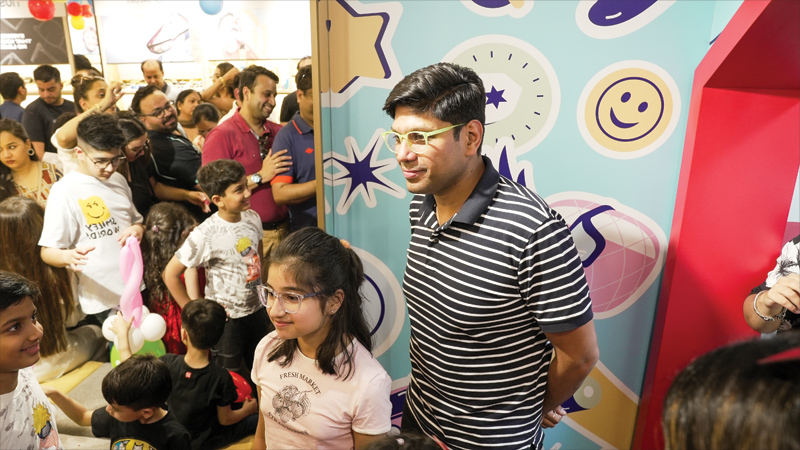
Lenskart has recently inaugurated its first-ever kids-only eyewear store in India, marking a significant stride towards addressing and transforming children’s vision care needs comprehensively. Lenskart Kids offers specialised eye testing facilities tailored specifically for children. These are operated by professionals who are not only skilled in optometric precision and care but are also adept at interacting with children, making the process enjoyable and stress-free.
In addition, the store is designed with the young wearers in mind. The atmosphere is infused with a sense of excitement and discovery, encouraging children to channel their curiosity and take pride in selecting their glasses, turning what can often be a daunting task into a fun and empowering ritual. Within this dynamic space, children can also engage themselves in playful activities while parents browse through the offerings of the kids’ eyewear collection, Hooper by Lenskart.
At the store inauguration, Lenskart CEO and co-founder Peyush Bansal shared a special moment with customers who’ve been buying from the brand for the past many years, turning it into an educational celebration. He conducted a lively session filled with insights, raising awareness on the increasing prevalence of myopia. Through engaging stories and practical advice, Peyush provided valuable tips on how they can actively prevent and manage myopia, enriching their understanding in a fun and interactive way.
He also personally engaged with the parents and shared his enthusiasm for this venture, stating, “Every child deserves the best vision care possible and we knew that Lenskart has to make that happen. As for all our customers, we want to ensure that children don’t have to make any compromises when it comes to their eyes, and they have access to the best range of eyewear that is both comfortable and stylish.” He further added, “Another problem leading to lower awareness of myopia in children is that kids’ eye tests are expensive. We are investing extensively in technology that can help us democratize this and make kids’ eye tests more affordable and accessible across the country.”
Beyond eye testing, Lenskart is also investing in technology that will stop myopia progression in children, thereby aiming to reduce the global increase. The company remains committed to making eye health a priority for all ages, ensuring that our young users see the world with clarity and joy. This new chapter in Lenskart’s story is not just about eyewear; it’s about building a legacy of healthier vision for the children of today, who will lead us into tomorrow.