Connect with us

Brands

KitKat becomes official chocolate partner of Formula 1

Published

on

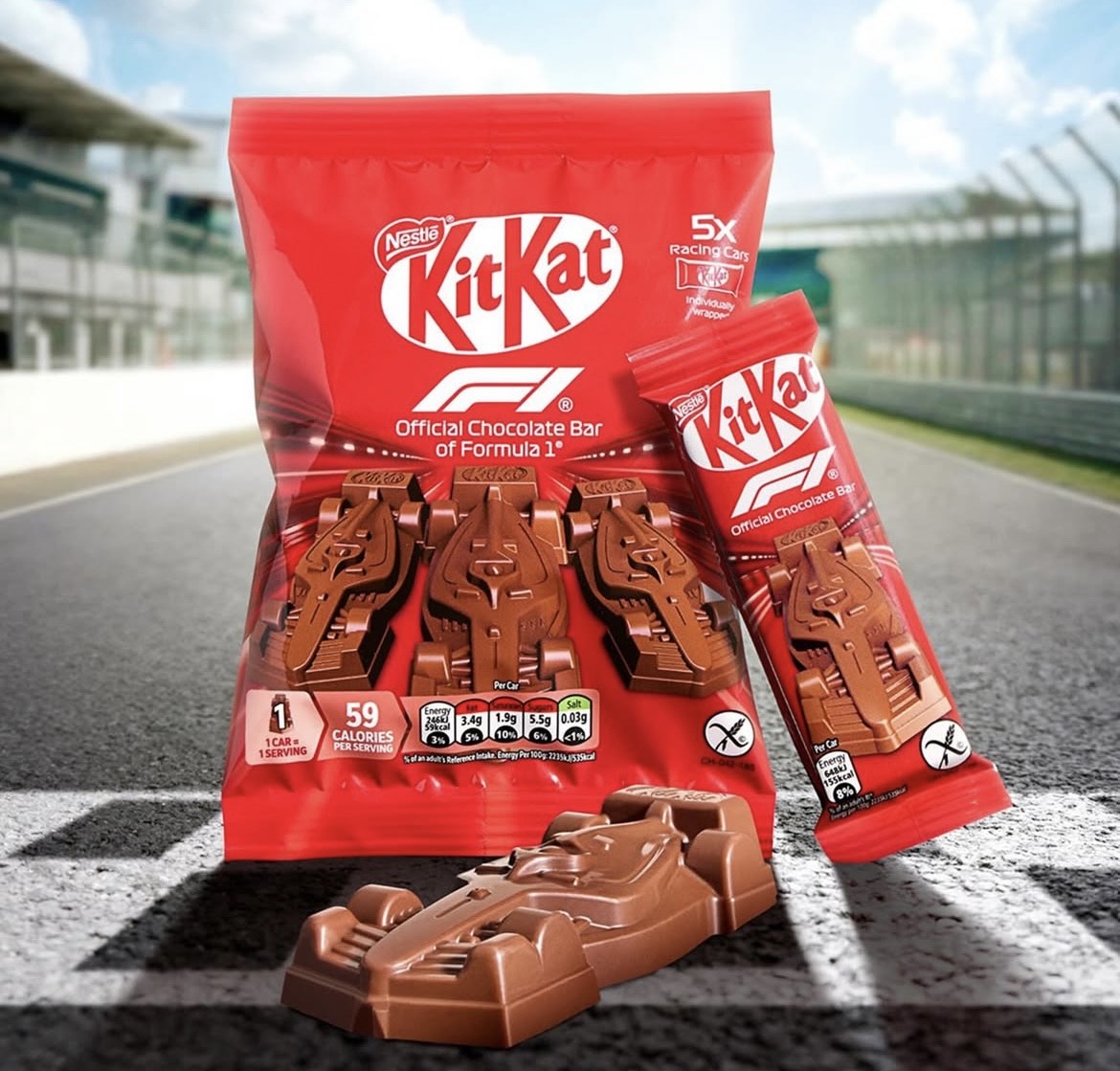
Switzerland: KitKat is hitting the accelerator. Nestlé is launching the first full season of KitKat as Formula 1’s official chocolate partner in 2026, betting big on one of the world’s fastest-growing sports and one of its own most iconic brands.

From Melbourne to Monza, KitKat will feature at 12 grands prix across Nestlé’s priority markets, starting with the Formula 1 Qatar Airways Australian Grand Prix on March 6–8. Trackside branding is just the start. The deal stretches into social media, Netflix tie-ins around Drive to Survive in selected markets, limited-edition products, exclusive merchandise, in-store theatre and prize promotions—designed to pull younger fans deeper into the sport.

The brand is also pushing product innovation at full throttle. A limited-edition KitKat Formula 1 chocolate car—claimed as the first of its kind—has been developed using Nestlé’s R&D expertise and will be produced at the San Sisto factory. The moulded car features a smooth milk-chocolate shell packed with crispy cereal and wafer pieces, built using existing manufacturing lines to allow rapid scaling.

Advertisement

The chocolate car goes on sale from January 2026, launching in Australia and several European markets including the UK, France, Italy, Austria and Switzerland, before rolling out globally in step with the F1 calendar. It will come in 29g single bars and 11g sharing formats. A second product, the F1 KitKat Chunky, will debut in Europe, using Nestlé’s proprietary technology to create a marbled finish inspired by the blur of racing cars. More launches are promised as the partnership evolves.

“Our partnership with Formula 1 shows how we are investing at scale behind our most iconic brands,” said Liberato Milo, head of the confectionery sbu at Nestlé. “By combining product innovation with strong consumer engagement, we are setting KitKat apart. We are excited to bring the ‘Have a Break, Have a KitKat’ message to F1 fans worldwide.”

The collaboration first revved up during the 2025 season, marking KitKat’s 90th anniversary and Formula 1’s 75th, with activations in Mexico, Brazil and Ecuador. Early results point to a sharper, more modern brand image and a stronger bond with Formula 1’s fast-growing fan base.

Advertisement

In 2026, KitKat is not just taking a break—it is racing for pole position.

Click to comment

Leave a Reply

Your email address will not be published. Required fields are marked *

Brands

Zydus Wellness expands Ritebite Max Protein into new formats

RTD shakes, ghee jaggery bars and Korean chips target $10–12 bn protein market.

Published

on

MUMBAI: Protein is no longer just gym talk, it’s making a full-course entry into everyday India. Zydus Wellness Ltd. is stretching its Ritebite Max Protein portfolio across three new formats, signalling a sharper push to turn protein from a niche supplement into a daily habit. The expansion brings ready-to-drink (RTD) protein shakes, culturally rooted ghee jaggery bars, and Korean-inspired protein chips under one umbrella, an attempt to build what the company calls a “multi-format protein ecosystem”. The move targets India’s rapidly expanding protein market, currently estimated at $10–12 billion and growing at a mid-teen CAGR.

The numbers suggest the strategy already has legs. In Q3 FY26, Ritebite Max Protein posted near double-digit EBITDA margins following its acquisition, driven by distribution expansion, product innovation and broader category tailwinds.

At the centre of the rollout is convenience. The newly launched RTD shakes available in Choco Burst and Berry Blush deliver 26 grams of protein per 250 ml serving, designed for on-the-go consumption. Meanwhile, the “Roots” Ghee Jaggery Protein Bars blend traditional Indian ingredients with whey and casein, offering 10 grams of protein and 4 grams of fibre per serving.

Advertisement

But the play isn’t just about nostalgia. On the other end of the spectrum, Korean-flavoured protein chips featuring variants like Hot Chilli, Barbeque and Gochujang tap into global snacking trends. Each 60-gram serving delivers 10 grams of protein and 4 grams of fibre, alongside claims such as no palm oil and gluten-free formulation.

The broader insight is clear: the protein category is fragmenting along lifestyle lines. One cohort is leaning into familiarity and traditional formats, while another is chasing novelty and international flavours. Zydus is betting it can straddle both worlds.

With a nationwide rollout planned across e-commerce and quick-commerce platforms, the company is positioning Ritebite Max Protein not just as a product line, but as a day-long consumption habit, one shake, bar, or chip at a time.

Advertisement
Continue Reading

Advertisement News18
Advertisement
Advertisement
Advertisement
Advertisement Whtasapp
Advertisement Year Enders

Indian Television Dot Com Pvt Ltd

Signup for news and special offers!

Copyright © 2026 Indian Television Dot Com PVT LTD

This will close in 10 seconds