Brands
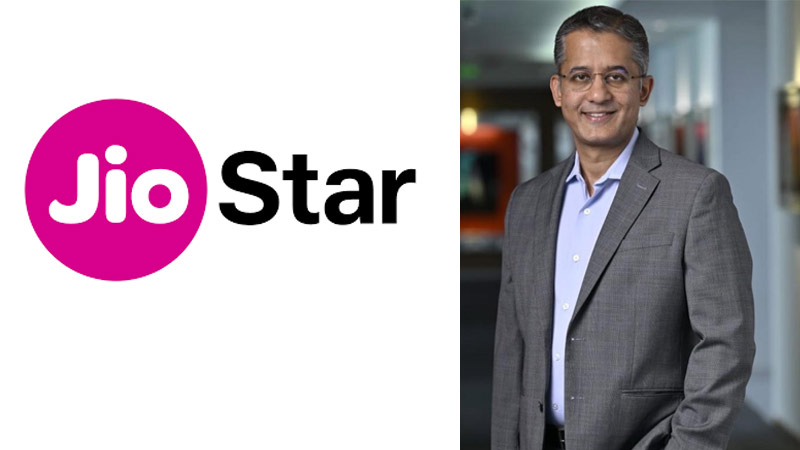
Kevin Vaz reacts to JioStar’s quarterly results

MUMBAI: Mumbai-based Reliance Industries delivered a robust performance in the quarter ended December 31st 2025, with consolidated revenues climbing 10 per cent year-on-year and EBITDA rising 6 per cent. The numbers underscore the strength of its diversified portfolio even as global uncertainties rattle markets.
V Srikanth, the company’s chief financial officer, told analysts on January 16th that profit after tax came in at Rs 22,290 crore, up 1.6 per cent. For the nine months through December, revenues grew 9 per cent whilst EBITDA surged 18 per cent and PAT jumped 28 per cent. “Businesses continue to deliver cash,” he said, noting that the conglomerate’s net debt position remained steady.
The performance was underpinned by stellar growth in digital services, where Reliance Jio added 8.9 million subscribers to reach 515 million customers. Average revenue per user ticked up organically to Rs 213.7, a 5.5 per cent annual increase, with no tariff hikes baked in. The telecom unit posted EBITDA of Rs 18,408 crore, a 16.5 per cent year-on-year jump, whilst operating revenues rose nearly 12 per cent.

Anshuman Thakur, head of strategy at Jio, highlighted the company’s technology edge. “Our whole core of 4G and 5G runs on our own stack, developed in-house,” he said. The 5G user base has swelled to 253 million, capturing 65 per cent of India’s 5G subscribers. Fixed broadband connections crossed 25 million, with 70 per cent of new additions coming via fixed wireless technology. “We are the world’s largest fixed wireless operator already,” Thakur noted.
On the retail front, revenues hit a record Rs 97,600 crore despite headwinds from GST rate rationalisation and a split festive season. Dinesh Taluja, chief financial officer of Reliance Retail, said the demerger of Reliance Consumer Products (RCPL) on December 1st also affected comparisons. The retailer’s quick commerce business is scaling rapidly, reaching a run rate of 1.6 million daily orders, a 53 per cent quarter-on-quarter surge. “We are on track to be the second largest QC player,” Taluja said.
RCPL, now a direct RIL subsidiary, clocked revenues of Rs 5,000 crore in the quarter, up 60 per cent year-on-year. Ketan Mody, executive director, said the unit completed acquisitions of global brands including Brylcreem and Toni & Guy whilst expanding beverage capacity across 12 states.
The oil-to-chemicals (O2C) business remained a cash cow, with EBITDA climbing 15 per cent to Rs 16,507 crore. Transportation fuel cracks surged 60-100 per cent, whilst Jio-bp retail volumes grew 24 per cent. Srinivas Tuttagunta, chief operating officer for refining and marketing, said diesel and gasoline sales through Jio-bp jumped 25 per cent and 21 per cent respectively. “We focused on the domestic market,” he said.
Petrochemicals faced margin pressure as global operating rates sagged to 80 per cent, but Amit Chaturvedi, president of the division, pointed to Reliance’s edge. “Three-fourths of our portfolio is gas-based,” he said, referring to cheaper ethane and refinery off-gas feeds versus costlier naphtha. “That has fully paid off.”
The exploration and production business saw EBITDA dip to Rs 4,850 crore on lower volumes and softer gas prices. Sanjay Barman Roy, president of E&P, said KG-D6 and CBM fields produced 26.5 million standard cubic metres daily, still a substantial slice of India’s 90-95 mmscmd output.
Entertainment unit JioStar posted operating revenues of Rs 6,896 crore with EBITDA of Rs 1,303 crore. Kevin Vaz, chief executive of JioStar Entertainment, delivered a standout revelation: monthly active users hit 450 million, up 13 per cent, whilst the Women’s Cricket World Cup shattered records with live watch time surging tenfold over the previous tournament. “The final match viewership was as good as any IPL match,” Vaz declared, noting that the event drew four times more viewers with peak concurrency hitting 21 million. The platform’s growth story is equally striking—Vaz said JioStar managed to convert cricket fans to entertainment consumers, keeping them sticky quarter-on-quarter even without major sporting events. Digital entertainment revenue hit record highs driven by connected TV and broader client engagement. Entertainment watch time climbed 15 per cent, powered by Bigg Boss franchises across multiple markets and top-rated originals.
The new energy push is gathering steam. Karan Suri, senior vice president, said the company is on track to commission its first fully integrated 10-gigawatt solar manufacturing facility this year, with plans to scale to 20 gigawatts. “We have reached a very high yield of 94-95 per cent” in module production, he said. Solar cell manufacturing using heterojunction technology is ramping up, whilst pilot facilities for ingot and wafer production are expanding to gigascale. Polysilicon and glass plants—both rare outside China—are nearing completion.
Battery manufacturing for 40-gigawatt-hour capacity is also advancing, with equipment already on site. Suri said the group’s 550,000-acre Kutch site will eventually generate 300 billion units of round-the-clock green power annually. “At an annual installation of 20 gigawatts peak, we will be delivering as much capacity as more than three out of four countries in the world,” he said.
S&P upgraded Reliance’s credit rating from BBB+ to A-, making it the first Indian manufacturer with an international A-minus rating. Srikanth said the upgrade reflects earnings shifting to less cyclical consumer businesses and strong free cash flow generation.
The conglomerate spent Rs 34,000 crore on capital expenditure in the nine months, split across O2C expansion (Rs 9,000 crore), new energy (Rs 8,000 crore), Jio (Rs 7,500 crore) and retail (Rs 4,000 crore). Srikanth emphasised the balance sheet remains robust with no change in net debt or leverage.
Asked about retail’s single-digit revenue growth, Srikanth was blunt. “These are extremely short-term volatility. The opportunity is so large.” He urged investors to look past quarterly fluctuations caused by the festive calendar shift, GST changes and the RCPL demerger. “We are very constructive about growth rates.”
The numbers suggest he has reason to be. With 515 million mobile subscribers, 25 million home broadband connections, 20,000 retail stores and gigawatt-scale solar factories taking shape, Reliance’s bets are paying off. The conglomerate is no longer just an oil refiner, it is India’s most diversified industrial powerhouse, and it is firing on all cylinders.





Brands
Tessolve lands a semiconductor veteran to drive its next big push
Ravi Kumar Chirugudu, who started his career at ISRO and has spent 35 years building chips and companies, joins the Bengaluru-based firm as president and chief operating officer
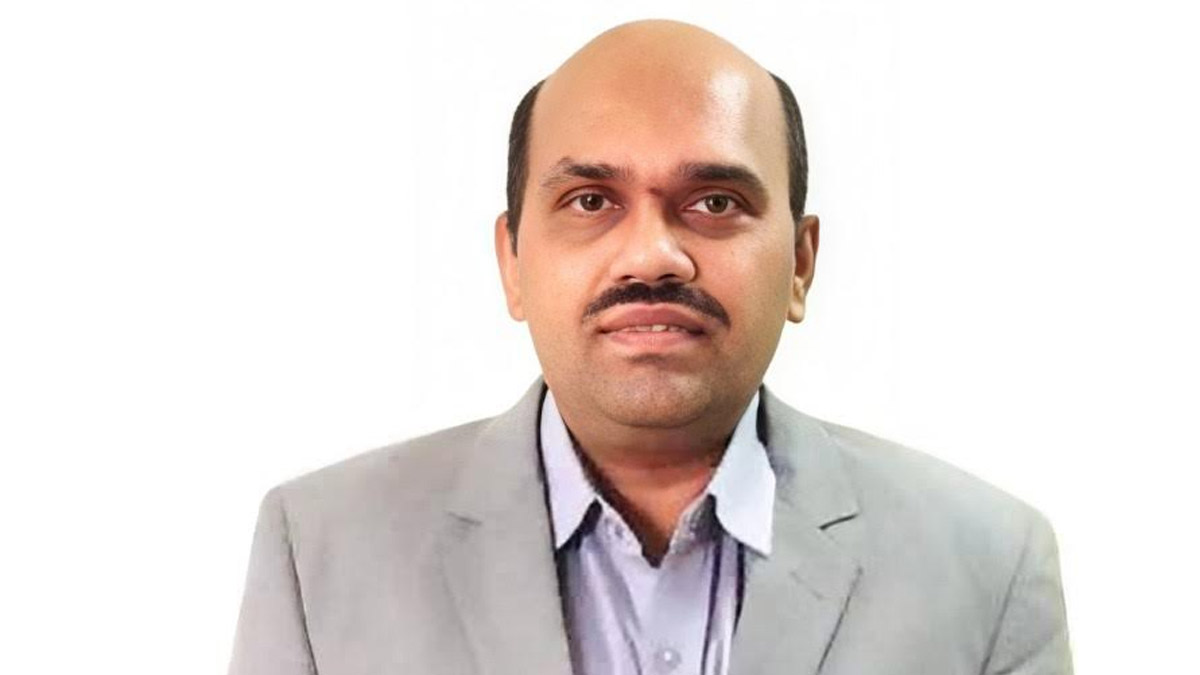
BENGALURU: Tessolve has never been shy about its ambitions. The Bengaluru-based engineering services firm already counts 18 of the world’s top 20 semiconductor companies among its clients, employs more than 3,500 engineers across 12 countries, and last year pocketed a $150m investment from TPG. Now it has hired the executive it believes can turn those assets into something bigger. Ravi Kumar Chirugudu, a 35-year semiconductor veteran who once built satellite payloads for ISRO and has since scaled engineering organisations across three continents, joins as president and chief operating officer, effective immediately.
THE MAN AND THE MANDATE
The appointment is, by any measure, a serious hire. Ravi Kumar Chirugudu comes to Tessolve after senior leadership stints at HCL Technologies, Altran and Wipro, where he managed large profit-and-loss portfolios and oversaw cross-regional teams. Over the course of his career, he has been instrumental in bringing more than 1,000 new products to market across the high-tech, energy and manufacturing verticals. Before the private sector claimed him, he began his working life as a scientist at the Indian Space Research Organisation, contributing to research and development in charge-coupled device technology and satellite payloads, a foundation that shaped everything that followed.
In his new role, he will lead Tessolve’s global growth strategy: expanding its engineering capabilities, deepening customer relationships and accelerating innovation across semiconductor and high-performance computing domains. The brief is broad, but the context is specific. Tessolve operates in the $550 billion global semiconductor market, and its recent moves, the acquisition of Germany’s Dream Chip Technologies and the TPG funding round, have sharpened both its reach and its expectations.
Srini Chinamilli, co-founder and chief executive of Tessolve, is characteristically direct about why Ravi Kumar Chirugudu was the choice:
“As we scale our global semiconductor and system engineering capabilities, Ravi’s appointment marks an important step forward. As global semiconductor demand continues to accelerate across industries, it is creating significant opportunities across the semiconductor lifecycle, from design, packaging, validation and systems integration. Ravi’s deep knowledge and leadership in this ecosystem brings the right mix of industry expertise, customer connect and execution capability, which will play a key role in strengthening our position as a trusted global engineering partner and reinforcing our market leadership.”
THE NEW ARRIVAL SPEAKS
Ravi Kumar Chirugudu, for his part, frames the move in terms of timing and culture, two factors that veteran executives tend to weigh as heavily as title or compensation:
“I am happy to join Tessolve at a time when the industry is rapidly evolving towards more complex, AI-driven systems. What stands out to me is its strong people-first culture and its commitment to bringing value to its customers. The strength of its global team, combined with its deep expertise in semiconductor innovation and next-generation product engineering, creates a solid foundation to build differentiated, scalable solutions. I look forward to working closely with the team to drive strategic growth and strengthen its role in shaping the global semiconductor ecosystem.”
The reference to AI-driven systems is not incidental. The semiconductor industry is in the midst of a structural reshaping, driven by the insatiable compute demands of artificial intelligence. For engineering services firms like Tessolve, which offers end-to-end capabilities from silicon design to packaged parts and invests in high-performance computing, high-speed interfaces, photonics and 5G, the moment is both an opportunity and a test. The company says it is well positioned to capture the next wave of industry growth. Ravi Kumar Chirugudu is now the person who has to prove it.
He came in from outer space, literally, and spent three decades learning how the semiconductor industry works from the inside out. Now Tessolve is betting that accumulated knowledge can help it cross the next frontier. In the $550 billion global chip market, the gap between ambition and execution is measured in engineering hours and leadership quality. Tessolve has just gone shopping for both.






