Brands
Kantar unpacks ‘The Indian Masculinity Maze’ in new report

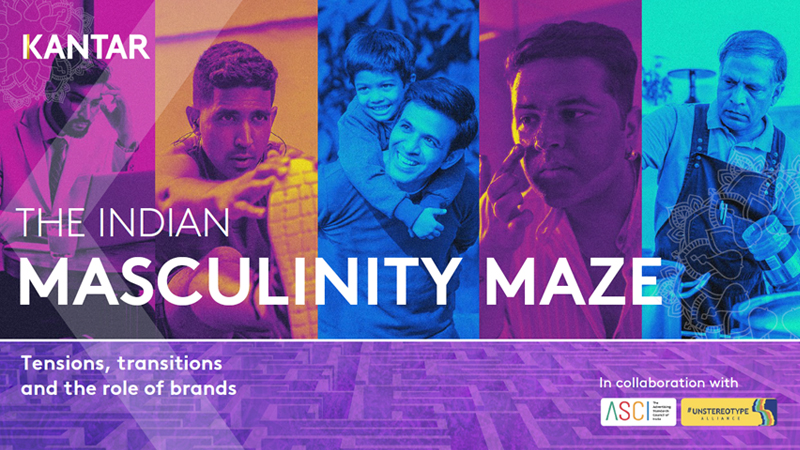
MUMBAI: The age-old Marlboro Man is losing relevance and Kantar has the receipts to prove it. In its latest study, The Indian Masculinity Maze, launched in partnership with the Advertising Standards Council of India (ASCI) and UN Women’s Unstereotype Alliance, Kantar dives into the complicated, contradictory world of Indian manhood and how badly advertising is getting it wrong.
The research surveyed 880 urban men aged 18–45 across eight Indian cities and dissected over 450 TV ads in 12 languages. The results paint a jarring picture of what happens when marketing lags behind culture.
Commenting on the report, Kantar executive vice president, Insights Division, and co-author of the report, Prasanna Kumar said, “This report isn’t about rewriting masculinity overnight. It’s about recognising where men are today, often caught between tradition and transition and helping brands engage with that complexity in a way that’s both commercially smart and culturally sensitive.”

Masculinity misfired: what ads keep botching
It’s 2025, but the ‘macho man’ stereotype still dominates Indian adland. According to Kantar:
1. 71 per cent of men agree that “real men don’t cry”—but increasingly find the idea limiting.
2. Only 6 per cent of male characters in ads show emotional care or respect towards women.
3. A staggering 94 per cent of ads don’t challenge traditional male roles.
4. Voiceovers still scream patriarchy: 43 per cent male vs just 31 per cent female.
5. Household and caregiving roles for men? Featured in a measly 1 per cent of ads.
Gen Z men, in particular, are left out in the cold. While they’re more open to emotional expression and shared domestic responsibilities, ads seem stuck in the past—showing them as overly confident, immaculately groomed, and little else.
Soumya Mohanty, Kantar managing director & chief client officer- South Asia, Insights Division, added, “Most ads still rely on outdated male stereotypes, rarely showing men as emotionally present or involved at home. This widens the gap between reality and representation. But this isn’t just a cultural miss; it’s a commercial one. Our LINK data shows that ads breaking these norms deliver significantly stronger brand equity and sales impact.”
Here’s the kicker: ads that portray emotionally nuanced men perform better. Kantar’s LINK database shows a 63-point lift in brand equity and a 44-point bump in short-term sales when brands ditch the stoic-provider trope and embrace complexity.
Brands that test their ads with inclusive male samples, particularly in personal care and household categories, see markedly better cross-gender performance.
ASCI CEO and secretary general Manisha Kapoor said, “ASCI is committed to fostering progressive advertising representations. Earlier this year, we launched the ‘Manifest: Masculinities Beyond the Mask’ study, in collaboration with the Unstereotype Alliance (convened by UN Women). We are now pleased to associate with Kantar on ‘The Indian Masculinity Maze’ to take this conversation forward. The Kantar report will help the industry move beyond superficial portrayals to understand not just the diverse realities of men today, but also to create positive representations of men that are in sync with reality.”
Gen Z men are open to vulnerability, fluid identity, and nurturing roles—but advertising hasn’t caught up. Over 60 per cent feel ads obsess over confidence and looks, and 32 per cent say fatherhood and caregiving are glaringly underrepresented.
“They’re navigating a cultural identity crisis, and advertising is just adding to the noise,” notes the report.
Kantar outlines a clear six-point plan for brands ready to break the bro-code:
1. Portray real lives – Men don’t live in protein shake commercials. Show them as they are—stressed, caring, flawed, and figuring it out.
2. Represent shared roles – Normalize dads doing dishes and men expressing emotion.
3. Focus on the emotional journey – Confidence is earned, not assumed.
4. Test inclusively – Male perspectives matter—especially in products they use but don’t see themselves in.
5. Model modern masculinity – Let men be soft, uncertain, nurturing and human.
6. Colour the whitespace – Health, identity, mental well-being—these aren’t side plots, they’re main stories waiting to be told.
“Kantar has been a founding member of the Unstereotype Alliance India Chapter. We value our collaboration with Kantar and ASCI on this important initiative to develop the study on masculinities in Indian advertising. Achieving gender equality and inclusion requires the meaningful engagement of all genders, including men and boys. It is important that marketers and content creators better understand evolving perspectives and aspirations to help challenge gender stereotypes and promote more inclusive narratives” said UN Women India Country Office Country Representative, ad interim, Kanta Singh.
So the bottom line is real men do cry and real brands should pay attention.
(If you are an Anime fan and love Anime like Demon Slayer, Spy X Family, Hunter X Hunter, Tokyo Revengers, Dan Da Dan and Slime, Buy your favourite Anime merchandise on AnimeOriginals.com.)





Brands
Samsung certifies 1,000 Maharashtra students in AI and coding
The South Korean electronics giant marks its first large-scale skilling push in the state, with women making up nearly half the national programme’s enrolment
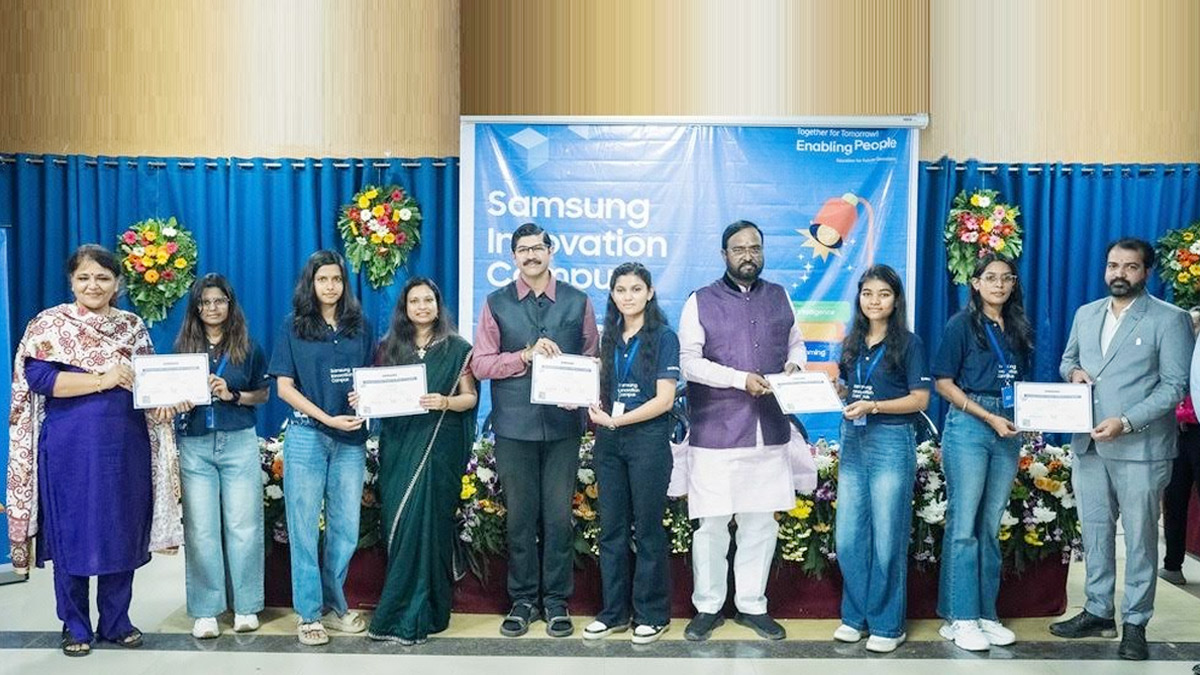
PUNE: Samsung has put 1,000 students in Maharashtra through a certified training programme in artificial intelligence and coding, the largest such drive the South Korean electronics company has run in the state and a signal that corporate India’s skilling ambitions are moving well beyond the boardroom brochure.
The certifications were awarded under Samsung Innovation Campus (SIC), the company’s flagship corporate social responsibility programme, which launched in India in 2022 with the stated aim of democratising access to future-technology education. The 1,000 graduates were drawn from four institutions: 127 from Savitribai Phule Pune University, 373 from Pimpri Chinchwad University, 250 from D.Y. Patil University’s Ramrao Adik Institute of Technology and 250 from Anjuman-I-Islam’s Kalsekar Technical Campus. All completed training in either AI or coding and programming, the two disciplines Samsung has identified as the critical pillars of the digital economy.
The programme does not stop at technical training. Soft-skills development and career-readiness modules are baked into the curriculum, a deliberate attempt to close the gap between what universities teach and what employers actually want.
“India’s digital growth story will ultimately be shaped by the quality of its talent pipeline,” said Shubham Mukherjee, head of CSR and corporate communications at Samsung Southwest Asia. “As technologies like AI move from the periphery to the core of industries, skilling must evolve from basic training to building real-world capability. This milestone in Maharashtra reflects how industry and academia can come together to create a future-ready workforce that is both globally competitive and locally relevant.”
The Maharashtra drive sits within a rapidly scaling national effort. Samsung Innovation Campus trained 20,000 young people across India in 2025, hitting its stated target for the year. Women account for 48 per cent of national enrolments, a figure the company cites as evidence of its push for an inclusive technology ecosystem. The programme is implemented in partnership with the Electronics Sector Skills Council of India and the Telecom Sector Skill Council.
Samsung, which is marking 30 years in India this year, runs SIC alongside two other initiatives, Samsung Solve for Tomorrow and Samsung DOST, as part of a broader effort to build what it calls a generation of innovators with both the technical depth and the problem-solving mindset to thrive in a fast-moving digital world.
A thousand certified students is a tidy headline. Whether they find jobs that match their new skills is the harder question, and the one that will ultimately determine whether corporate skilling programmes like this one are genuine pipelines or well-photographed gestures.






