MAM
Ipsos India appoints Sonul Verdia as customer experience vertical head
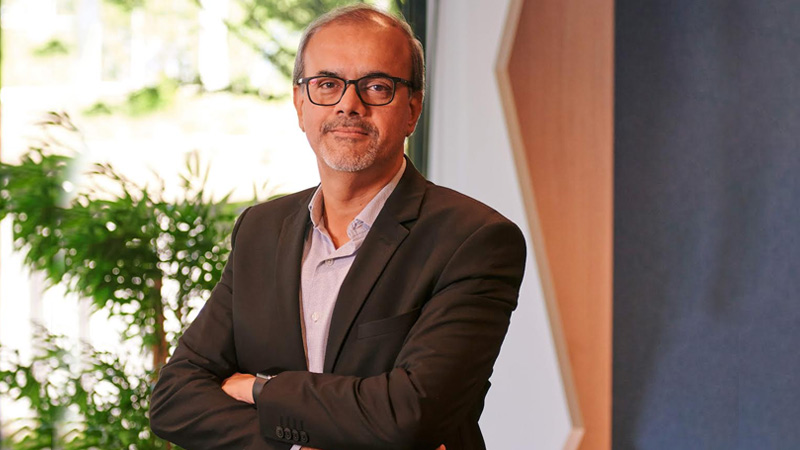
MUMBAI: Ipsos India has announced that Sonul Verdia will lead its Customer Experience (CX) practice, with immediate effect. He takes over from Parijat Chakraborty, who will focus on Public Affairs & Corporate Reputation businesses.
Verdia, who already leads the Mystery Shopping practice, views his role as a great way of leveraging dual opportunities with clients: “There is a lot of synergy and linkage between Customer Experience and Mystery Shopping and clients can derive benefits of both at one point of contact and it will enable us to provide clients with a more robust and competitive strategy for enhanced customer satisfaction. I’m super charged about the new role and our enhanced offerings.”
Amit Adarkar, CEO Ipsos India and Operations Director, Asia Pacific, sees ample opportunity for growth in CX business, “CX is the new battleground and at the top of every CEO’s agenda, as it ties in with healthy topline and bottomlines – Ipsos delivers a complete ‘Return on Customer Experience Investment, ensuring that CX delivers on some of the key challenges faced by organizations – how they can exceed brand promise, promote customer retention and recover those at risk, grow share of wallet, increase advocacy and drive up operational efficiency.”
“Ipsos is already is key player in Customer Experience both globally and locally, but we feel some sectors have not understood the utility of measuring and monitoring of customer expectations and delivering on them. Because a bad experience can make customers reject the brand for life. Our enhanced offerings come backed with technology to capture in the moment experience, helping clients address issues with speed,” added Adarkar.
Verdia will be leveraging opportunities with the existing base of Ipsos clients and will be tapping into new opportunities as they unfold.
Verdia joined Ipsos a year ago, to launch the Mystery Shopping practice for Ipsos India and has exponentially grown the business across all the major sectors.

MAM
Paramount set to acquire Warner Bros. Discovery in $81 billion deal
Shareholders back merger, combined entity could reshape streaming and studios.
MUMBAI: Lights, camera… consolidation, Hollywood’s latest blockbuster might be happening off-screen. Shareholders of Warner Bros. Discovery have voted in favour of selling the company to Paramount in a deal valued at $81 billion rising to nearly $111 billion including debt setting the stage for one of the biggest shake-ups in modern media. The proposed merger, still subject to regulatory approvals, would bring together a vast portfolio spanning HBO Max, CNN, and franchises such as Harry Potter under the same umbrella as Paramount’s own heavyweights, including Top Gun and CBS.
At the heart of the deal is streaming scale. Executives have indicated plans to combine HBO Max and Paramount+ into a single platform, potentially creating a stronger challenger to giants like Netflix and Amazon’s Prime Video. Current market data suggests HBO Max holds around 12 per cent of US on-demand subscriptions, compared to Paramount+’s 3 per cent, together still trailing Netflix’s 19 per cent and Disney’s combined 27 per cent via Disney+ and Hulu.
Paramount CEO David Ellison has signalled that while platforms may merge, HBO’s creative identity will remain intact, stating the brand should “stay HBO” even within a broader ecosystem.
Beyond streaming, the deal would redraw the map for film production. Combining two of Hollywood’s oldest studios Paramount Pictures and Warner Bros., the new entity aims to scale output to over 30 films annually, while maintaining a 45-day theatrical window. Warner Bros. currently commands around 21 per cent of the US box office, compared to Paramount’s 6 per cent, underscoring the strategic weight of the acquisition.
But scale comes with scrutiny. Critics warn that fewer players could mean reduced consumer choice, rising subscription costs, and potential job cuts as the combined company looks to streamline overlapping operations while managing billions in debt.
The news business, too, faces a reset. CNN would join forces at least structurally with Paramount-owned CBS, raising questions about editorial independence and positioning. The merger has already drawn political attention in the United States, particularly given perceived ties between the Ellison family and Donald Trump, though the company maintains that newsroom autonomy will be preserved.
If approved, the deal would mark another milestone in Hollywood’s consolidation wave shrinking the industry’s traditional “big six” studios to a “big four”, with Paramount joining Disney, Universal, and Sony at the top table.
In an industry built on storytelling, this merger may well become its most consequential plot twist yet.