
MAM
India’s services exports hit record $421 billion in FY26
IT and business services account for nearly 79 per cent of exports


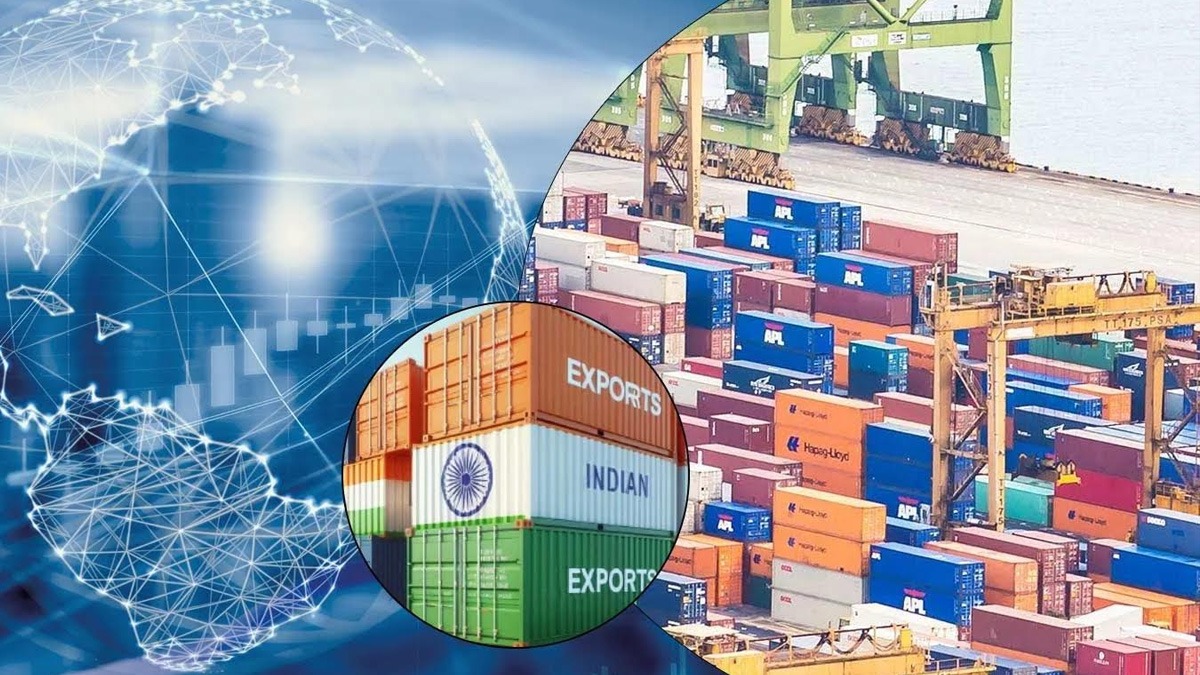
MUMBAI: India’s biggest export isn’t packed in a container, it’s delivered through a keyboard, a headset and a high-speed internet connection. The country’s services exports climbed to a record $421.3 billion in FY26, powered by strong growth in information technology and business services, as the Centre sharpened its push to expand India’s footprint in global services trade.
In a written reply in the Rajya Sabha, Minister of State for Commerce and Industry Jitin Prasada said India’s total services exports have grown steadily over the past five financial years, rising from $254.5 billion in FY22 to $325.3 billion in FY23, $341.1 billion in FY24, $387.5 billion in FY25, and $421.3 billion in FY26, according to Reserve Bank of India (RBI) data.
The country’s services exports continue to be dominated by telecommunications, computer and information services, which contributed $206.6 billion in FY26—accounting for 49.03 per cent of total services exports. Business services followed with exports of $124.2 billion, making up 29.5 per cent of the total. Together, the two sectors contributed nearly 79 per cent of India’s services exports during the year.
To sustain this momentum, the government said it is pursuing a multi-pronged strategy focused on improving market access, resolving domestic bottlenecks and expanding opportunities through Free Trade Agreements (FTAs).
According to the ministry, recent FTAs have secured comprehensive market access and national treatment for Indian service providers across multiple delivery modes, including cross-border digital services, commercial presence overseas and the temporary movement of professionals. The agreements also include provisions aimed at making licensing and authorisation procedures more transparent, predictable and time-bound.
The government has also negotiated frameworks for Mutual Recognition Agreements (MRAs), enabling professional qualifications to be recognised across partner countries and reducing the need for duplicate certification or licensing.
Several sector-specific gains have also been secured through trade agreements. These include dedicated provisions for traditional medicine in agreements with Oman and the European Union, supportive frameworks for students under the Australia and New Zealand FTAs, and commitments to eliminate double taxation on India’s IT services under the India-Australia ECTA.
On social security, the Centre said recent agreements, including the India-Oman CEPA, the India-New Zealand FTA, the India-UK CETA and the proposed India-EU FTA, provide frameworks to prevent double social security contributions for professionals working overseas. Following the understanding reached under the India-UK CETA, the two countries signed a Social Security Contributions Agreement on 10 February 2026, allowing temporary workers to avoid paying contributions in both jurisdictions.
The Services Export Promotion Council (SEPC) has also stepped up trade promotion through international exhibitions and industry events, supported by financial assistance under the government’s Export Promotion Mission.
Among its recent initiatives were the second Medical Value Tourism Summit held in Tamil Nadu on 4-5 April 2025, and Indian pavilions at major global events, including the Arabian Travel Market 2025 in Dubai, GETEX 2025, MIPCOM 2025 in Paris under the “Waves Bazaar” theme, the Malaysia Health & Pharma Expo, Tokyo Games Show 2025, and GAMESCOM 2025 in Germany to showcase India’s capabilities in gaming and entertainment.
SEPC also organised industry events such as Future-Ready Logistics in India, the International Conference on Transforming Higher Education & Skilling, the Finolegal Convergence Summit 2025, and a National Dialogue on School Education, reflecting the government’s broader push to position India as a global services powerhouse.
With technology-led services contributing nearly half of all exports and business services adding another third, the latest figures underline how India’s economic story is increasingly being written not just in factories, but through knowledge, digital capability and skilled talent.






