
Brands
India’s processed food sector eyes $600 billion future on value-led growth
India’s processed food sector transitions to a value-led economy, reaching USD 600 billion


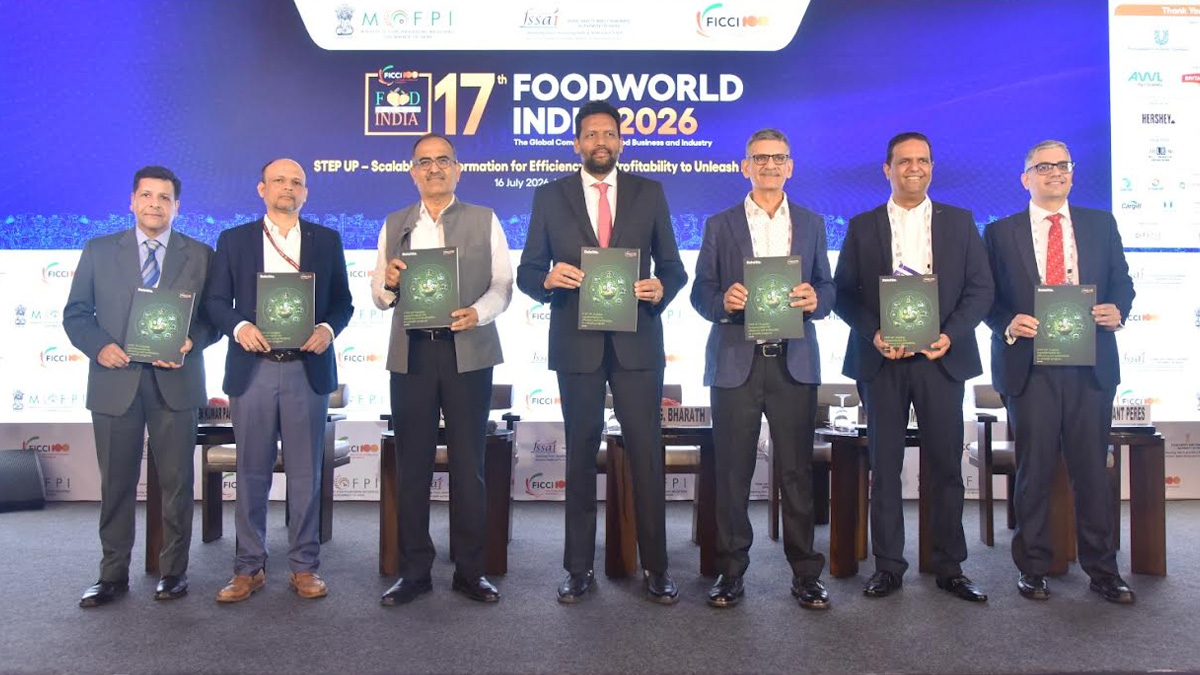
NEW DELHI: India’s processed food sector is undergoing a structural reset, moving decisively away from its traditional volume-driven model to emerge as a high-value, consumer-centric powerhouse projected to reach USD 600 billion by 2030. Triggered by rapid urbanisation, expanding digital networks, and an increasingly discerning customer base, this transformation marks a historic evolution from a supply-led agricultural pyramid into a premiumised trapezium.
A joint report by the Federation of Indian Chambers of Commerce and Industry and professional services firm Deloitte reveals that the current processing rate stands at just 12 per cent, signaling an astronomical runway for expansion. This progression is heavily incentivised by central policies, including the Production Linked Incentive Scheme for Food Processing Industry, the Pradhan Mantri Kisan SAMPADA Yojana, and the Pradhan Mantri Formalisation of Micro Food Processing Enterprises Scheme. These flagships are actively modernising domestic infrastructure, lowering post-harvest losses, and enforcing international traceability benchmarks.
“India’s food processing sector is emerging as a key driver of economic growth, supported by a strong agricultural base, a rapidly expanding consumer market, and increasing emphasis on value addition,” noted Ministry of Food Processing Industries secretary Avinash Joshi.
The visual landscape of consumption is changing at breakneck speed. While traditional neighborhood kirana stores remain crucial for community trust, they faced approximately 200,000 closures in 2024 alone, with 45 per cent of those shut downs concentrated in major metropolitan hubs. Urban spaces are aggressively turning toward digital ecosystems. E-commerce and quick commerce platforms now generate close to 20 per cent of revenue for category leaders, and up to 70 per cent of all new product launches are digital-first. Furthermore, marketing campaigns utilising artificial intelligence-driven personalisation are unlocking revenue growth of between 4 and 6 per cent for forward-thinking enterprises.
“The industry is increasingly being shaped by a more discerning consumer, a more demanding buyer and a more complex operating environment, and the companies that will lead the next chapter are those investing in capabilities, not just capacity,” stated Federation of Indian Chambers of Commerce and Industry director general Jyoti Vij.
Amidst this appetite for expansion, operational efficiency has been elevated to a strategic core business focus. Corporate players face heavy supply-chain disruptions, highlighted by global shipping bottlenecks in the Red Sea, Suez corridor, and the Strait of Hormuz, alongside erratic local weather conditions like monsoons and intense heatwaves. These volatile vectors are paired with strict domestic mandates, such as the April 2025 rule requiring a minimum of 30 per cent recycled packaging content, which is set to scale to 60 per cent by 2029. In response, processors are installing advanced internet of things frameworks; deploying predictive maintenance algorithms has successfully lowered asset preservation outlays by up to 25 per cent while slashing unscheduled operational downtime by 35 to 50 per cent. Furthermore, standardisation serves as a commercial shield, as domestic product quality failures or recalls can cost mid-sized firms anywhere from INR 5 crore to INR 50 crore in unexpected regulatory losses.
“Health, protein and sugar consciousness are no longer niche concepts or passing fads, they have evolved into enduring consumer priorities, pushing companies to rethink products rather than simply expand distribution,” observed ITC Ltd chair-FICCI food processing committee; executive director ITC Ltd & div ceo ITC food Hemant Malik.
Adding to this outlook, Mars Snacking India co-chair, FICCI food processing committee; general manager Mars Snacking India Prashant Peres explained that the sector has transitioned from basic value-addition to an innovation-driven industry that now gives consumers various price and package options.
“By harnessing scale, consumer centric innovations and technology, we can unlock unprecedented value from farm to fork, and position India as a global food processing powerhouse,” added Hindustan Unilever Ltd co-chair-FICCI food processing committee & executive director- foods Hindustan Unilever Ltd Rajneet Kohli.
“Consumers today are more willing to experiment, yet their choices remain anchored in trust, which continues to be the industry’s most enduring source of competitive advantage,” noted Emami Agrotech Ltd co-chair, FICCI food processing committee, chief executive officer & director Emami Agrotech Ltd Sudhakar Rao Desai.
“Winning will increasingly depend on an organisation’s ability to innovate continuously, respond quickly to emerging trends, and remain relevant across an increasingly diverse set of consumer needs,” shared Zydus Wellness Ltd president CIFTI-FICCI & chief executive officer, Zydus Wellness Ltd Tarun Arora.
“Success will increasingly come from being present wherever demand emerges, using technology to respond faster, and maintaining the discipline to continually refresh portfolios, channels and capabilities,” remarked Tata Consumer Products Ltd managing director & chief executive officer, Tata Consumer Products Ltd Sunil Dsouza.
“By strengthening execution capabilities and investing in future-ready growth platforms, the sector can unlock profitable growth while better serving the evolving needs of Indian consumers,” commented Britannia Industries Ltd managing director and chief executive officer, Britannia Industries Ltd Rakshit Hargave.
“Growth will increasingly be driven by the ability to identify emerging needs early, develop relevant propositions and continuously evolve portfolios in line with changing consumer expectations,” suggested LT Foods Ltd chief executive officer – global branded business, LT Foods Ltd Vivek Chandra.
“To capture this opportunity, the industry must prioritise innovation, build resilient value chains, and strengthen partnerships across the ecosystem,” stated Cargill Food South Asia managing director and vice president, Cargill Food South Asia Dheeraj Talreja.
“Together, we are building an ecosystem where growth, sustainability and competitiveness coexist, and the industry thrives as a whole,” affirmed Mondelez India president, Mondelez India Samir Jain.
“By embedding technology across our value chains, rationalising operations for efficiency, and committing to sustainable practices, we can transform this sector into a true engine of economic progress,” detailed MTR Foods chief executive officer, MTR Foods Sunay Bhasin.
“The next wave of growth will come from scalable transformation-leveraging digitalisation, usage of AI, Traceability tracking, automation and integrated supply chains to drive efficiency and profitability,” highlighted Wipro Consumer Care India president-food business, Wipro Consumer Care India Anil Chugh.
“While growth is essential, a shared commitment to sustainability is imperative for long-term impact on the consumer choices,” added Danone India managing director, Danone India Shashi Ranjan.
“As consumer needs become more diverse and dynamic, organisations must leverage technology, data, and agile operating models to deliver customised solutions at scale,” noted Abbott general manager for Abbott’s nutrition business in India Anirban Basu.
“By aligning science, sustainability, and policy, while fostering industry–academia collaboration, the sector can reduce post-harvest losses, enhance global competitiveness, and accelerate export growth,” emphasised Marico Limited chief research and development officer, Marico Limited Shilpa Vora.
“India’s food processing industry must continue investing in innovation to address rising consumer demand for healthier, functional and convenient foods,” stated Almond Board of California director – India, south korea and japan, almond board of California Sudarshan Mazumdar.
“Realising this potential will depend on the ability to move beyond commodity exports toward branded, value-added offerings that meet evolving global standards,” summarized Deloitte South Asia partner and consumer industry leader Deloitte South Asia Anand Ramanathan and Deloitte India partner, Deloitte India Avinash Chandani.
On the international stage, India remains the world’s topmost milk producer and a frontrunner in staples like rice, spices, and fruits. Agricultural and processed food exports hit USD 52.6 billion during the last fiscal year, with marine seafood alone hitting a historic USD 8.28 billion high. Yet, while the current domestic processed export mix is heavily skewed toward low-value commodities, shifting the balance to branded items promises a three-to-five-fold jump in export realisation per unit. By aligning domestic hygiene frameworks closer to international targets, India is firmly poised to shed its basic commodity moniker and establish itself permanently as the premium food basket of the world.






