
MAM
India’s live events sector grows 44 per cent as government pushes key reforms
Centre targets doubling the sector by 2030 with single-window licensing and venue reforms


NEW DELHI: India’s live events sector is turning up the volume, growing 44 per cent in a year to nearly 34,000 events and supporting the livelihoods of more than 10 million people, according to the Ministry of Information and Broadcasting.
The government is now targeting a doubling of the sector by 2030, with the potential to generate 15-20 million direct and linked jobs.
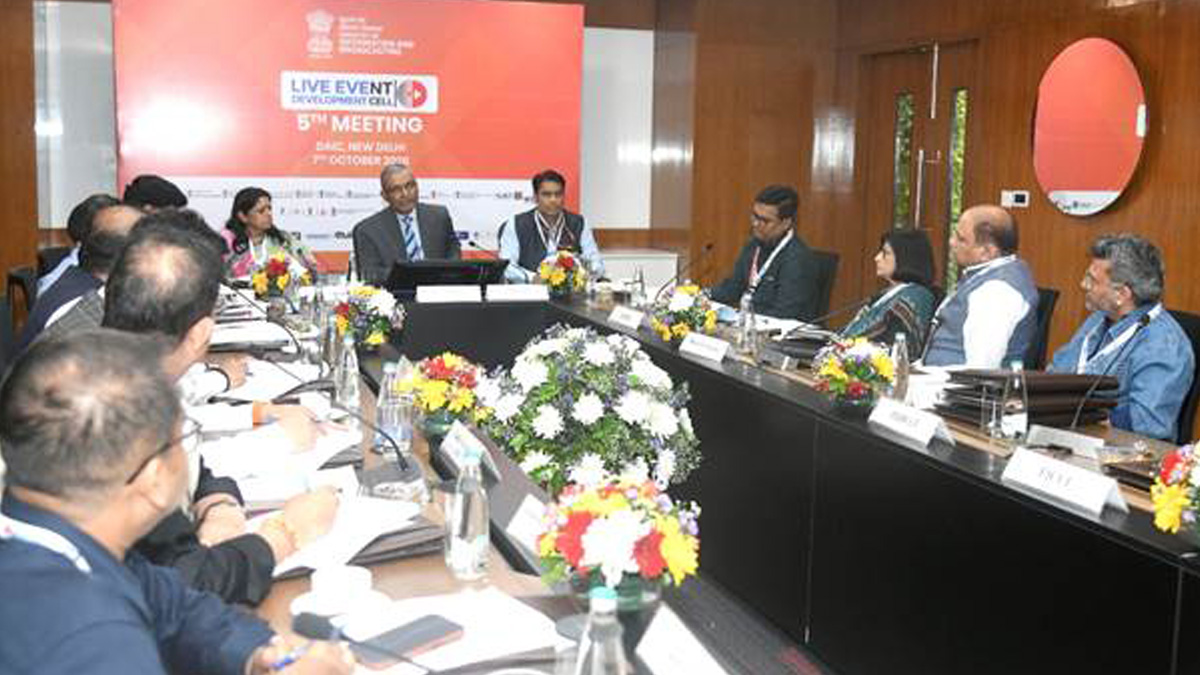
The figures were discussed at the fifth meeting of the Live Events Development Cell (LEDC), chaired by information and broadcasting secretary Chanchal Kumar. The meeting brought together representatives from 14 central ministries and departments, 10 states and union territories, and 21 industry bodies.
Kumar described the LEDC as an example of collaboration between the Centre, states and industry, while reviewing measures aimed at making it easier to organise live events across the country.
A key focus of the meeting was the single-window licensing system being developed through the India Cine Hub (ICH) portal.
States and union territories have been urged to appoint nodal officers and authorised officials, integrate departmental and local licensing systems with ICH, and process the entire licensing journey through the portal.
Live event venues have also been encouraged to adopt the portal and notify licensing as a time-bound public service.
The number of states and union territories with designated nodal officers has risen from 16 to 29. Five states have so far adopted the Model Executive Order on Streamlining Licenses and Permissions for Live Events in India, 2026, which was circulated on 13 March.
Maharashtra has adopted the model order and presented its implementation at the meeting. Other states and union territories have been asked to speed up adoption.
The Ministry of Home Affairs has also streamlined requirements for re-registration with the Foreigners Regional Registration Office (FRRO) for short-term stays by foreign artists.
The LEDC discussed a set of next-generation reforms aimed at reducing regulatory hurdles for organisers.
Among the proposals is a single national music licensing regime with notified fees, which would replace overlapping demands from multiple rights committees. The cell also discussed notifying entertainment zones under the Noise Pollution (Regulation and Control) Rules, 2000.
Another proposal involves relaxing limits on foreign remittances for payments to international artists.
The government is also looking at measures to make it easier for international artists and crews to work in India, including group visas and customs duty exemptions for show equipment.
Other proposals include bringing live entertainment skills into the National Skills Qualification Framework, expanding training and certification centres and apprenticeships, and promoting India as a destination for event-led tourism.
Fiscal measures under consideration include rationalising GST, exploring CSR-aligned incentives, infrastructure financing through viability gap funding and blended finance, and recognising the live entertainment sector under the MSME framework.
Venue availability was another major issue discussed by the LEDC, with the government looking at ways to expand purpose-built infrastructure for live events.
The Archaeological Survey of India (ASI) and Sports Authority of India (SAI) have issued standard operating procedures for hosting live events at their properties and venues.
The meeting also discussed pre-approving key venues so organisers do not have to repeatedly seek the same venue-level permissions for every event.
Under the proposed Brownfield and Greenfield Venue Development framework, states, industry stakeholders and sports authorities have been asked to provide feedback on developing purpose-specific live event venues.
The proposals include identifying venues at the state level, bringing live event and performance venues above a specified capacity into the harmonised master list of infrastructure subsectors, and supporting projects through viability gap funding.
The Live Events Skills Development Committee, chaired by the vice chancellor of the Indian Institute of Mass Communication (IIMC), presented an update on training initiatives.
This includes an MoU between IIMC, Media and Entertainment Skills Council (MESC) and Event and Entertainment Management Association (EEMA), along with certificate and short-term courses for the live events industry.
The LEDC also proposed launching inclusivity guidelines and green concert protocols at WAVES 2027, with a focus on the safety and accessibility of women and persons with disabilities at live events and concerts.
With the sector already expanding rapidly, the government’s reform agenda is aimed at moving live events from a fragmented licensing environment towards a more predictable system covering approvals, venues, skills and infrastructure.
The Centre has said it will continue working with states and industry stakeholders to build an ecosystem capable of supporting the sector’s target of doubling by 2030.






