MAM
Indian citizens trust defence forces and the PM the most: Ipsos survey

MUMBAI : The news is not so good for all of us who are part of the media. Our tribe ranks even below the police in terms of the trust that the general public places in it, if one were to go by the results of the quarterly survey, the Ipsos IndiaBus Trust in Institutions, conducted by global research company’s Ipsos India..
If the fourth estate is held in such low esteem by its primary customer, the Indian citizen, do media owners need to go back to the drawing board and do a rethink about their raison d’etre ? That’s question that begs an answer! An honest answer!
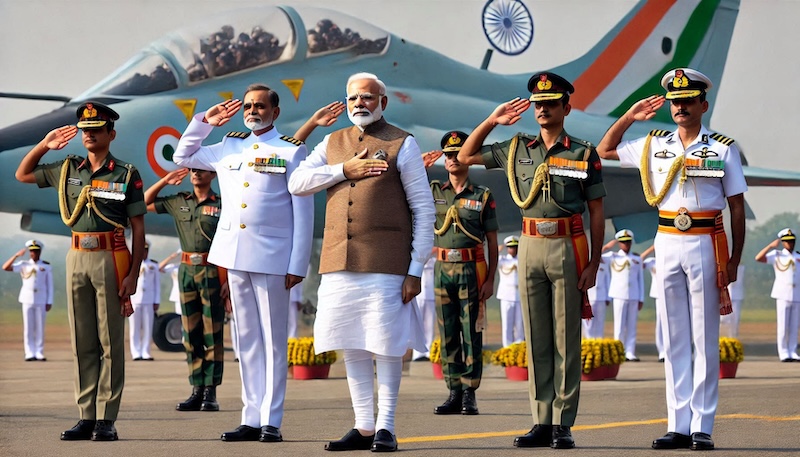
The Ipsos survey revealed that the defence forces (army, air force and navy) are the most trusted with a score of 56 pr cent, followed by Indian prime minister Narendra Modi who scored 45 per cent positive responses. The RBI came third with a 44 per cent score, followed by the supreme court.

Interestingly, all these institutions have improved their scores over the last quarter (in September) and have shown that the citizens have the highest faith in these institutions, as they continue to serve the nation with exemplary dedication and ethical work practices, says a press release issued by Ipsos India. To be fair even us media folks improved our trust score from 24 per cent in September 2024. But we are a far cry from the 36 per cent we notched up in June 2024.

Politicians (20 per cent), political parties (21 per cent), community leaders (22 per cent), and religious leaders (24 per cent), have even more reasons to be worried as they continue to lead in the distrust list.
The survey displayed certain pockets where the most trusted institutions have higher equity among the citizens.
The defence forces have received higher trust scores among the tier1 citizens (71 per cent), the north zone (69 per cent), the west zone (68 per cent), the employed (67 per cent), tier2 (63 per cent), metros (62 per cent) and males (61 per cent) etc.
The PM of the country received highest scores in the north zone (62 per cent), tier1 (57 per cent) and tier 2 (57 per cent) cities, the west zone (52 per cent), the employed (51 per cent) and males (48 per cent). Whlle the RBI was trusted most by the west zone (61 per cent), tier1 (59 per cent) and tier2 (54 per cent) citizens, the north zone (53 per cent) and the employed (52 per cent). Across these three institutions, they have a common thread of supporters with high trust – though only in the case of the RBI, trust is high in the west zone, Mumbai being the commercial capital of India.
 Ipsos India group service line leader, public affairs, corporate reputation, CSR & ESG Parijat Chakraborty pointed out that the topper institutions are the backbone of the nation with their word being sacrosanct. “After all, they have stood the test of time in serving the nation with transparency, equality and justice. All these institutions command respect – whether our defence forces, PM of the country, the RBI, the supreme court of India, the parliament – and their reputation has been built over years of impeccable delivery and service to the nation,” he elaborated.
According to him politicians, political parties, community leaders, and religious leaders, are institutions that need to win the trust of the masses through greater transparency and fulfilment of their promises to the electorate and patrons on one hand and managing their reputation through visibility around their achievements via communication, not leaving anything to speculation. He highlighted one positive outcome from the survey for them. ”We see recovery in scores to the previous levels, after a dip in September,” he said.
(For the doubting Thomases who doubt the survey’s authenticity, at least use it as a guide post. Ipsos IndiaBus is a monthly pan India omnibus – which also runs multiple client surveys- that uses a structured questionnaire and is conducted by Ipsos India on diverse topics among 2200+ respondents from Sec A, B and C households, covering adults of both genders from all four zones in the country. The survey is conducted in metros, tier one, tier two and tier three towns, providing a more robust and representative view of urban Indians. The respondents were polled face to face and online. We have city-level quota for each demographic segments that ensure the waves are identical and no additional sampling error. The data is weighted by demographics and city-class population to arrive at a national average. )







When people talk about growing money, they often jump straight to investments and overlook something closer to home, i.e., the savings account. While it might appear simple, the savings account interest rate plays a quiet but essential role in how your money grows over time.
It rewards you just for keeping your money parked safely. Many ignore it because the growth feels slow, but consistency changes the story. Understanding how this interest functions can help you make prudent everyday money decisions.
1. Interest turns idle money into working money
Money sitting in a savings account does not stay still; it earns interest. The savings account interest rate determines how much your balance grows without any extra effort from you.
Even though the returns may seem modest, this growth happens automatically.
Over time, especially with a steady balance, interest ensures your money is at least doing something instead of waiting quietly.
2. Higher interest rates reward disciplined saving
A better savings account interest rate encourages you to keep more money in your account. When you know your balance is earning consistently, you are less tempted to withdraw unnecessarily.
This creates a positive cycle: more savings lead to more interest, and more interest motivates better saving habits. Discipline, not size, becomes the actual growth driver here.
3. Compounding quietly boosts long-term value
Interest is not always paid just on your original deposit, it often compounds. That means you earn interest on the interest already credited to your savings account.
Over months and years, this compounding effect adds up. While it may not feel dramatic in the short term, it steadily increases your total balance without any extra contribution from you.
4. Interest helps protect money against inflation
While a savings account is not meant to beat inflation aggressively, the savings account interest rate helps lower the impact of rising prices.
Without interest, your money loses value over time. With it, at least a part of that loss is offset. This makes a savings account a safer place for short-term goals and your emergency funds.
5. Interest supports financial flexibility
Interest earned in your savings account adds to your available funds without locking your money away. Unlike investments, you do not have to wait or fret about timing.
This flexibility means your money grows while staying accessible, ideal for planned expenses, emergencies, or opportunities that need quick access to cash.
Ending note
Growing money does not always need bold moves; sometimes it needs smart placement. The savings account interest rate may work quietly, but its impact is steady and reliable. When you respect its role and use your savings account intentionally, you create a strong financial base, one where your money grows patiently, safely, and always within reach.
Over time, this steady growth builds confidence, supports better financial decisions, and prepares you for future investments without pressure or unnecessary risk, making every day saving feel purposeful and rewarding.









