MAM
India notifies Rs 62,500 crore mobile manufacturing scheme
New plan targets deeper local sourcing, Indian brands, exports and 60,000 jobs


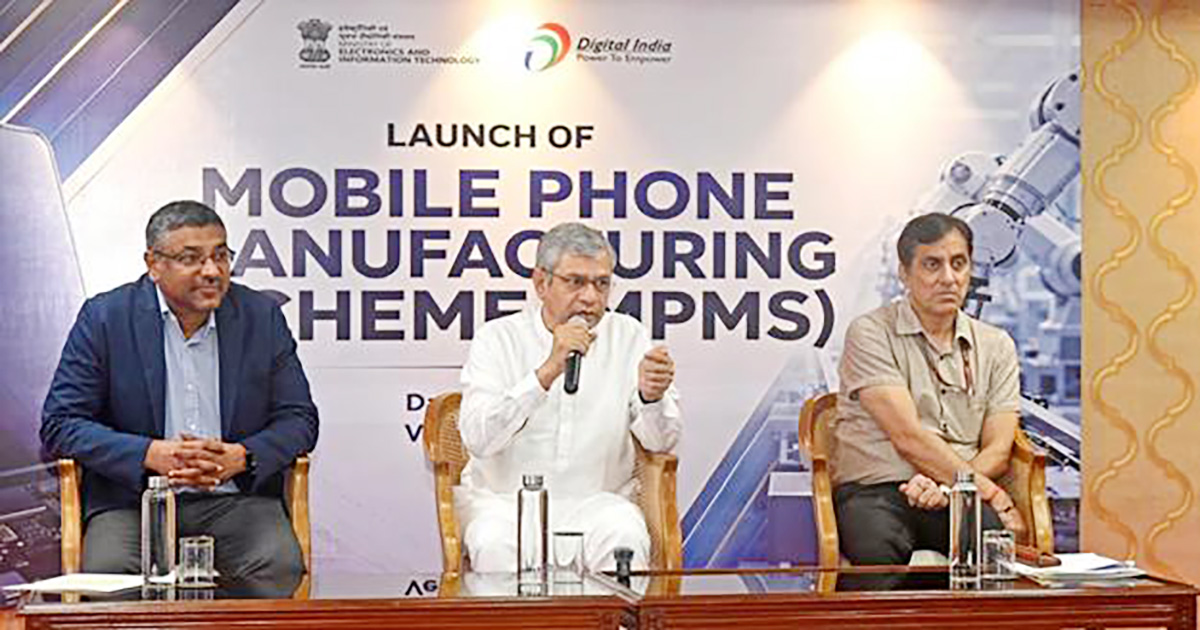
NEW DELHI: India is ready to put more of its money where its mobiles are. The government has notified a Rs 62,500 crore Mobile Phone Manufacturing Scheme (MPMS), aimed at making the country’s mobile industry more competitive globally while pushing more manufacturing, design and intellectual property into India.
The five-year scheme, which runs from financial year 2026-27 to FY31, is designed to build on the gains made under the Production Linked Incentive Scheme for Large Scale Electronics Manufacturing, whose tenure ended in March 2026.
The government expects the new programme to drive cumulative mobile phone production of about Rs 39 lakh crore during its tenure, while generating around 60,000 direct jobs and giving exports another leg up.
The scheme has two broad tracks. Target Segment 1 focuses on scaling up mobile phone manufacturing, while Target Segment 2 is aimed specifically at supporting Indian-owned mobile brands.
For manufacturers under the first segment, incentives will range from 2.25 per cent to 5 per cent. Indian brands under the second segment will receive a 5 per cent incentive, with an additional 3 per cent available for Indian design and research and development.
There is also a further incentive of up to 1.5 per cent for companies that source key components and sub-assemblies domestically. To qualify, the localised components must account for at least 25 per cent of the total mobile phone units manufactured in a financial year.
The government is also putting a sharper definition around what counts as an Indian brand. Eligible companies must be registered or incorporated in India, hold their intellectual property and trademarks in the country, have management control with Indian citizens and have more than 51 per cent shareholding held by Indian citizens. They must also maintain in-house design and R&D capabilities in India.
Ashwini Vaishnaw said the scheme would give a significant boost to Indian-owned brands, intellectual property and design.
The Ministry of Electronics and Information Technology, union minister for electronics and information technology, Ashwini Vaishnaw, said genuine Indian ownership would be central to the programme, with the design, intellectual property and brand required to be Indian-owned and capable of competing with leading products in their respective segments.
The government also plans to scrutinise intellectual property ownership to ensure that claims of Indian ownership are genuine. Non-fiscal support for Indian brands will be developed in consultation with the industry.
The eligibility criteria reflect the government’s focus on scale. Under Target Segment 1, mobile phone manufacturers and electronics manufacturing services companies registered in India must have recorded a minimum turnover of Rs 10,000 crore in FY26.
Existing brands must then maintain annual sales of at least Rs 5,000 crore above their FY26 sales benchmark. New brands will become eligible after reaching annual sales of Rs 10,000 crore in India, followed by the same Rs 5,000 crore annual threshold.
The bar is lower, but still substantial, for companies seeking support under Target Segment 2. Applicants need a minimum turnover of Rs 1,000 crore in FY26 and must meet the government’s definition of an Indian brand.
Applicants can also receive a one-year gestation period under the second segment, giving new Indian brands some breathing room to establish themselves before the scheme’s full requirements kick in.
The policy comes as India seeks to move beyond simply assembling mobile phones towards capturing a larger share of the value created by the industry.
India is now the world’s second-largest mobile phone manufacturer by volume, according to the government, with 99.2 per cent of mobile phones used in the country being made domestically. Smartphones also became India’s largest exported product category in 2025.
The government’s electronics manufacturing push has already produced a significant expansion in the sector. Electronics manufacturing has grown seven-fold and exports have increased eleven-fold since FY15, with mobile phones emerging as the biggest driver.
The next challenge is to deepen the supply chain. By rewarding domestic sourcing, design and R&D, the MPMS seeks to encourage companies to make more of the technology and components behind the handset in India, rather than stopping at final assembly.
The bigger ambition is equally clear: create Indian brands with Indian intellectual property that can compete beyond the domestic market. If the scheme delivers, India’s mobile story could shift from being largely about making phones for the world to building brands and technology that the world wants to buy.