Brands
‘India is one of the few markets where making positive impact is possible’ : Wolff Olins MD Charles Wright


|
Q. Why has Wolff Olins not set up shop in the rapidly growing market of India when it has caught the attention of every big global agency? |
|
|
Q. So how do you get a feel of the local needs of the Indian clients? |
|
|
Q. Isn’t India a difficult market from a brand perspective as it is very price sensitive?  |
|
|
Q. So how do you deal with this? |
|
|
|
|
Q. What other lessons have you learnt from here? |
|
|
Q. What about growth? |
|
|
Q. Do Indians value brands as much as the matured consumer markets? |
|
|
Q. Isn’t that good news for a branding company? |
|
|
Q. Are Indian brands receptive to this?
In a similar way but in a different segment, Tata Docomo talks about enabling ordinary people to do stuff that they couldn’t do before. The common thread in these two brands is the positive impact we are trying to create.
I would love to do work in the healthcare sector and financial services. Why is there no big financial group from India like in America and Europe? How come so many families do not have access to clean water? We would love to work with companies that are addressing the big issues of our times. We want to do stuff which has positive impact. |
|
|
Q. How do you select brands? |
|
|
Q. Doesn’t this sound like you were born in a different age and era? |
|
|
Q. With such independent thinking, wouldn’t you have been better off staying separate rather than selling to Omnicom?
America, however, was a very tough market. So we approached Omnicom and told them that we needed their help to go international. We were willing to be acquired but wouldn’t want to be bulldozed because it’s the way that we work that makes us successful and not the size of what we do. So if we get acquired, it is on the understanding that the culture is what makes us successful and Omnicom has to trust us on this one.
Omnicom agreed to our terms. The way it works is that at the start of the year we tell them what we are going to achieve and as long as you do that, they leave you alone. It is a very fertile environment for us. |





Brands
ITC Sunfeast Farmlite launches Sugar Free Cookies range
New variants offer guilt-free indulgence for health-conscious snackers.
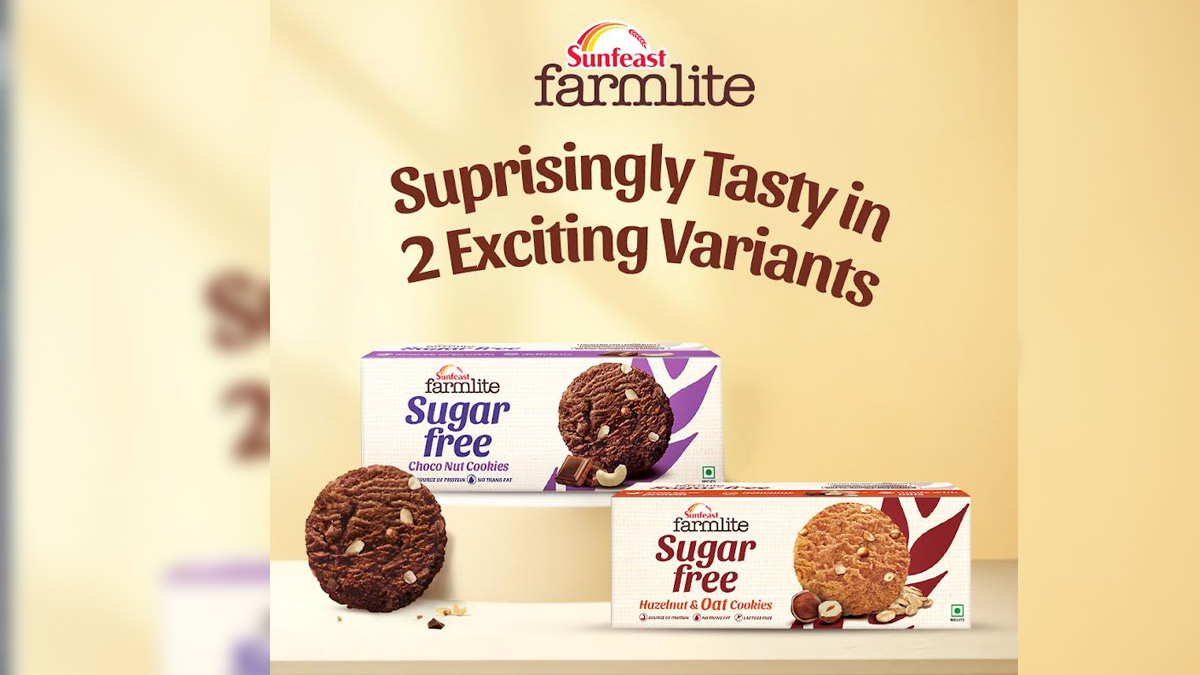
MUMBAI: ITC Sunfeast Farmlite is sweetening the deal for biscuit lovers who want to have their cookie and eat it too without the sugar. The better-for-you biscuits range from ITC Foods has expanded its portfolio with the launch of an all-new Sugar Free Cookies line, aligning with the company’s vision of ‘Help India Eat Better’. The range is designed for consumers who are rethinking sugar in their daily snacking but refuse to compromise on taste and indulgence.
The collection debuts with two tempting variants: Choco Nut Cookies and Hazelnut & Oats Cookies. Both are a source of protein and contain no trans-fat, while the Hazelnut & Oats variant is also lactose-free.
ITC Ltd. vice president (marketing), biscuits, foods division, Suraj Kathuria said, “At Sunfeast Farmlite, we believe mindful snacking should never come at the cost of indulgence. With this launch, we are catering to the growing need for guilt-free snacking while delivering a rich, satisfying cookie experience.”
ITC Ltd. vice president & head of food sciences for foods division Dr Shantanu Das added, “We have applied robust food science to develop cookies that are sugar-free while preserving the taste and texture consumers love.”
Each cookie comes in convenient single-serve packs to maintain texture and freshness. Both variants are available in 100g packs priced at ₹100 and can be found on quick-commerce platforms including Blinkit, Swiggy Instamart, and Zepto.
In a market increasingly leaning towards healthier choices, ITC Sunfeast Farmlite’s new Sugar Free Cookies prove that cutting sugar doesn’t mean cutting joy. For the health-conscious yet indulgent snacker, this could be the perfect bite-sized solution.






