
Brands
India eyes access to 75 per cent of global trade through FTA network
Goyal says nine FTAs cover $60 trillion economies as exports hit $317 billion


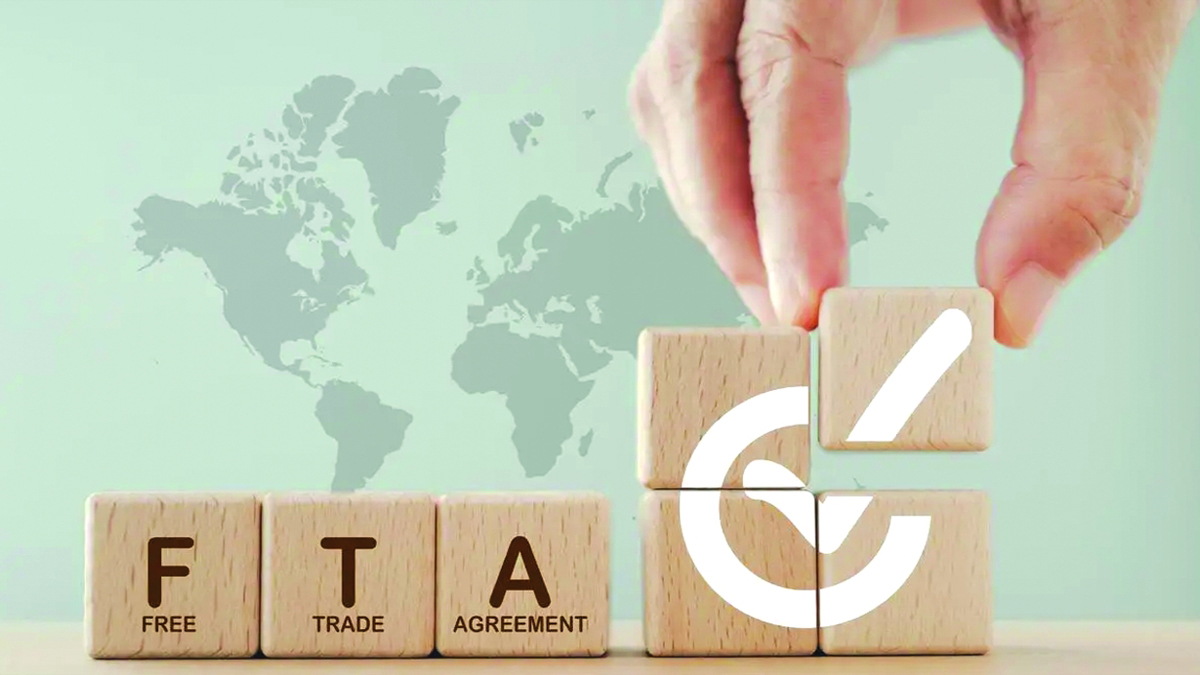
MUMBAI: India is putting its FTAs to work, with the government looking to turn preferential market access into a much bigger export engine and take the benefits from boardrooms to the last district and the smallest exporter.
Commerce and Industry Minister Piyush Goyal said India’s nine FTAs, covering economies with a combined GDP of about $60 trillion, now provide preferential access to nearly two-thirds of global trade. With more agreements in the pipeline and efforts to deepen existing market access, India could eventually gain access to 75 per cent of global trade at rates lower than those available to competitors, he said.
Addressing a national workshop on leveraging FTAs in New Delhi, Goyal called for a nationwide outreach drive covering all 780 districts, with a particular focus on MSMEs, traders, startups, first-time exporters and women entrepreneurs. The idea is to make FTAs less of a policy document and more of a practical export tool for businesses that have traditionally found global markets difficult to crack.
India’s export momentum is already providing some tailwind. Exports reached about $317 billion during April-July, up from $280 billion in the corresponding period last year — a jump of around $36-37 billion in just four months. Goyal said the country is targeting $1 trillion in exports this year, implying growth of about 16 per cent.
The minister also pointed to India’s 7.8 per cent first-quarter GDP growth, calling it significant given the uncertainty and turmoil in the global economy. He said India should continue aiming high rather than being guided by what he described as the “naysayers”.
The government’s broader ambition remains considerably larger: a $30 trillion economy by 2047 and, by 2030, exports as close as possible to the previously set $2 trillion target. Goyal argued that settling for a $1.2 trillion or $1.3 trillion outcome would not be enough to generate the jobs, businesses and entrepreneurship India needs.
The FTA pipeline is central to that push. India’s agreements with Mauritius, Oman, the UAE, Australia and the UK are already live, with the India-UK FTA effective from July 15. The European Free Trade Association (EFTA) is set to become operational, followed by New Zealand and subsequently the European Union’s 27 nations. India is also pursuing agreements with Canada, Mexico, Chile, Mercosur, SACU, GCC and Israel, while looking at ways to improve market access through reviews involving ASEAN, South Korea and Japan.
Goyal stressed that the value of an FTA should not be judged simply by the headline tariff. What matters, he said, is whether Indian exporters get a better rate than their competitors in the same market.
He cited textiles as an example, noting that India had struggled to compete with Bangladesh and Vietnam, which benefited from lower or zero-duty access to developed markets through LDC status and FTAs. With India’s newer agreements improving its relative tariff position, he said the focus must now shift to scale, quality, diligence, customer trust and timely delivery, leaving performance as the next test for exporters.
The government is also looking to make the export push more local. Goyal called for Export Promotion Councils and industry associations to reach smaller businesses through local languages and easy-to-consume content, while taking more businesses from different districts on sector-specific international delegations.
The workshop’s Export Promotion Mission discussions focused on easier access to export credit, digitised compliance and direct support for FTA documentation, including rules-of-origin certification. The Districts as Export Hubs initiative is intended to close information gaps faced particularly by first-generation and MSME exporters.
Goyal also called for faster support on regulatory approvals, SPS and TBT requirements and freight assistance where geographical challenges affect exporters, including those in the Northeast, Kashmir, Uttarakhand and Himachal Pradesh. He specifically flagged the disruption caused by the Strait of Hormuz and the need to support smaller exporters affected by it.
Infrastructure is another piece of the export puzzle. Exporters will receive priority support for the upcoming 100 BHAVYA parks, with concessions linked to higher commitments and plug-and-play facilities planned to make industrial operations easier. Existing clusters and industrial parks could also receive support through the Export Promotion Mission.
The afternoon workshop was divided into six parallel State-focused breakout groups, bringing together States and Union Territories to identify export clusters, products, practical barriers to using FTA benefits and the support required from the Centre. Senior Commerce Ministry and State officials co-chaired the sessions, with action points presented during the concluding session.
Commerce Secretary Rajesh Agrawal said the workshop was designed to bring the Centre, States, Export Promotion Councils and industry bodies together, with breakout sessions mapping specific FTA opportunities for industries across States. ITPO Chairman Jawed Ashraf also highlighted the need for stronger market linkages and collaborative export promotion.
The message running through the workshop was straightforward: signing trade deals is only half the job. The harder part is ensuring that an MSME in one of India’s 780 districts knows what the deal offers, can meet its requirements and actually gets its goods through the door.






