Digital
How Student Travel Insurance Differs from Regular Travel Insurance



Studying abroad is more than an overseas trip; it is a long academic stay with health, fees, a sponsor, and travel responsibilities. A student leaving India may need cover that supports education-related situations, while a short-term traveller may only need protection for a limited journey.
Understanding this difference early can make policy comparison clearer for students and parents before they choose a plan for the course period abroad.
Purpose of the Insurance
When choosing travel insurance in India, the purpose of the journey should be the first factor. A standard travel plan usually suits short trips taken for leisure, work, visiting relatives, or personal travel. It mainly focuses on emergency medical needs, baggage delay, passport support, and trip-related concerns.
Student-focused cover is different because the journey is linked to education and a longer stay. It may include benefits related to studies, tuition fees, sponsors, and health support.
Coverage Duration
The length of stay is a major reason why both plans work differently. Regular trip cover is usually selected for a defined travel period, from departure to return. A student plan may be arranged around an academic stay, such as a course term or study period.
Medical Coverage Differences
Medical protection is important in both plans, but needs may differ. A standard travel policy generally focuses on sudden illness or injury during a trip. Student travel insurance may offer medical cover shaped around a longer stay abroad, subject to the terms, limits, and conditions of the policy.
Academic-Related Benefits Available Only in Student Travel Insurance
Some student plans may include benefits that are directly connected with education. These features can be useful when a covered situation affects a student’s ability to continue studies or manage fee-related responsibilities. The exact availability of each benefit depends on the chosen policy, so the wording and benefit schedule should be read carefully.
● Study Interruption Coverage: Study interruption coverage may support eligible expenses when education is affected due to a covered event.
● Tuition Fee Protection: This may support eligible tuition-related loss if the student cannot continue studies due to an insured reason.
● Sponsor Protection: This may support fee-related concerns if the sponsor is affected due to any covered event.
● Compassionate Visit Benefits: This may support a family member’s visit when the policy allows it under stated conditions.
Eligibility Requirements
Eligibility depends on the traveller’s profile and the reason for travel. A standard overseas policy is usually based on trip details, destination, travel dates, and the applicant’s eligibility under the insurer’s rules. A student plan may need education-linked documents, such as admission proof or course details.
Students checking travel insurance for the UK should also review any requirements shared by their university, visa process, or destination guidelines.
Cost and Value Comparison
The right policy should be judged by suitability, not only by premium. A regular plan may be cost-effective for travellers who do not need education-linked benefits. For overseas students, the coverage may be more useful when it includes travel, health, and academic needs within one plan.
Those buying insurance for international education should compare benefits, limits, waiting conditions, and claim requirements before deciding whether student-specific cover is suitable.
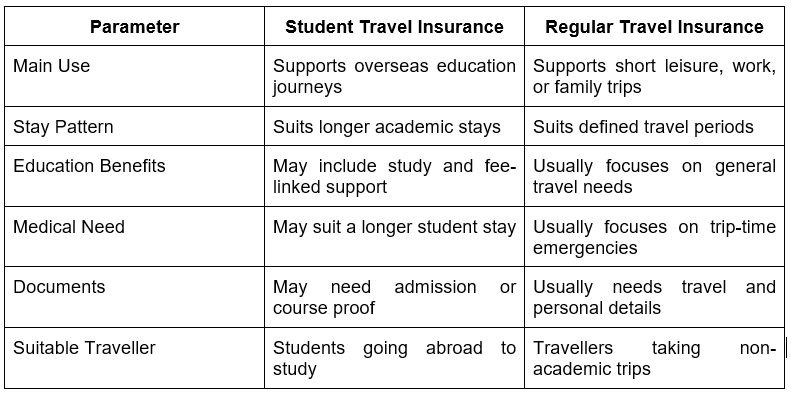
Comparison between Student Travel Insurance and Regular Travel Insurance
Actual cover can vary by insurer, destination, plan type, and policy wording. The table below shows how both options usually differ in purpose and use.
Conclusion
Student and standard travel plans serve different needs. A student plan may be more suitable when the journey includes admission, fees, a sponsor, and a longer stay abroad. A regular plan may work better for travel that is not linked to education.
Travellers should read the policy wording, benefit schedule, inclusions, limits, and claim conditions carefully, as final benefits depend on the selected plan, applicable terms, and personal circumstances.