MAM
How do the new TDS rules impact influencer marketing in the country?


Mumbai: If you are a social media influencer, then, come July, you will have to take a tax cut on the gifts or freebies received from brands for the sales promotions of their products. The Central Board of Direct Taxes (CBDT) recently announced that gifts, samples and other promotional stuff that is given to a social media influencer will be treated as an “income” for the influencer and will attract TDS (or tax deducted at source). As per the new income tax rules, a 10 per cent TDS will be mandatory on “benefits received in cash or kind in a business or profession.” The new TDS Rules will come into effect from 1 July.
In recent years, influencer marketing has been growing by leaps and bounds. What was a $1.7 billion industry in 2016 has since grown to become a $9.7 billion industry in 2020. In 2021, it grew to $13.8 billion and this year, the market is projected to expand to a whopping $16.4 billion industry.
IndianTelevisionDotCom spoke to various stakeholders from the industry to find out how the new tax rules will impact the burgeoning influencer marketing industry in the country.

While a lot of intricacies in terms of the legalities involved and how exactly it will function need to be figured out, some industry players quantified that the guidelines issued by the CBDT for social media influencers is a step in the right direction that will have a positive impact in the long run. Several believe that it will lead to a more regularised industry in the long run, but that its implementation, perhaps, requires more thought.
According to Langoor co-founder & CEO Venugopal Ganganna, the new guidelines are an effort at bringing a greater degree of reliability and accountability to the products being promoted since the influencers will now be forced to collaborate only with those products and services they believe in.
“Today, an influencer’s fee depends wholly on the size of their audience and following. The influencer economy is also largely driven by the promotion of free products. Taxing this freebie forces both the brand and the influencer to be more intentional about their partnership making it a win-win-win not just for the both of them, but also for the end customer,” stated Ganganna.
TheSmallBigIdea associate director – new business Kruthika Ravindran believes the new guidelines come with its own pros & cons. “There definitely is going to be an inflation in the rates since influencers would look at paid deals with brands where they can recover their money, as compared to barter deals”. However, she adds, this will also lead to the influencers being more credible & accountable for the brands they represent and the products they endorse.
Pointing out the challenges related to the guidelines’ implementation, Alpha Zegus founder & director Rohit Agarwal said, “The guideline requires people who are benefiting from sales promotions to ‘report’ the same in their tax returns and pay 10 per cent TDS. Problem 1 – How do you ensure that everyone reports every freebie that they have received? .
He further added, “Many social media influencers are young, and receive products from various brands quite regularly. Some of them don’t even fall under the taxable age, while some don’t have the funds to pay TDS out of their pockets (since the product does not have a liquid monetary value).
A lot of electronic gadgets (and similar products) have a certain MRP, but are actually sold at a much lower value than the MRP, he said. “Is the influencer expected to pay 10 per cent TDS on the MRP, or on the in-store value? All in all, the move is understandable but comes with a lot of challenges in terms of opportunities and execution.”
On the new CBDT guidelines for social media influencers, Mirum India joint CEO Hareesh Tibrewala marked that TDS is not a new concept and when payments are made to another person, TDS is deducted and the recipient of the payment can claim a TDS credit while filing his return of income.
Tibrewala was more scathing in his criticism of the move, however, calling it a “bit of a retrograde measure” listing out three reasons for the same: The revenue that the govt generates will be extremely minimal. Secondly, it is going to increase paperwork for the brand and the influencers. And, lastly, he feels the gifts given to an influencer are not really an income for the influencer.
“A social influencer is able to promote a product (say a new shampoo launch) or a service (promoting a hotel) only if he is able to ‘experience’ the product or service,” he said. “Hence the product or promotional material that is given to a social influencer is not in lieu of his professional fees for doing the promotion (unlike in the case of saying the medical fraternity where the doctors are given gifts and gratification as a part of compensation for their services).”
In the realm of influencer marketing, free goodies sent to the influencers indeed generate substantial PR for the brand. But they’re also a little one-sided, with the influencers having less to no say on whether they would be interested in receiving the freebies.
The new rule, says SoCheers director – digital marketing Rajni Daswani, will allow for a more respectful and understanding relationship to be fostered between the brands and the influencers. “It will now require a two-way conversation when it comes to sending free packages, where both the parties can agree from the very beginning. This will also lead to setting more clear expectations between the two,” she mentioned.
According to Tonic Worldwide director strategy Ankita Chauhan, as social media and related businesses continue to grow, the changes in the regulations and policies are going to be inevitable. Just like the past regulations of declaration of sponsored content, this too will become a part of the working process between the parties, she believes.
Last year in June, the Advertising Standards Council of India (ASCI) issued guidelines making it mandatory for influencers to label all kinds of promotional content they post, in order to create a distinction between user-generated content and promotional advertisements.
According to Scrollin’ Media co-founder Samridhi Goel, the government sees as much potential in this industry to grow as much as it sees in crypto and hence they are taking steps to generate more revenue from such streams. However, she added, it should phase out in a more structured way so that it does not impact the earnings and businesses of either of the parties involved.
Socxo CMO Ajit Narayan said that Influencer marketing is an abused channel, where influencers, be it celebrities, macro or micro-influencers are all in the game of leverage. So, if they are a business by itself, should they be exempt from taxes, he asks. “On one side is the monetary remuneration. Which is directly proportional to their fees which already is within the ambit of TDS. And why not, this is income and should be treated so.”
However, this blanket tax on products is ‘taking it too far’. “It would have been a more thought-through approach if there were limits on freebies,” adding that the most affected will be micro and nano influencers for whom this business might be a side hobby or a corporate program. Not a good move for this segment, he concluded.
IPLIX Media founding member & head- talent management & client servicing Arpan Soni is in agreement with Narayan, noting, “The new TDS rule will undoubtedly have an impact on the revenue of nano and micro-influencers as most of their associations are barter. However, it will not impact macro influencers to such an extent as they majorly undertake paid collaborations only.”
The best strategy for aspiring and budding creators will be to charge a nominal fee for the amount they’ll have to pay later on, Soni adds. “While we’ll definitely have to wait and watch to see the real impact it will have, at this juncture, creators, brands, and even agencies are waiting for more clarity.”
On the other hand, influencer marketing startup ClanConnect co-founder and COO Kunal Kishore Sinha believes that there will be minimal impact on micro and nano influencers, who will continue to work on barter and paid collaborations on a scale that isn’t taxable.
He stated, “The only big difference, then, will be that brands that currently offer such freebies will minimise making payments in kind and prefer cash transactions. Simply put, this is a positive move and will only lead to the growth and evolution of the influencer marketing ecosystem with no major change in influencer activities and opportunities.”
He also agrees that the government recognising the influencer marketing space as a mainstream business worthy of regulation is a positive development for the entire industry.
Gaming talent management agency 8bit Creatives founder and CEO Animesh Agarwal too believes it to be a logical step. “Given that influencers receive the products, in exchange for providing the promotional service, it is income for them, and liable to tax, as per the fundamental principles of income tax. This move is also one of the first few official recognitions of the creator economy by the tax department, which is important for any industry to grow.”
“The 20K threshold is a welcome exception because it spares smaller creators and numerous modest home brands the hassle. Additionally, this TDS is not applicable in the case of returnable products, which is also logical. All in all, I feel the move is an indication of how bullish the government is on the creator economy, and how far we have come,” he further says.
Several of the influencers themselves while being sceptical about the impact of the move believe the new guidelines will definitely lead to a drop in barter deals being undertaken, making it slightly difficult for new influencers to enter the market.
Social media influencer Cherry Mardia shared, “A lot of influencers are lured by corporate freebies like vacations & gadgets. Since there will be a tax on this, both parties now- the brand & the influencer being taxed, both will be equally involved & mindful while promoting it vs an influencer being a passive consumer of a free gift.”
Content creator, podcaster, entrepreneur, and author Varun Duggirala added that while the idea comes from the right place, the system needs to be thought through. “For any regulation to work the system or process needs to be in line with how these transactions happen in reality, and therein lies the concern with this announcement. The creator space is still largely chaotic and this can very easily add to the chaos rather than help in systematising it.”
According to another influencer, The Bajis, “Collaborations like this foster the relationship between the creator and the brand and thus, help both of them grow parallelly. Therefore, eradicating them from the picture completely might become an obstacle to the growth of small and medium businesses along with creators.”
Aaliya Ilyasi, another influencer with a sizeable following, states that the problem arises because the creator now has to pay tax on a good/ service that they are not getting paid for in the first place! “Small-scale influencers and even small businesses start with barter collaborations to build a portfolio and it helps them get recognised by other creators and brands which then leads to more monetary gigs for these influencers and low-cost high return sales for the brands.”
On the bright side, several of them feel that this also recognises ‘being an influencer’ as ‘an actual job’, and dignifies the hours that they put into content creation as work, which will essentially translate into growth and progress for the industry.






Brands
Charlotte Tilbury opens first flagship store in India
Luxury beauty brand bets on immersive retail as India expansion gathers pace
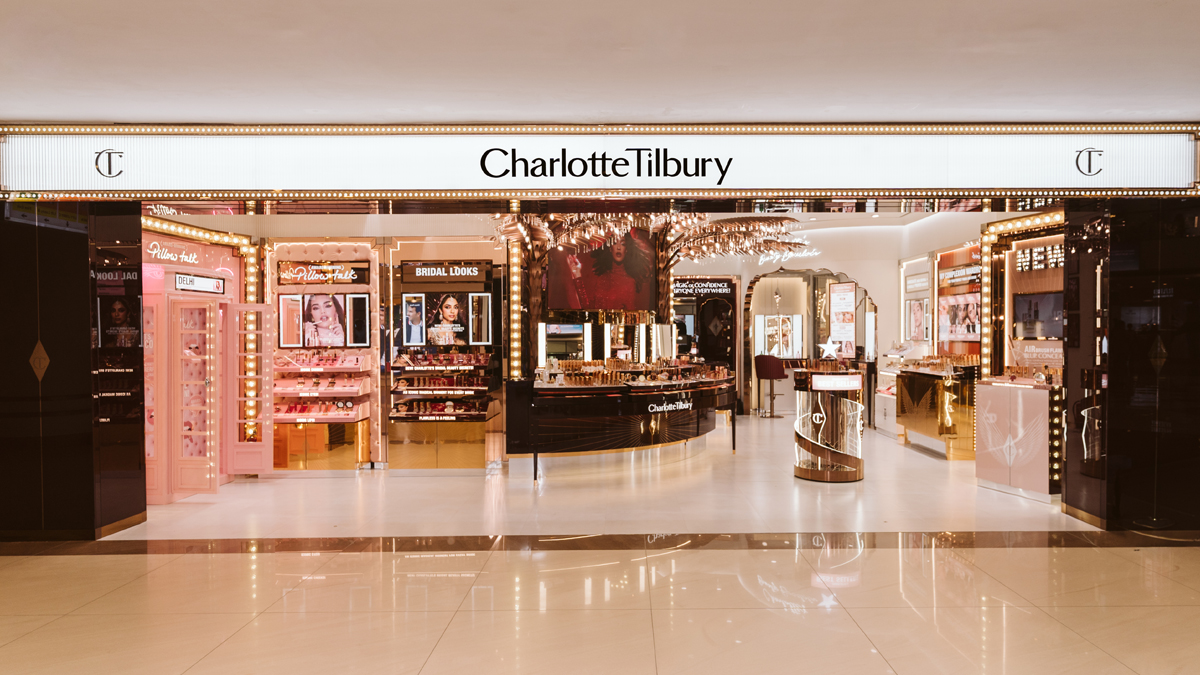
NEW DELHI: Charlotte Tilbury has opened its first flagship Beauty Wonderland in India, planting a high-glamour marker in New Delhi as global beauty brands double down on the country’s fast-growing premium market.
Located at Nexus Select Citywalk in Saket, the store is operated end-to-end by Nykaa, deepening a partnership that began with the brand’s digital launch in India in 2020 and has since scaled across retail, marketing and distribution. The opening signals a shift from marketplace presence to standalone brand environments as companies chase long-term equity and consumer loyalty.
The launch was marked by an event on April 9 featuring actor Sobhita Dhulipala, the brand’s first beauty muse in India, underscoring Charlotte Tilbury’s growing cultural push in the market.
“Darlings, I am so excited to open my first-ever flagship Beauty Wonderland in India, in its vibrant and iconic capital, New Delhi,” said Charlotte Tilbury. “This is such a magical milestone for the brand as we continue to grow in one of the world’s most dynamic and exciting beauty markets.”
Tilbury highlighted the brand’s connection with Indian consumers. “India has always been a place of incredible beauty, celebration and transformation. I have been so inspired by the artistry, creativity and passion of our community here. They are true beauty connoisseurs that appreciate next-generation formulas,” she said.
The store is designed as an immersive retail experience, blending the brand’s Art Deco and old Hollywood aesthetic with local cues. A bespoke Royal Indian Arch anchors the space, alongside personalised makeup services tailored to Indian trends and occasions. A dedicated bridal looks wall nods to the country’s strong wedding-led beauty market, while interactive elements such as the Pillow Talk photowall and in-store masterclasses aim to drive engagement.
For the first time in India, the full Charlotte Tilbury portfolio is available under one roof, spanning makeup, skincare and fragrance, including the Fragrance Collection of Emotions and bestsellers such as Magic Cream, Airbrush Flawless Blur Concealer and Pillow Talk products.
Nykaa, which operates 57 doors for the brand alongside its app and website, will now lead end-to-end management of Charlotte Tilbury’s exclusive boutiques in India, covering retail operations, staffing, supply chain, marketing and omnichannel integration.
“Charlotte Tilbury has been one of our most successful and strategic global partnerships,” said Anchit Nayar, executive director and chief executive officer, Nykaa Beauty. “The launch of the first exclusive boutique, fully operated by Nykaa, is a natural next step and reflects our shared long-term commitment to building the brand in India.”
Nykaa’s broader beauty playbook, built on digital-first entry followed by omnichannel scale, now reaches over 42 million consumers and has become a template for global brands entering India. The retailer currently serves 52 million customers through its platforms and runs 276 offline beauty destinations, reinforcing its position as a gateway for international labels.
Charlotte Tilbury, founded in 2013, now operates in over 50 markets with more than 3,000 employees and 500 products across categories, with over 3,000 distribution points globally.
A second standalone store is slated to open at Mall of India in Noida in May 2026, signalling an aggressive retail push.
In a market where beauty is fast turning from aspiration to everyday indulgence, Charlotte Tilbury is not just selling products. It is building theatre, and betting that Indian consumers are ready to buy into the spectacle.






