Ad Campaigns
How Cadbury perfected its communication in India

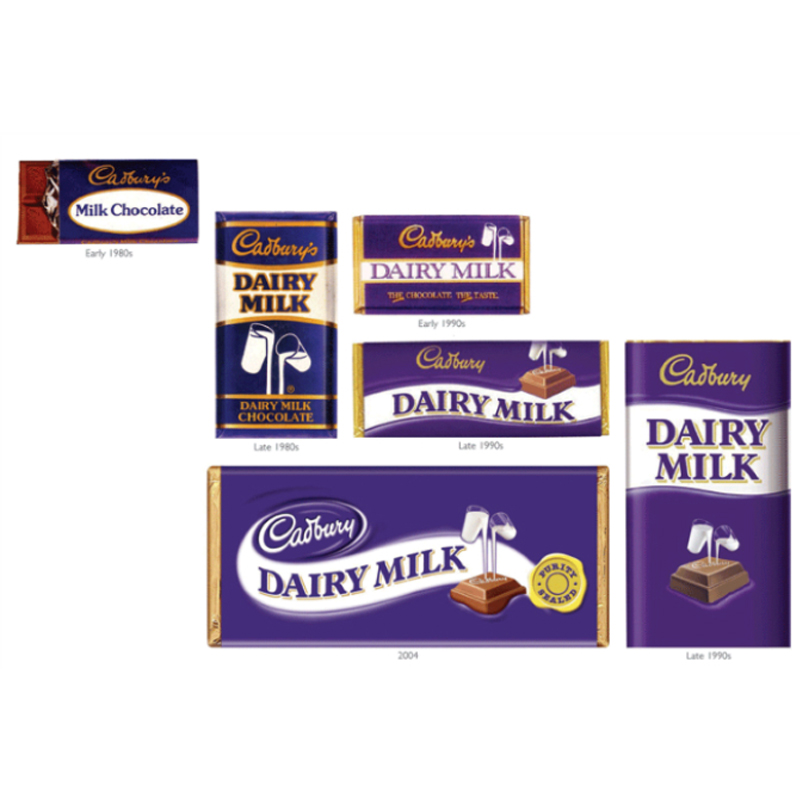
MUMBAI: What comes to your mind when you hear ‘kuch meetha ho jaaye?’ If you’ve been in India for the last two decades, you would instantly blurt out Cadbury. But the popular Indian chocolate has a 100-year-old history.
In June 1905 in England, Cadbury made its first Dairy Milk bar, with a higher proportion of milk than previous chocolate bars, and it became the company’s best-selling product by 1914. Cadbury India, now known as Mondelez India, began its operations in the country as early as 1948 by importing chocolates.
The Indian chocolate industry was worth Rs 58 billion at the end of 2014 and is predicted to reach Rs 122 billion at a compound annual growth rate of 16 per cent by 2019. According to the 2016 Euromonitor International report, the chocolate confectionery market in India is projected to grow at 8 per cent per annum between 2016 and 2021 to reach Rs 16,200 crore (on constant value) from Rs 11,256 crore in 2016, backed by better retailing across rural areas. Mondelez is the market leader in India’s chocolate space with more than 65 per cent market share and Cadbury Dairy Milk is its highest-selling product that has a market share of 41 per cent.

Mondelez India has given birth to some of the most memorable ads in its 70 years of existence in the Indian market with catch-phrases that come to us at the tip of our tongue—‘kuch khans hai zindagi mein’, ‘shubh aarambh’, ‘pappu paas ho gaya’, ‘aaj pehli tareek hai’ and ‘kiss me.’
All these notable campaigns are attributed to Ogilvy & Mather (O&M), an advertising agency that has been associated with the brand for over 26 years.
English was the medium of communication for Cadbury’s when the chocolate market was a niche in 1948. Mondelez India director of marketing for chocolates category Prashant Peres believes that all of Cadbury’s communication throughout the years has been about relations and bringing people joy in celebrating relations. While that has remained constant, what has changed is what the brand is trying to achieve with advertising.
“In the beginning, we were just trying to say that chocolate is a nice treat for kids but today Dairy Milk is a mass brand and it is a part of everyone’s heart. We have made a huge change in communication right from talking to kids to being occasion specific to now a casual consumption product,” he adds.
The brand has always been known for its loveable advertisements that make you want to sing along and do a little jig yourself. We take you down memory lane and explore how the brand communication for Cadbury Dairy Milk has changed and evolved over the years.
1993: The brand launched its first TVC in India in 1993 showcasing a teenage girl watching cricket in the stadium and then jumps into the ground, eating a Cadbury chocolate as soon as the cricketer hits a century.
1994: Another advertisement showed a to-be bride with henna on her hands, trying hard to open the wrapping of Cadbury chocolate with her elbows. The ad showed that teenagers too can enjoy a treat.
1999: With the tagline ‘khane walo ko khaane ka bahana chahiye’, the ad featuring popular video jockey Cyrus Brocha became an instant hit among viewers. The objective behind the communication was to make the chocolate category more socially and culturally relevant and drive penetration in the process as the penetration level of the chocolate category in 1999 was 19 per cent in the urban market at the time.
2002: This was when Cadbury changed its strategy. Having tapped all age-groups, it wanted to project Cadbury chocolates as a meetha – thereby trying to eat into the market of traditional Indian sweets. Advertisements were doled out showing Cadbury chocolate being enjoyed at every possible instance.
2003: With this ad, the company aimed to position the brand as not just an occasion-based chocolate but as more of a casual consumption habit with the ‘khush hoon khamakha’.
2005: Passing an exam always calls for a celebration and when Pappu finally does finally clear his 12th standard exams, it calls for a sweeter celebration. The new communication from Cadbury’s Dairy Milk extended the core promise of happiness to yet another ‘moment of joy’ in one’s life. The brand signed actor Amitabh Bachchan as a brand ambassador.
2008: In this ad, Cadbury vouches that pay day is always a reason to celebrate. The brand pays a tribute to the salaried employees by giving them another reason to celebrate the payday.
2009: The campaign showcased people living a fast life in the cities spreading happiness during the festival of lights among neighbours, the postman, the pizza delivery boy and many others who, though significant, are never valued for their little contributions that bring joy to one’s life. The core thought behind the new campaign is to surprise those who work unconditionally on Diwali day and at least expect their little gestures to be appreciated.
2010-2012: Cadbury by now had launched its campaign ‘shubh aarambh’ that was based on the concept of the Indian tradition of having something sweet before every auspicious occasion, with the belief that it leads to a favourable outcome.
2014: In a significant move, Cadbury decided to move away from its occasion-related brand positioning and to make chocolate consumption a casual habit with its tagline – ‘dil jo keh raha hai suno’. The campaign was in sync with Cadbury’s global proposition of ‘Free the Joy’.
2015: With an aim to change its communication, Cadbury launched this campaign showing the bonding between a saas and bahu (mother-in-law and daughter-in-law) duo. The ad shows a small-town mother-in-law and daughter-in-law strengthening their bond of friendship with a piece of chocolate.
2016: Mondelez International created animated ads as early as 1980’s in the United States and other markets but the concept came to India only in 2004 when Mondelez India (then known as, Cadbury India) decided to have an animation film to promote its new product. Cadbury introduced an animated alien series in 2016 to promote its product with #InterstellarParty where the aliens were thoroughly enticed by the chocolate. The song became an instant hit among viewers.
The brand stopped creating ads specifically for Cadbury Dairy Milk as its focus shifted to newer variants that the company launched in the market including Silk Oreo, Lickables and Cadbury Dairy Milk Silk.





NATIONAL: Amazon Ads has laid out a sharply tech-led vision for the advertising industry in 2026, arguing that artificial intelligence, streaming TV and creator partnerships will combine to turn brand building into a more precise, performance-driven business.
At the heart of the shift, the company says, is the fusion of AI with Amazon’s vast trove of shopping, browsing and streaming signals, allowing advertisers to move beyond blunt reach metrics to campaigns designed around real customer behaviour.
“The future of advertising is not about reaching more people, but the right people with messages that resonate,” said Amazon Ads India head and vice president Girish Prabhu. “By combining AI with deep customer insights, we help brands move from broadcasting campaigns to having meaningful conversations wherever audiences spend their time.”
One of the biggest changes, according to Amazon Ads, will be the collapse of the wall between media planning and creative development. Retail media, powered by first-party data, is increasingly shaping everything from brand discovery to final purchase, pushing marketers to design campaigns around audience insight rather than internal instinct.
AI is also moving from a support tool to a creative engine. Agentic AI, which automates and accelerates production, is expected to make high-quality creative accessible even to small businesses, compressing weeks of work into hours and giving challengers the ability to compete with larger brands on speed and scale.
Behind the scenes, AI-driven analytics will take on a bigger role in campaign optimisation, identifying patterns, spotting opportunities and recommending actions that would previously have required teams of analysts.
Streaming TV is another big battleground. With India’s video streaming audience now above 600 million and connected TV users at 129.2 million in 2025, advertisers are set to treat streaming not just as a branding channel but as a performance engine, measured increasingly by sales, sign-ups and bookings rather than just reach.
Finally, Amazon Ads sees creators and contextual advertising reshaping how brands tell stories. Creators will act less like influencers and more like long-term partners, while scene-aware ads on streaming platforms will allow brands to insert hyper-relevant offers into the flow of what viewers are watching.
Taken together, Amazon Ads argues, these shifts mark a move towards advertising that is both more human and more measurable, where AI handles the complexity, and creativity does the persuading.








