Brands
Honeygate: A sweet tale turns bitter for brands


KOLKATA: Honey is one of the most loved home remedies or immunity booster in Indian households. With the onset of Covid2019, the sweet miracle has attracted more Indian consumers, even global buyers. But a plot-twist has changed the narrative, as top brands in the category are allegedly adulterating the product with the addition of sugar syrup.
An investigation by the Centre for Science and Environment (CSE) has found that leading brands sell honey which doesn’t meet purity standards. Dabur, Patanjali, Apis Himalaya, Baidyanath, Zandu failed to clear the Nuclear Magnetic Resonance Spectroscopy (NMR) test. What’s more concerning is the fact that the business of adulteration has evolved to hoodwink stipulated Indian tests.
“The honey category stands stirred and shaken. Sugar syrup is sure an adulterant. The next time a consumer reaches out for a jar of honey, there is going to be suspicion around. And rightly so. The brand equity of the category is stirred,” Harish Bijoor Consults Inc. brand guru and founder Harish Bijoor said.

Will brand reputation and business suffer?
As the brand reputation of honey is based on health benefits, the controversy is not going to bode well for manufacturers. Brand consultant Shubho Sengupta stated that the category is very close to Indian families, unlike new age brands. Certainly, the consumers will be disappointed, thereby impacting the brand equity. Consumers might look at it as “tampering with Indian tradition,” remarked Sengupta adding that there are many emotions at play. However, it is hard to make out what would be the impact on sales.
Business strategist Lloyd Mathias echoed the sentiment, and noted that the addition of sugar syrup is damning, because consumers buy honey for its health benefits and some of the prominent brands like Dabur, Jandu, Patanjali being on the list is disheartening.
“Honey, as an overarching category, promises purity. If that purity comes under question, then it is a huge blow on the brands that are failing the test. Today, a lot of consumers must be thinking about what they are buying. It impacts large brands very badly. Last time when something like this happened, brands like Pepsi, Maggie had a tough time coming back,” pointed out Naresh Gupta, co-founder & chief strategy officer at Bang In The Middle. He added that food is a very high involvement category and consumers will not be quiet if they found anything wrong with what they consume.

Will this cause a long-term impact?
However, Alchemist Brand Solutions founder and managing partner Samit Sinha differed slightly. He went on to explain that many of these brands have a wide portfolio and honey is not their flagship product and not even the biggest contributor to their revenues. Moreover, the brands in the rejected list are very large, established, and riding on strong momentum. Hence, they have the ability to ride out the storm.
Moreover, a lot of developments happen but they are restricted to the intellectual community, and it is not certain if this one will actually reach the target consumer – the middle-class Indian housewives, he noted.
“Our expectations on substantiating claims and superior products have been historically far-fetched and the attitude on the ground has been more like 'adjust karlenge'. Also, the impact on the category will be short-term as the consumer mindset is like 'aisa toh sab karte hain' (everyone does this), so it is a possibility that people will get over it,” Sinha added.
Mathias, too, held the view that while the report may cause a bit of a hub-bub now, public memory is short-lived. But if these brands don’t go and correct themselves, they will continue to lose in terms of consumers’ faith.
“The only good thing is the brands will hopefully address the issue and will make sure they are not adulterating natural honey,” he said. Sinha’s also optimistic that one good thing that will emerge from the incident is that the brands will no longer sell fabricated products but superior products.
However, after a huge face loss, the brands have started defending themselves. According to Gupta, these companies cannot debunk the claim just by releasing an ad saying “I am pure,” because the whole report has been covered widely across media. They will have to put their money where their mouth is to win back the consumers’ trust.
While the experts agree that CSE is a reputed organisation which has carried similar movements in the past, Sengupta mentioned that consumers will, unfortunately, believe the brands’ claims because brands like Dabur will spend huge to kind of own the narrative. Very few consumers will care about an NGO report unless the competitors promote it.

Will it help the brands that passed the test?
You can count on one hand the number of brands that passed the quality test, among them being – Marico’s Saffola Honey, Markfed Sohna and Nature's Nectar. These products will jump in to maximise the impact, acknowledged Sengupta. Mathias concurred, adding that it is a positive endorsement for those brands. “Those two-three brands will be preferred hugely and they might come up with campaigns. That will bring a systematic change in the category. It’s a category dominated by heritage players for a very long period but suddenly the category will change,” Gupta commented.
Saffola lost no time in tooting its horn and advertising the fact that it “has launched the best quality honey in its purest form” in India.
“Every batch of Saffola Honey is tested using NMR (Nuclear Magnetic Resonance) technology, which is one of the most advanced tests in the world, in the best in class laboratories to ensure that it is 100 per cent pure, free from added sugars and free from any form of adulteration. Saffola Honey is produced at a USFDA registered plant with state-of-the-art technology ensuring robust quality checks and controls. Saffola Honey is also compliant with each of the quality parameters mandated by FSSAI,” a Marico spokesperson said.
Right now, the biggest brands producing honey are like the magician whose best trick has been suddenly exposed for what it is – a sleight of hand. It will be interesting to see how the magic syrup makes its comeback.






Brands
SatLeo Labs raises $5.5m seed funding led by Unicorn India Ventures
Fresh capital to power thermal satellite mission and AI data platform
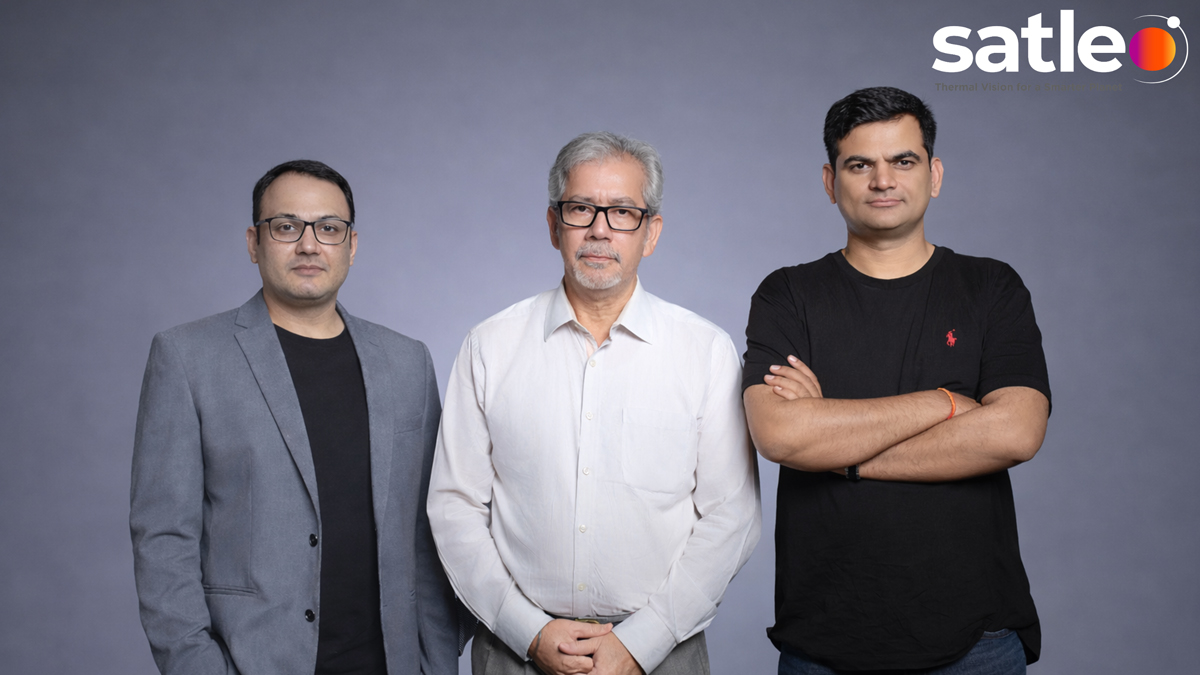
MUMBAI: SatLeo Labs has raised $2.2 million in a fresh seed round led by Unicorn India Ventures, taking its total funding to $5.5 million as it steps up efforts to scale its space-based thermal intelligence platform.
The funding round also saw participation from existing backers including Merak Ventures, Java Capital, IIMA-CIIE and deep-tech investor Manish Gandhi.
The capital will be used to accelerate SatLeo’s flagship thermal satellite mission and further develop its AI-powered platform designed to deliver high-resolution thermal and visible data from low Earth orbit. The company aims to turn this data into actionable insights for sectors ranging from climate monitoring to urban planning.
Over the past year, SatLeo has scaled rapidly, growing its team from 8 to 30 specialists across satellite engineering, thermal sensing and AI-led geospatial analytics. It has also achieved a key milestone with the development of its first experimental payload, TAPAS-1, which reached near flight-ready status within six months and is now positioned for launch.
On the ground, the startup has begun translating its technology into real-world use cases. Pilot projects in cities such as Ahmedabad and Tumakuru have focused on monitoring urban heat islands and air pollution, impacting over 400,000 citizens. At the same time, its commercial pipeline has expanded sharply, with letters of intent rising from around $15 million to over $42 million within a year.
SatLeo Labs co-founder and CEO Shravan Bhati said, “Sustainability has become imperative amid accelerating climate change and rapid urbanisation. This fundraise represents a critical milestone as we move into the execution phase of our next mission.”
He added that the company is focused on scaling its satellite constellation and enhancing payload performance to deliver thermal intelligence at a global level.
Backing the startup, Unicorn India Ventures managing partner Bhaskar Majumdar said, “Space is an arena where the next wave of technological innovation will emerge. SatLeo’s ability to combine thermal and visible satellite data into real-time insights positions it strongly for long-term growth.”
Looking ahead, SatLeo plans to focus on launch readiness, expanding commercial deployments and scaling its technology stack over the next 12 months.
As demand for climate and environmental intelligence grows, SatLeo’s latest fundraise signals rising investor confidence in space-tech solutions that bring data from orbit down to everyday decision-making.






