Brands
Honda expands India lineup with 10 new motorcycles and scooters
Seven new models and three updates span ICE, EV and flex-fuel segments


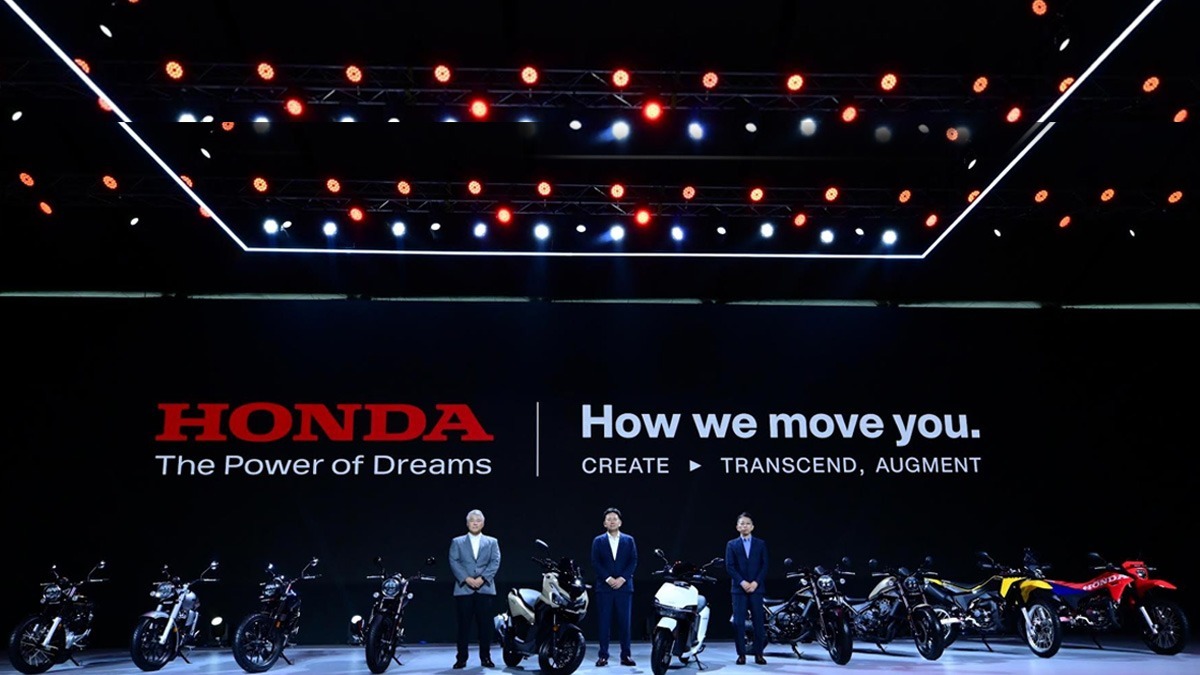
MUMBAI: Honda has shifted into top gear and it’s bringing almost every kind of rider along for the ride. Honda Motorcycle & Scooter India (HMSI) has unveiled an expanded portfolio of 10 motorcycles and scooters for the Indian market, broadening its presence across adventure touring, cruisers, roadsters, electric mobility and flex-fuel technology as consumer demand moves beyond basic commuting.
The new portfolio comprises seven all-new models and three refreshed motorcycles with updated colour options, reflecting Honda’s strategy of offering products across multiple price points and riding styles while deepening localisation in India.
The company said the latest lineup also marks a significant milestone in strengthening its product development, engineering and manufacturing capabilities in the country, while improving access to Honda’s global technologies through greater local sourcing.
The launch comes as India’s two-wheeler market continues to evolve, with buyers increasingly seeking motorcycles and scooters that reflect their lifestyles alongside traditional priorities such as affordability, fuel efficiency and lower ownership costs.
Leading the announcements is the Honda ADV 160, positioned as a City Adventure Scooter. Powered by a 160cc water-cooled engine, it combines adventure-inspired styling with everyday practicality. Honda said it will become India’s first scooter capable of running on up to E85 fuel, while offering an 8.1-litre fuel tank and 27 litres of under-seat storage, both claimed to be segment-leading.
Honda also introduced the CB 500, described as a heritage roadster powered by a 501cc single-cylinder air-cooled engine with an oil cooler. The motorcycle will be offered in three variants—Alloy, Spoke Tubeless, and Spoke Tubeless with graphics.
The company’s modern classic range has also received an update, with the CB350, CB350RS and CB350C getting new colour options while retaining their existing mechanical package.
For cruiser enthusiasts, Honda unveiled the Rebel 300 and Rebel 500, both featuring bobber-inspired styling. The Rebel 300 is powered by a 286cc liquid-cooled engine, while the Rebel 500 uses a 471cc liquid-cooled parallel twin engine. Both motorcycles will be available in Standard and E-Clutch variants.
Expanding its adventure motorcycle range, HMSI also showcased the XR 300L, powered by a 293.5cc air-cooled engine with an oil cooler, alongside the XR 300 Rally, a rally-inspired motorcycle designed for long-distance touring and mixed-terrain riding.
On the electric mobility front, Honda introduced the QC3, a family-focused electric scooter equipped with a 3 kWh battery delivering a claimed IDC-certified range of 151 km. The scooter can be charged to 80 per cent in two hours and 40 minutes and comes with 32 litres of under-seat storage, a Smart Key, and a 5-inch TFT instrument cluster with connected features.
The company also announced that select models across the new portfolio will feature Honda E-Clutch technology, which automatically controls clutch operation to make riding easier in heavy traffic and stop-start conditions.
Speaking at the unveiling, Tsutsumu Otani, President and CEO of HMSI, said India remains one of Honda’s most strategic global markets and that the expanded portfolio reflects the company’s multi-pathway approach, spanning advanced internal combustion engine models, electric vehicles and flex-fuel technologies while strengthening its ‘Make in India for the World’ strategy.
Mutsuo Usui, Director of Sales and Marketing, said the broader lineup is aimed at customers looking for motorcycles and scooters that match both their mobility needs and lifestyle aspirations, whether for daily commuting, weekend touring or leisure riding.
HMSI said the 10 models will be introduced in phases, with launch dates, prices and market availability to be announced closer to their respective introductions. The expanded range signals Honda’s intention to compete across a wider spectrum of India’s rapidly evolving two-wheeler market, where choice is increasingly becoming as important as cost.