Brands
Heritage Foods Ltd partners with SIG

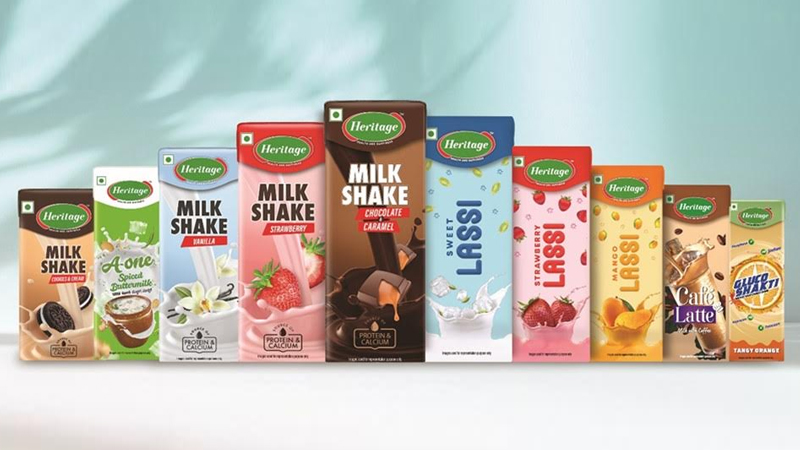
Mumbai: Heritage Foods Ltd has partnered with SIG to package its beverages in aseptic carton packs. SIG has supplied Heritage Foods Limited with state-of-the-art, highly flexible filling solutions and innovative aseptic packaging, that will help position the company to meet evolving consumer needs.
Heritage Foods Ltd has installed an SIG XSlim 12 Aseptic filling machine at its manufacturing unit in the Medchal−Malkajgiri district of Telangana. The filling machine can fill 12,000 SIG XSlimBloc carton packs per hour and has the flexibility to fill nine different volume sizes (from 80ml to 200ml) on the same filling line – and it takes less than 15 minutes to complete the volume change. This will help Heritage to reach diverse consumer groups targeting different price points.
Heritage Foods Ltd vice chairperson & managing director Bhuvaneswari Nara said, “At Heritage Foods, our core promise is to delight our consumers with our products and deliver health and happiness. With the commissioning of the new line from SIG, we will be launching a wide range of products that cater to the numerous taste preferences of our consumers – from sweet and indulging milkshakes, to refreshing spiced buttermilk. We value our partnership with SIG as we share common values of sustainability and convenience.”
Heritage Foods Ltd executive director Brahmani Nara said, “At Heritage Foods, we strive to continually grow our value-added products and one of the most critical segments for driving growth is the drinkables for us. In the drinkables segment, growth depends on innovation and distribution expansion and the interplay between the two. This is where the new SIG line is going to make a difference. With the filling technology in place, we can create a wider range of drinkables, and the variable pack sizes allow us to have the same product at multiple attractive price points and open up new consumer segments, which was not possible before our partnership with SIG.”
Like all SIG carton packs, SIG XSlimBloc carton packs have a high share of forest-based renewable materials, a lightweight and space-saving design, are produced using 100% renewable electricity, and designed to be fully recyclable. Heritage Foods Limited will utilize SIG’s packaging solutions to fill a wide range of its beverages. This will include different flavors of lassi, buttermilk, cold coffee, milkshakes, whey-based energy drinks, and UHT Milk.
IMEA president & general manager at SIG Abdelghany Eladib said, “With Heritage Foods Limited’s strong position in the South Indian market and our innovative packaging solutions, we will be able to diversify the packaging landscape in India. This partnership is designed to boost growth for both companies and will help Heritage Foods Limited gain the flexibility to respond quickly to shifting market demands, while allowing SIG to further expand its presence in the Indian market. We are delighted to partner with Heritage Foods Limited and look forward to a long and fruitful journey ahead.”
Vandana Tandan, head of markets, India and Bangladesh at SIG: “We are excited to be working with Heritage Foods Limited. By using our advanced and innovative packaging solutions and flexible filling technology, the dairy company is excellently positioned to diversify its offering, respond quickly and efficiently to changing market requirements, and seize the opportunities from the strong demand for on-the-go products that the Indian market is currently experiencing.”







