Brands
HCLTech delivers Rs 24 dividend as revenue hits Rs 1.3 lakh crore
IT giant delivers solid growth for shareholders with a major payout despite navigating global market shifts.


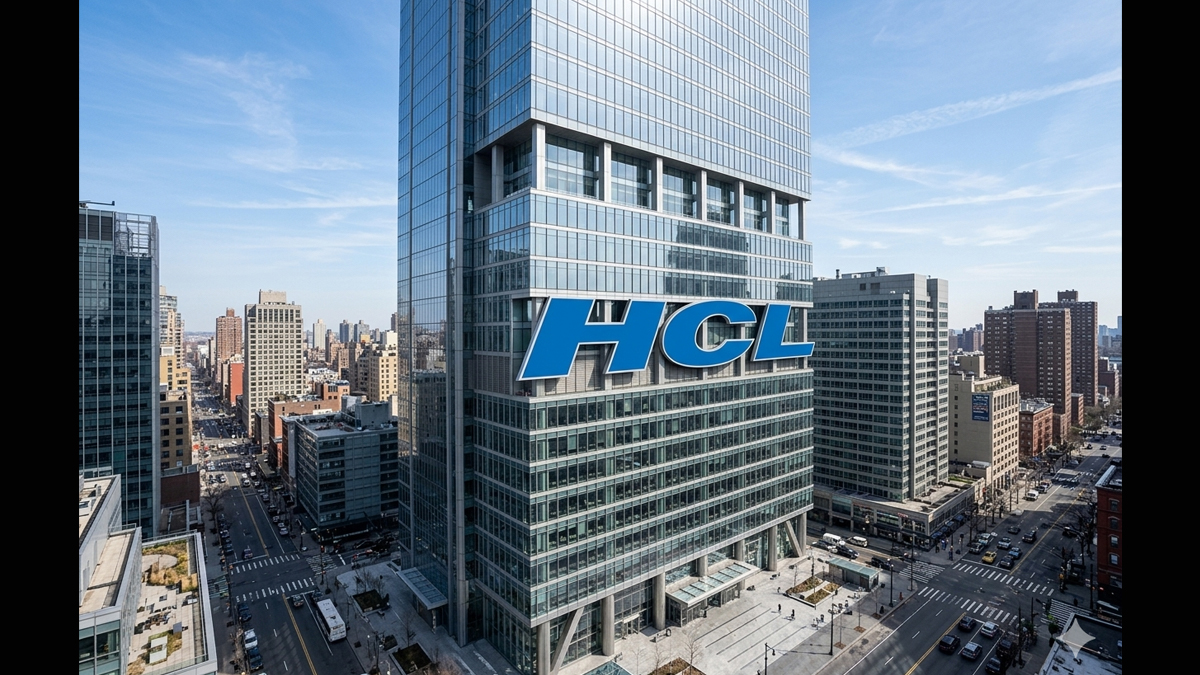
MUMBAI: HCLTech has clearly found the right code for financial success, proving that its operational strategy is more than just a quick fix for the digital age. The technology titan’s board of directors officially signed off on their year-end deliberations on 21 April 2026, revealing a set of annual results that suggest the company’s growth trajectory remains well-buffered against economic volatility.
The primary highlight for investors is the declaration of an interim dividend of Rs 24 per equity share (on a face value of Rs 2) for the 2026–27 financial year. Shareholders will not have to wait long for the processing of these funds; the record date is set for 25 April 2026, with payments scheduled to be completed by 5 May 2026. This follows a total dividend of Rs 54 per share already distributed during the 2025–26 fiscal year.
The consolidated annual results show a company operating at a high frequency across its global markets. Total revenue surged to Rs 130,144 crore for the year ended 31 March 2026, a significant jump from the Rs 117,055 crore recorded the previous year. Net profit remained robust at Rs 16,652 crore for the full year, despite a slight dip from Rs 17,399 crore seen in 2025. Quarterly performance also reflected steady momentum, with Q4 revenue reaching Rs 33,981 crore and net profit at Rs 4,490 crore, compared to Rs 30,246 crore in revenue during the same period last year.
The company’s diverse service portfolio played a balanced role in this financial performance. IT and Business Services remained the primary engine, contributing Rs 96,094 crore to annual revenue. Engineering and R&D Services showed strong growth, climbing to Rs 22,056 crore for the year, while HCL Software maintained a consistent stream of Rs 11,994 crore.
It was not entirely smooth scrolling, as the company had to account for specific financial hurdles. HCLTech faced a one-time impact of Rs 956 crore due to the New Labour Codes. Additionally, total expenses for the year rose to Rs 108,616 crore. This was largely driven by employee benefits, which reached Rs 74,143 crore, a figure that reflects the ongoing high costs of securing top-tier tech talent in a competitive market.
On the standalone front, the company reported a profit before tax of Rs 10,024 crore for the year. However, the final quarter saw a standalone loss of Rs 900 crore, which the company attributed to a material Bilateral Advance Pricing Agreement (BAPA).
Despite the rise in costs, HCLTech’s financial “cache” remains substantial. Total assets grew to Rs 116,258 crore as of 31 March 2026, compared to Rs 105,544 crore a year earlier. The company’s cash and cash equivalents stood at a healthy Rs 8,195 crore at year-end, providing ample bandwidth for future investments and expansion.
As the global tech landscape continues to shift, HCLTech appears to have the right architecture to maintain its performance, ensuring that for its investors, the future remains highly user-friendly.