
Brands
Hair loss concerns start young as Indian men seek help in their 20s and 30s: Man Matters
Over 7 lakh consultations show younger men spot receding hairlines before thinning


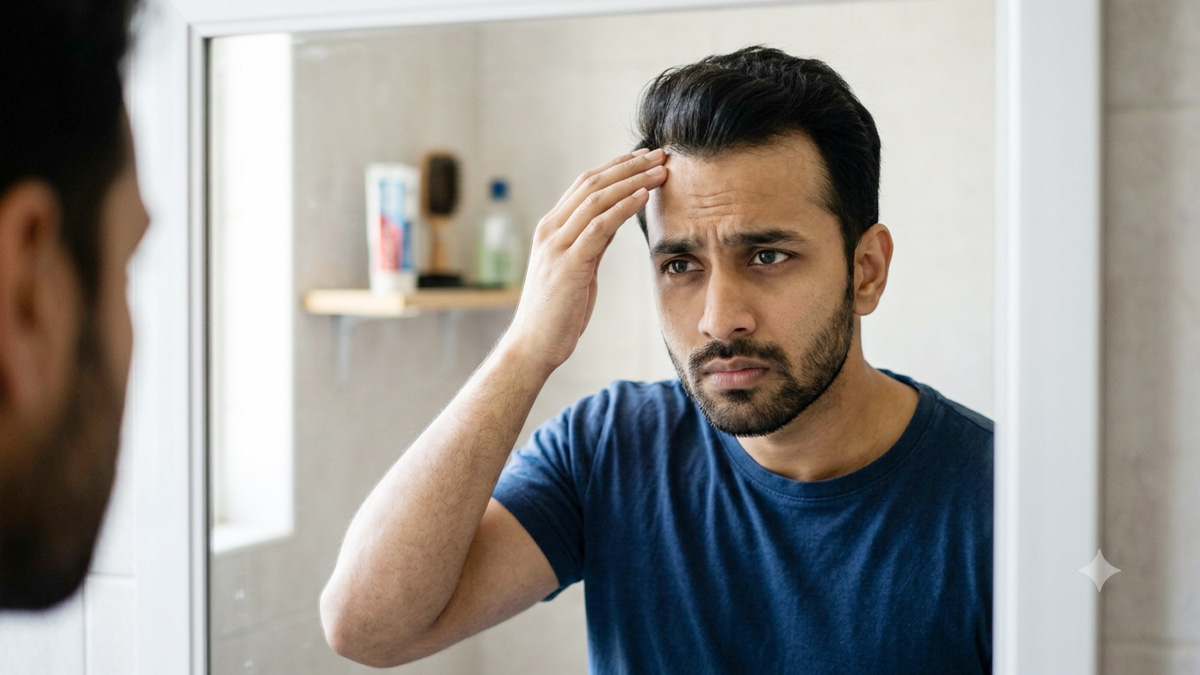
MUMBAI: Hair today, worry tomorrow? A new analysis of more than seven lakh consultations suggests Indian men are seeking professional help for hair loss relatively early, but often only after the problem has progressed.
The Man Matters Hairfall Index 2026, based on 704,152 consultations conducted between August 2025 and August 2026, found that 87.2 per cent of hairfall consultations came from men under 35. Men in their 20s accounted for the largest share of the consultation base, highlighting how concerns around hair loss are emerging well before middle age.
The analysis by Man Matters looks at how men across India describe their hair concerns, how those descriptions change with age and when they seek professional consultation.
However, seeking help young does not necessarily mean catching hair loss at its earliest stage. Among consultations where a doctor recorded a Norwood stage, 65.2 per cent of men were at Stage 3 or higher at the time of consultation.

The data also shows that what men notice about their hair changes with age.
Among men below 25, a receding hairline was the more common concern, accounting for 18.8 per cent of descriptions, compared with 14.5 per cent for thinning.
After 35, the pattern reverses. Thinning and low volume accounted for 19.6 per cent of concerns, while receding hairline fell to 14.6 per cent.
In other words, younger men tend to notice their hairline first, while older men are more likely to describe a loss of volume, which can refer to thinning around the crown and top of the scalp.
“87 per cent of Indian men who consult for hair loss are under 35. Two in three are already at Stage 2 or beyond by the time they do. Wherever you are, the earlier a doctor sees it, the more options you have,” said Dr Sumit Upadhyay.
The findings also underline that “hairfall” is not a single condition. Pattern hair loss, or androgenetic alopecia, is linked to genetics and the sensitivity of hair follicles to DHT and can begin after puberty. Temporary shedding, known as telogen effluvium, can occur following factors such as stress, illness or other health changes and may improve once the underlying trigger is addressed.
The consultation data cannot establish which cause applies to an individual.
The report takes a broader view of hair health, with consultations considering factors including lifestyle, nutrition, stress, overall health, scalp condition and everyday hair-care practices. Doctors also assess hair history, recent health or lifestyle changes and the nature and pattern of the concern.
Importantly, the Hairfall Index is not a measure of hair-loss prevalence among India’s wider male population. Its dataset covers men aged 18 to 60-plus who chose to consult online for a hair, scalp or skin concern.
Concern categories were created from the descriptions submitted during intake, with similar phrasings grouped together. Where available, hair-loss stage was taken from the doctor’s consultation record.
The findings therefore point to patterns among men seeking help rather than establishing how common hair loss is among Indian men overall. They also show association rather than causation and cannot determine the underlying cause of hair loss for any individual.
For men, the takeaway from the dataset is less about counting lost strands and more about when those concerns become significant enough to seek professional advice.






