MAM
GUEST COLUMN: Performance marketing is a discipline, not a shortcut
The case for structured, data-led growth over short-term gains

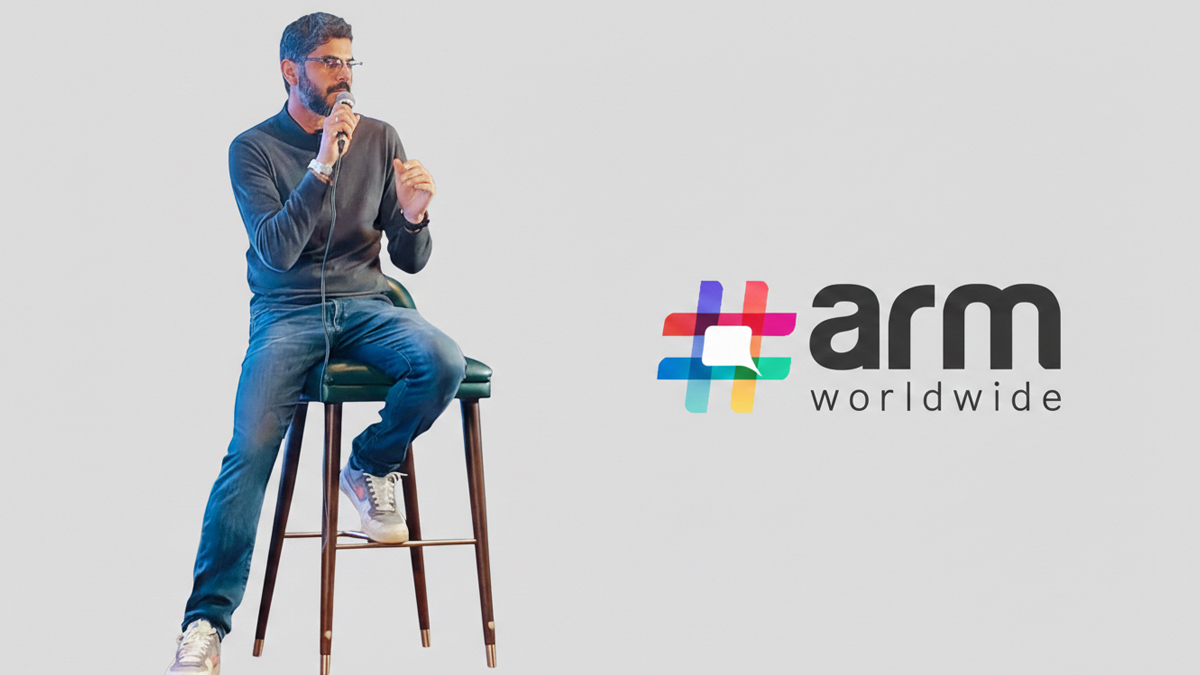
MUMBAI: Performance marketing is often seen as a quick route to scale, but Abhishek Punia, co-founder and CEO of ARM Worldwide, argues that it is not a shortcut, but a discipline that demands structure, financial clarity, and long-term thinking. Drawing on the evolution of digital acquisition and the lessons from brands that scaled too fast, he highlights how performance marketing can either build sustainable growth or expose fragile unit economics, depending on how it is governed.
In this piece, Punia explains how performance marketing has moved beyond simple funnel tactics to become a learning system and capital allocation engine. He explores the growing convergence of branding and accountability, and why organisations that balance data-driven performance with sustained brand investment are better positioned to create durable, profitable growth.
Over the past decade, performance marketing has powered some of India’s fastest-scaling consumer brands. Digital acquisition, precision targeting, and aggressive media investment enabled companies to unlock rapid revenue growth. For many organisations, dashboards replaced intuition and ROAS became the dominant measure of success.

Yet speed does not automatically create strength.
Brands that scaled rapidly through acquisition-led strategies often discovered that efficiency alone can produce fragile growth when retention weakens, margins compress, or media costs rise. Others that balanced accountable acquisition with sustained brand investment built more resilient economics. The contrast reveals a structural truth. Performance marketing can accelerate expansion, but it does not guarantee durability. The defining question is not whether it works, but how it is governed. Is it used as a tactical lever for rapid scale, or as a disciplined system for building long-term value?
To answer this, we must examine what performance marketing represents inside the business, not just inside the media plan.
Beyond funnel labels
Performance marketing is often reduced to a question of placement. Is it top-funnel or bottom-funnel? Is it awareness or conversion? These questions, however, miss the larger point. The real distinction lies not in where it operates, but in how it operates. At its core, performance marketing introduces accountability into the marketing ecosystem. Every investment is tied to a defined outcome. Every campaign is evaluated against measurable business impact. It shifts marketing from exposure-based thinking to result-based thinking.
Historically, ATL (above the line) built reach and mental availability at scale, while BTL (below the line) focused on direct response. The funnel model connected these efforts through a largely sequential journey from awareness to purchase. Those structural categories still exist, but digital ecosystems have blurred their boundaries. Measurement now travels across the entire journey. Performance marketing today functions as a continuous feedback mechanism. Audience behaviour generates data. Data informs optimisation. Optimisation improves efficiency. This loop repeats, creating an evolving system rather than a one-time campaign push.
When practised with rigour, performance marketing strengthens capital allocation. It ensures that expansion does not outpace profitability. When used only as a scaling lever, it can create the illusion of momentum while masking fragile unit economics. In this sense, discipline means three things: clarity on financial metrics, structured experimentation across channels, and alignment between marketing, finance, and product. Without these elements, performance becomes activity. With them, it becomes strategy.
The new growth approach
What began as a measurable acquisition tool has evolved into a structured approach to growth. Today, its value lies not only in driving conversions, but in shaping how organisations learn from data and how they scale with financial discipline.
Performance as a learning system
The true competitive edge in performance marketing lies in learning velocity. Access to media platforms and targeting tools is widely available. Differentiation no longer comes from access. It comes from interpretation and iteration.
Data functions as a strategic asset rather than a reporting output. Each click, purchase, abandonment, and repeat transaction reveals insight into intent, price sensitivity, creative resonance, and channel productivity. High-performing teams convert these signals into structured testing frameworks. Creative variables, audience definitions, landing experiences, offer structures, and bidding logic are continuously evaluated and recalibrated.
Over time, competitive strength compounds not because of isolated optimisations, but because the organisation institutionalises learning as an operating capability.
Targeting has evolved accordingly. Behaviour-led personas, powered by first-party data and predictive modelling, increasingly replace broad demographic buckets. Industry research consistently suggests that AI-driven personalisation can increase conversion rates by 20 to 30 percent compared to generic campaigns, underscoring how relevance has become a measurable criterion. Growth is no longer driven by isolated campaign wins. It is driven by the robustness of the learning system behind them.
Performance as a scalable engine
The real evolution in performance marketing is not about faster optimisation. It is about smarter allocation of capital.
Success is increasingly evaluated through lifetime value, cohort durability, retention strength, and payback timelines rather than immediate ROAS alone. The rise of retail media ecosystems such as Flipkart and Amazon reflects this shift, where commerce data, search intent, and sponsored placements converge to create accountable growth environments.
As intent data concentrates within closed platforms, competitive pressure within auction systems intensifies, shifting bargaining power toward platforms and increasing the importance of margin discipline and differentiation for brands.
Automation platforms such as Google Performance Max and Meta Advantage plus further embed machine-led bidding and creative optimisation into this system. However, as optimisation becomes increasingly algorithmic, tactical advantages compress, and strategic clarity becomes the primary differentiator. First-party data strategies allow brands to prioritise higher-value customers over one-time conversions, aligning acquisition with long-term profitability. Even creative strategy is increasingly evaluated for its contribution to engagement depth and repeat behaviour.
In this context, performance marketing operates not as tactical media buying, but as a structured engine for scalable and financially sound growth.
The convergence of branding and accountability
If performance marketing determines how efficiently capital is deployed, branding determines the quality and readiness of the demand that capital seeks to convert. Optimisation can sharpen targeting, refine bids, and improve creative delivery, but it operates within the boundaries of existing perception. It can capture intent, but it cannot independently build sustained preference.
Branding builds mental availability well before the purchase moment. Through consistent messaging, experience design, and cultural presence, it shapes how consumers evaluate value. When familiarity and trust are already established, performance channels require fewer touchpoints and less persuasion to convert. This is why high-salience brands often demonstrate stronger and more stable acquisition economics. Global players such as Nike and Indian platforms such as Zomato and Blinkit, invest continuously in brand experience and ecosystem depth. Their performance activity does not compensate for weak perception. It amplifies equity that has already been built. Conversion is supported by recognition, perceived value, and repeat behaviour rather than short-term incentives alone.
The relationship is structural. Branding shapes predisposition over time. Performance converts that predisposition into measurable revenue. An endurance race offers a useful parallel. The pace visible on race day reflects months of preparation and conditioning. Speed may attract attention, but endurance determines sustainability. In the same way, performance tactics can generate immediate spikes, but sustained branding investment supports output across cycles of competition and rising media costs.
When branding and performance operate in convergence, growth becomes less reactive and more compounding. Performance delivers acceleration. Branding ensures that acceleration remains sustainable.
What endures in the end
The real distinction is not between speed and patience, but between execution and governance. At its most mature, performance marketing is not a campaign tactic but a framework for decision-making. It enforces clarity in capital allocation, aligns marketing with finance and product, and exposes weak unit economics early. Shortcuts optimise for immediate outcomes. Discipline builds operating systems that sustain value creation across cycles.
Performance marketing does not manufacture durability. It magnifies whatever discipline already exists within the organisation. That is why it is not a shortcut. It is a structured path to growth that can endure.






MAM
PwC India announces leadership change in Deals practice
Shashank Jain steps down as co-leader after nearly three decades with the firm.

MUMBAI: When one dealmaker steps off the pitch, another is ready to take the baton because in the fast-moving world of transactions, the game never really stops. PwC India has announced a leadership transition in its Deals practice, with Shashank Jain stepping down from his role as co-leader to pursue an opportunity in the industry. The practice will continue to be led by Mohit Chopra, ensuring continuity and sustained growth momentum.
PwC India partner and leader for advisory dinesh Arora paid tribute to Jain’s contributions. “We deeply appreciate the significant contributions made by Shashank over close to three decades he has spent with PwC, particularly his defining role in shaping and strengthening our Transaction Services practice in India,” he said. Arora highlighted Jain’s support for clients through some of the most complex and significant transactions in the Indian market, noting his deep technical expertise, sound judgment and nuanced understanding of the evolving M&A landscape.
The Deals practice remains a key growth driver for PwC India, and the firm expects continued expansion under Mohit Chopra’s leadership. He will continue to guide clients through complex transactions and transformational business moments, building on the strong foundation established over the years.
Reflecting on his journey, Shashank Jain said, “I have had an exceptional journey at PwC. I owe my growth and learning to the nurturing environment and leadership development that PwC provided.” He added that he had been working closely with Mohit and the larger team to ensure a smooth transition and expressed confidence that Chopra would take the Deals practice to newer heights.
From intern to respected deals leader, Shashank Jain has clearly closed many successful transactions and now, it seems, he’s ready to strike a new deal of his own.