MAM
GUEST COLUMN | How India’s youth Is becoming more technology-driven
From passive users to independent creators, Primebook’s co-founder charts how digital natives are rewriting the rules of learning, making and working


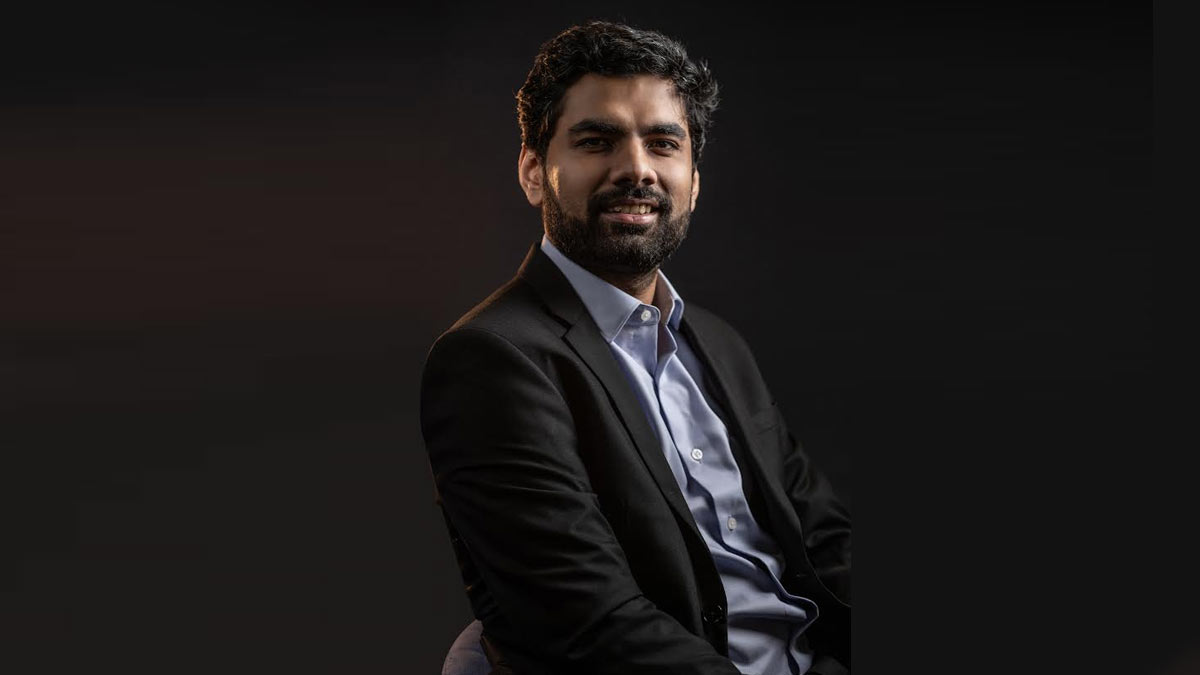
DELHI: Aman Verma is co-founder and chief operating officer of Primebook India, a full-stack deeptech startup he built alongside Chitranshu Mahant, a fellow IIT Delhi alumnus, since 2017. Primebook has grown from a two-member founding team into a 60-plus member organisation, and its journey included a stint on Shark Tank India, where it secured investment from Aman Gupta, co-founder of boAt. At the core of the company’s offering sits PrimeOS, India’s first Android-based laptop operating system, developed entirely in-house and powering the Primebook 2 Neo, Pro and Max lineup. The company has crossed 100,000 users, holds a 4.4 out of 5 rating across Amazon and Flipkart, has partnered with over 300 schools and NGOs, and is backed by Infotel Business Solutions, Auxano Capital, VCATS, Uneecops Technologies, Inflection Point Ventures and reputed HNIs. Verma himself was recently honoured as Visionary and Trusted Entrepreneur of the Year 2025 at the Great Indian Entrepreneur Awards. In this article, he talks about how India’s youth is becoming more technology-driven, and what that shift means for the way personal computing needs to evolve.
Ask a young Indian what they use technology for today and the answer is unlikely to be just one thing. The same phone or laptop can be used to attend a class in the morning, learn a new skill in the afternoon, work on a project in the evening and watch a video before going to bed.
Much of this shift has happened gradually, but it has changed what young people now expect from technology. Technology has moved from being something young people used for specific tasks to something that sits within almost every part of their day. For today’s young users, technology is becoming less of a tool they use and more of an environment they operate in.
That’s perhaps why young people are beginning to expect more from it.
Young Indians are learning on their own terms
For a long time, learning outside the classroom meant finding a book, joining a coaching class or asking someone who already knew the subject. The internet has added many more options.
A student struggling with a mathematics problem can find an explanation online. Someone interested in graphic design can learn from tutorials and practise using digital tools. A young person preparing for a job can take an online course or learn a skill that may not be part of their college curriculum.
The important change is that learning is no longer limited to what is available through formal education.
Young people can decide what they want to learn and, in many cases, find a way to start learning it immediately. This is gradually making independent learning an important part of growing up in a digital environment.
From audiences to participants
There is another shift taking place. Young Indians are not only consuming digital content. Many are creating it.
A student can start a small YouTube channel, a freelancer can build a portfolio online, and someone with an idea for a business can reach customers through digital platforms without having a physical store.
The tools required to create have also become easier to access. Editing a video, designing a poster, writing a blog or putting together a presentation no longer requires a specialised setup in the way it once did.
This is changing the relationship young people have with technology. A device is increasingly expected to help them make something, not just watch or read something made by someone else.
Digital confidence matters
Having access to technology is one thing. Knowing what to do with it is another.
A young person who is comfortable searching for information, learning a new tool, creating a document or working with others online is better equipped for both education and work.
Digital confidence does not mean knowing every new tool. It is the confidence to figure things out when a new tool comes along.
That ability is becoming particularly important because the technology people use today may not be the technology they use five years from now. The platforms will change, new forms of AI will emerge and the nature of work will continue to evolve.
The ability to learn and adapt may therefore matter more than knowing one particular tool.
Young users barely think in specs. They think in outcomes.
Young people look at personal technology very differently today.
Specifications still matter but they are only part of how young users evaluate a device. Young users also want to know whether a device can keep up with the things they actually want to do.
Can they attend a class and take notes at the same time? Can they work on a presentation while researching information? Can they edit content, use multiple applications and move between different tasks without the device becoming difficult to manage?
These are practical questions, and they are becoming more important as computing becomes central to education, work and creative pursuits. Young users are also increasingly moving between roles. A student can be a creator, freelancer, researcher or entrepreneur, sometimes within the same day.
A good device should therefore not require a user to understand the technology behind it before they can make use of it. The experience should help them get started.
Some things still need more than a touchscreen
Smartphones have made digital access easier for millions of people, but they cannot replace every form of computing.
There is a difference between replying to a message on a phone and writing a long report. There is a difference between watching a tutorial and creating a presentation while researching a topic. A larger screen, keyboard and a more flexible computing environment can make a real difference when the task becomes more involved.
The opportunity now is to make that experience simpler and more approachable, particularly for people who are using a computer not just for consumption, but as a tool for learning, creating and working independently.
India’s next generation won’t just use technology. They’ll build with it.
India’s young population will be an important part of the country’s digital future. Many will enter workplaces where technology is already deeply embedded, while others will use digital tools to build businesses of their own.
Technology companies therefore have to understand that young users are not one uniform group. A college student, a creator, a freelancer and a first-time professional may use the same device very differently.
What they share is a desire to do more with the technology available to them.
International Youth Day is a reminder that preparing young people for the future goes beyond formal education. It also means giving them the confidence and skills to use technology, adapt to change and create opportunities for themselves.
At Primebook, we believe personal computing should support that ambition by giving young users the freedom to learn, create and explore without making technology itself a barrier. The next generation of Indian users will not simply be consumers of technology. Many will build with it, work through it and create opportunities around it. The products we build today should be ready for that generation.