
MAM
GUEST COLUMN | How CXOs should measure success in the era of SEO, AEO, and GEO
As AI answers shape shortlists before a single click, AdLift’s Prashant Puri sets out a three-layer framework to measure discovery, representation and understanding


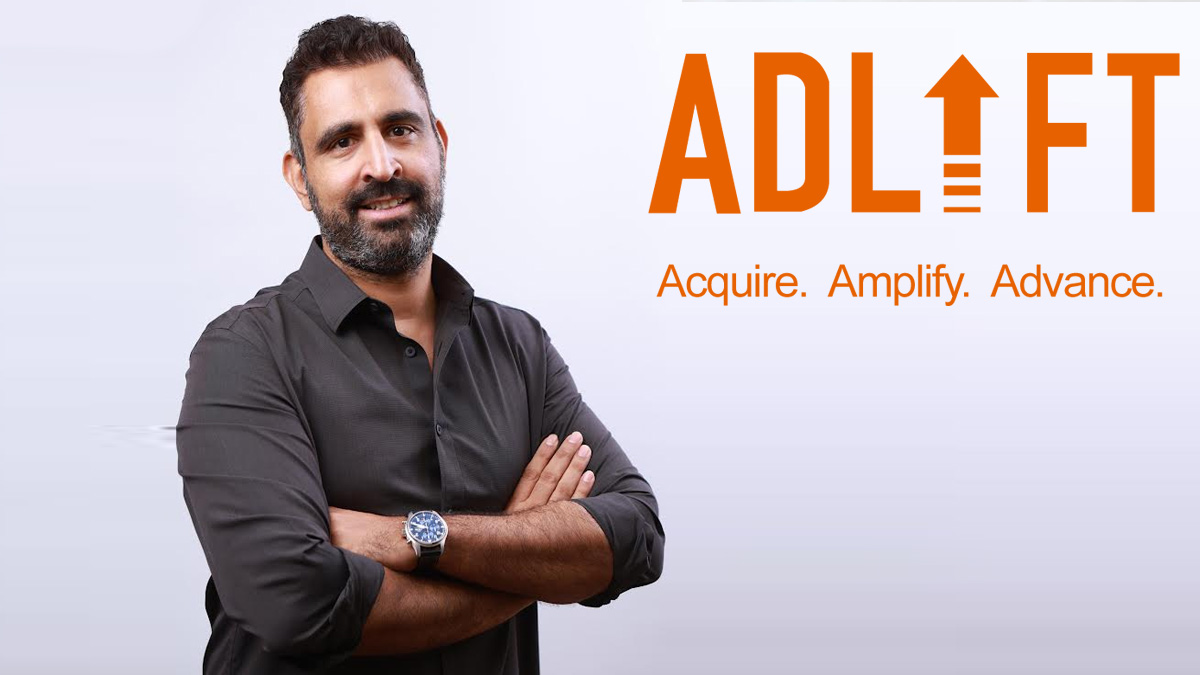
CALIFORNIA: Prashant Puri is a seasoned marketing professional with over 17 years of online experience and a proven track record of increasing traffic and monetising it. He has been CEO and co-founder of AdLift since March 2009. He led the growth of AdLift from a startup to a $10M+ ARR global performance agency specialising in SEO and performance marketing, and led its acquisition by Liqvd Asia. He is the creator of Tesseract, the first AI search visibility platform built by an Indian agency. His expertise spans SEO, SEM, display and rich media ads, affiliate marketing and email marketing. He has spoken at BrightonSEO in Brighton, Digital Summit in Phoenix, Dallas and Chicago, the Content Marketing Conference, the SEMrush Marketing Show, ad:tech, Pubcon, SMX, Conversion Conference and SES, among other events. In this article, he talks about how CXOs should measure success in the era of SEO, AEO and GEO, why traditional dashboards cannot see what happens before the click, and how conversational visibility, citation quality, Share of AI Voice and entity authority can be tracked through a three-layer framework of discovery, representation and understanding.
Most marketing dashboards are very good at telling you what happened after the click. They are close to useless at telling you what happened before it.
That gap did not matter much when search meant ten blue links. It matters enormously now. A customer can ask an AI platform to compare three brands, rule out two of them, and arrive at a shortlist without visiting a single website. By the time they show up in your analytics, the decision is largely made. And if they never show up at all, your dashboard registers nothing, which is very different from nothing having happened.
For a CXO, this is a measurement problem before it is a marketing problem. You cannot manage a funnel whose top half has become invisible to your reporting.
The Indian Consumer Has Already Moved
This is not a distant conversation. YouGov surveyed 1,004 urban Indian adults between April and May 2026 and found that 60% now begin at least one search daily with an AI assistant, while 89% use AI assistants when looking for information. Among Gen Z the daily figure is 67%, and among Millennials, 65%.
MiQ’s Festive Shopper Insights 2026 put a sharper edge on it: 43% of Indian shoppers said they discover brands through AI search, placing it ahead of e-commerce platforms (30%) and social media (27%) as the leading discovery channel in the country.
India is OpenAI’s second-largest market, with over 100 million weekly active users according to its Signals India report from February 2026. ChatGPT Ads went live here on 27 August, with self-serve access starting at ₹725 daily. Advertising follows attention; it does not create it.
Here is the part that gets misread. YouGov also found that only 27% of Indian AI users treat AI as their primary starting point. Another 26% use it alongside search engines, and 36% go to AI only after consulting search or other sources first. Consumers are not replacing search; they are stacking it. Search plus conversations is a bigger organic opportunity than search alone ever was. Any CXO who reads this as a migration story will underinvest in both halves.
What the Click Data Shows
Traditional metrics have not stopped mattering. Traffic, rankings, leads, and revenue still tell you what is happening at the bottom of the funnel. What has changed is how much of the journey they can see.
Pew Research Center studied 68,879 Google searches and found that when an AI Overview was present, users clicked through to a traditional result 8% of the time, compared to 15% without an AI Overview. Only 1% clicked a link inside the AI Overview itself. Gartner’s forecast of a 25% decline in traditional search volume by 2026 now reads conservatively.
Look at what arrives when a click does happen. Adobe Analytics found that AI-referred traffic converted 54% better than non-AI traffic in May 2026, a complete reversal from March 2025, when it converted 38% worse. Adobe also reported those visitors spending 53% longer on site and generating 53% more revenue per visit. Semrush puts the cross-industry conversion premium at 4.4x and projects AI search visitors will overtake traditional search visitors by 2028.
The honest caveat: AI referral traffic is still around 1% of total site traffic for most businesses, and a large share lands in GA4 as direct. Small, high-quality, badly measured, and growing fast. That combination is why leadership needs a framework rather than a single number.
Conversational Visibility Beats Keyword Position
A keyword tells you whether you appear for a phrase. It tells you very little about what happens when intent is expressed as a question with three constraints attached.
Start with the questions that carry commercial weight: What does a customer ask when entering your category, comparing options, or looking for a reason to say no? Then measure how your brand shows up.
The goal is not to obsess over a single AI response on one day. Models are probabilistic. What matters is the pattern across a stable set of prompts: how often you appear, which competitors appear alongside you, whether you were merely referenced or actively recommended, and whether what the model said was accurate. That last point is the metric most teams skip, yet it quietly does the most damage.
A search position tells you about visibility on a results page. Conversational visibility tells you whether the brand entered the consideration set at all.
Citations Are a Signal, not a Scoreboard
When an AI system draws on a source to build an answer, that is useful intelligence. It is also the fastest metric in this category to turn into a vanity number.
Ten citations from thin aggregator pages are worth less than one from a publication your buyers respect. The questions that matter are whether the citing source carries authority, whether the content is original, and whether it supports the expertise you want to be known for.
This is where SEO, content, PR, and brand stop being separate line items. Your website is one input into a larger information environment. Industry publications, research, expert commentary, reviews, and analyst coverage all contribute to how a model understands what you do. The leadership question shifts from how much content you produced last quarter to whether the wider digital ecosystem tells a consistent story about your business.
Share of AI Voice, Read Alongside Share of Search
Share of AI Voice measures how often you appear in relevant AI-generated responses compared with competitors. It behaves differently from Share of Search. A search results page has ten organic positions; an AI answer often names three brands. Repeated presence inside a much shorter list is a stronger signal of consideration, and absence is a much harder problem to solve.
Read it next to conventional search visibility, never instead of it. A brand gaining Share of Search while losing ground in AI recommendations is in a materially different position from one strengthening across both. The insight sits in the relationship between the two numbers.
The Question Underneath All of This
Does the digital ecosystem understand your brand correctly?
This is entity authority, and it is where most enterprises are weakest. AI systems need to connect your organisation to its products, category, leadership, and expertise. When those associations are inconsistent across your site and the wider web, adding a keyword to a page does nothing. You have an identity problem, not a content problem.
It also means AI measurement cannot live inside an isolated SEO dashboard. SEO owns search visibility. Communications builds third-party authority. Content develops expertise-led material. Brand shapes positioning. Every function feeds the same models. The CXO’s job is to check whether they are reinforcing one business narrative or producing four inconsistent ones.
What Google Just Handed You, and What It Withheld
On 3 June 2026, Google launched Search Generative AI performance reports in Search Console, and as of 31 August they are available to every site worldwide. You get impressions from AI Overviews, AI Mode, and generative features in Discover, broken out by page, country, device, and date.
You do not get clicks. You do not get prompts.
Read that limitation carefully. Google has effectively confirmed that impressions inside AI answers are a legitimate visibility metric while declining to connect them to a click, signaling that the click is no longer the sole unit of account. AI impressions have moved from agency estimates to platform-reported data. That is a meaningful shift in what a board can reasonably ask to see.
A Framework That Fits on One Slide
Traditional performance metrics like rankings, traffic, leads, conversions, and revenue still cover the depth of the funnel. Add three layers above them:
- Discovery: AI impressions from Search Console, conversational visibility across fixed commercial prompts, and Share of AI Voice against competitors.
- Representation: Citation quality, source authority, and factual accuracy of what models say about your business. Track corrections over time.
- Understanding: Entity consistency across your site, structured data, third-party coverage, and knowledge sources.
Above all, keep your discipline intact. AI citations should not become the new rankings. Share of AI Voice should not be celebrated without asking what it did for the pipeline. For context on where the money still sits, Indian paid search commands ₹16,581 crore, nearly a quarter of all digital ad spend. Nobody is reallocating that budget on the strength of a citation count alone.
Where This Lands
A customer can find you through search, meet you inside an AI recommendation, hear about you on a podcast, return to Google two weeks later, and convert through another channel. Attribution will not join all of that up cleanly.
What leadership reporting can show is direction. Is the brand becoming easier to discover across more surfaces? Is what the ecosystem says about it becoming more accurate? Are competitors gaining ground in the answers your customers actually see?
The model has usually made its recommendation before your marketing gets a chance to respond. The question for a CXO is no longer which metric replaces rankings, it is whether your brand is in the answer at all, and whether you can prove it.
The takeaway for leadership is simple: measure what happens before the click, not just after it, and make sure every function tells the same story about your brand.






