MAM
Guest Column: 5 Trends lending the Power to Believe in Indian TV industry


The four pillars influencing the M&E sector are: Infrastructure, Government policies, Devices and Digital Technologies. Growing consumer demand is inviting policy support driving innovation and resulting in increasing investments in the sector.
There are 5 identifiable trends which lend television industry the power to dream and the analysts the power to believe. These are:
1. Positive Government Directives
2. Surge in Digital consumption
3. Consolidation the new buzzword
4. Rural India beckons
5. Data undergirds everything
1. Positive Government Directives
The M&E industry is expected to leap forward after a slow 2016. 2016 experienced two large government directives which affected the TV industry in negative ways for the short term.

Demonetisation came as a bolt from the blue and shaved off around 2% of ad revenues for the TV industry.
GST as another one to rationalise taxation across the M&E industry. While challenges abound initially, overall M&E industry is however a beneficiary for two reasons:
• Availability of input credits across the board and inclusion of entertainment tax within the ambit of GST are both positive developments.
• Formalisation of economy and widening of tax base will result in overall positive impact on GDP and thereby resultant positive impact on ad spends.

Both Demonetisation and GST will however give a further boost to GDP in the long run. Over and above these, Cable digitisation is already creating a paradigm shift as a game changer with ARPU on an uptrend post digitisation. Even as it is delayed, the same is expected to be completed in 2017.
2. Surge in Digital Consumption
The surge in digital consumption is compelling existing players to take a hard look at their business models. OTT VOD is emerging as a parallel platform along with TV broadcast. Entry of Netflix, Amazon Prime as global leaders; VOOT, OZEE, Hotstar and Sony Liv as broadcast network backed platforms; and Jio Apps and Airtel Wynk as telecom companies backed platforms joining the game with syndicated content offerings.
Development of a sustainable digital ecosystem will be required in the long run to address credible measurement and limited monetisation models.
3. Consolidation the new buzzword
Consolidation is gaining momentum across the value chain. Even as there have been less number of transactions, the good news is that they are of higher value. The three biggest ones are Dish TV and Videocon merger, Ten Sports acquisition by Sony and Reliance ADAG TV broadcast business takeover by Zee.
4. Rural India beckons
Post commencement of rural measurement by BARC, the big story has bene that of the high levels of TV viewing habits of rural India. This has resulted in higher advertising spending in rural HSMs, introduction of new FTA channels and realignment of content focus for mass tastes.
5. Data undergirds everything
Along with the data dividends of digital becoming visible, BARC viewership data has led to consumer analytics becoming indispensable thereby leading to changes in content, distribution and ad strategies.
Conclusion
The long-term future for the television industry is very robust with CAGR projections above 14% for both segments of ad revenues and subscription revenues. The Indian Media & Entertainment industry is on the ball with Television leading the charge.
 |
(Piyush Sharma, a global tech, media and entrepreneurial leader, created the successful foray of Zee Entertainment in India and globally under the ‘Living’ brand. The views expressed here are of the writer’s and Indiantelevision.com may not subscribe to them.) |






Brands
Tessolve lands a semiconductor veteran to drive its next big push
Ravi Kumar Chirugudu, who started his career at ISRO and has spent 35 years building chips and companies, joins the Bengaluru-based firm as president and chief operating officer
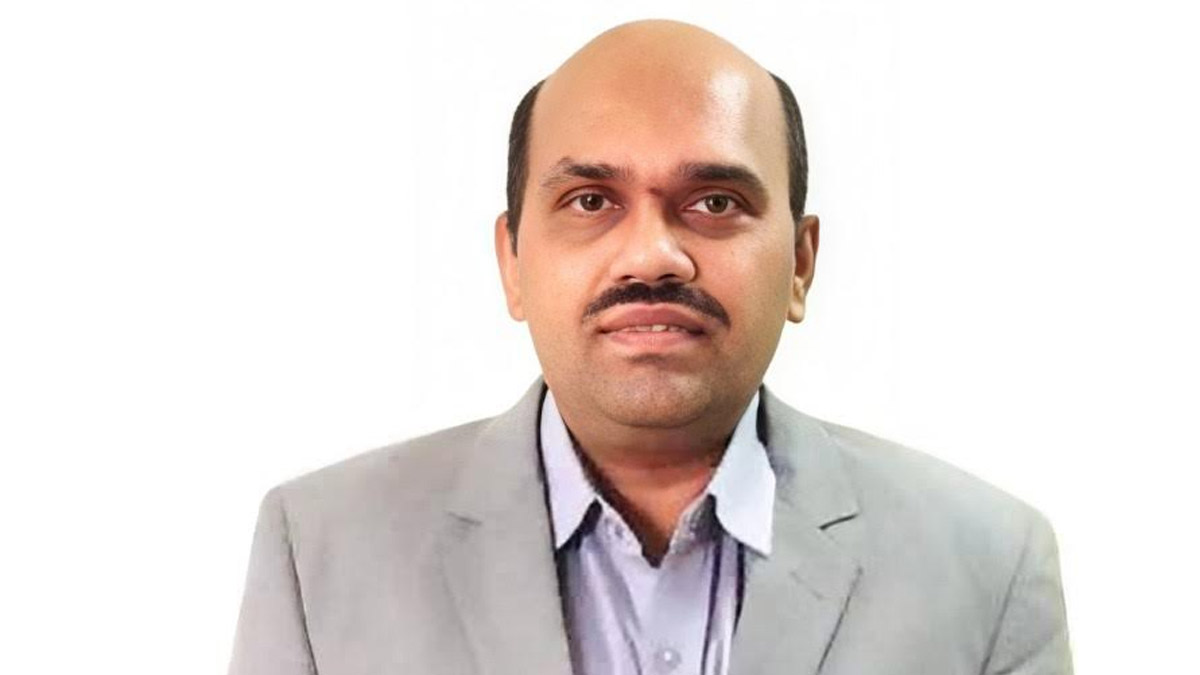
BENGALURU: Tessolve has never been shy about its ambitions. The Bengaluru-based engineering services firm already counts 18 of the world’s top 20 semiconductor companies among its clients, employs more than 3,500 engineers across 12 countries, and last year pocketed a $150m investment from TPG. Now it has hired the executive it believes can turn those assets into something bigger. Ravi Kumar Chirugudu, a 35-year semiconductor veteran who once built satellite payloads for ISRO and has since scaled engineering organisations across three continents, joins as president and chief operating officer, effective immediately.
THE MAN AND THE MANDATE
The appointment is, by any measure, a serious hire. Ravi Kumar Chirugudu comes to Tessolve after senior leadership stints at HCL Technologies, Altran and Wipro, where he managed large profit-and-loss portfolios and oversaw cross-regional teams. Over the course of his career, he has been instrumental in bringing more than 1,000 new products to market across the high-tech, energy and manufacturing verticals. Before the private sector claimed him, he began his working life as a scientist at the Indian Space Research Organisation, contributing to research and development in charge-coupled device technology and satellite payloads, a foundation that shaped everything that followed.
In his new role, he will lead Tessolve’s global growth strategy: expanding its engineering capabilities, deepening customer relationships and accelerating innovation across semiconductor and high-performance computing domains. The brief is broad, but the context is specific. Tessolve operates in the $550 billion global semiconductor market, and its recent moves, the acquisition of Germany’s Dream Chip Technologies and the TPG funding round, have sharpened both its reach and its expectations.
Srini Chinamilli, co-founder and chief executive of Tessolve, is characteristically direct about why Ravi Kumar Chirugudu was the choice:
“As we scale our global semiconductor and system engineering capabilities, Ravi’s appointment marks an important step forward. As global semiconductor demand continues to accelerate across industries, it is creating significant opportunities across the semiconductor lifecycle, from design, packaging, validation and systems integration. Ravi’s deep knowledge and leadership in this ecosystem brings the right mix of industry expertise, customer connect and execution capability, which will play a key role in strengthening our position as a trusted global engineering partner and reinforcing our market leadership.”
THE NEW ARRIVAL SPEAKS
Ravi Kumar Chirugudu, for his part, frames the move in terms of timing and culture, two factors that veteran executives tend to weigh as heavily as title or compensation:
“I am happy to join Tessolve at a time when the industry is rapidly evolving towards more complex, AI-driven systems. What stands out to me is its strong people-first culture and its commitment to bringing value to its customers. The strength of its global team, combined with its deep expertise in semiconductor innovation and next-generation product engineering, creates a solid foundation to build differentiated, scalable solutions. I look forward to working closely with the team to drive strategic growth and strengthen its role in shaping the global semiconductor ecosystem.”
The reference to AI-driven systems is not incidental. The semiconductor industry is in the midst of a structural reshaping, driven by the insatiable compute demands of artificial intelligence. For engineering services firms like Tessolve, which offers end-to-end capabilities from silicon design to packaged parts and invests in high-performance computing, high-speed interfaces, photonics and 5G, the moment is both an opportunity and a test. The company says it is well positioned to capture the next wave of industry growth. Ravi Kumar Chirugudu is now the person who has to prove it.
He came in from outer space, literally, and spent three decades learning how the semiconductor industry works from the inside out. Now Tessolve is betting that accumulated knowledge can help it cross the next frontier. In the $550 billion global chip market, the gap between ambition and execution is measured in engineering hours and leadership quality. Tessolve has just gone shopping for both.






