MAM
Govt tightens screws on smoking scenes in films, TV


NEW DELHI: The Government has tightened the screws for smoking scenes in films and television. It has directed that all films and television programmes made before 14 November 2011 and showing consumption of tobacco or liquor will have to mandatorily display anti-tobacco health spots or messages of minimum 30 seconds duration each at the beginning and middle of the film or the television programme.
There will also be an anti-tobacco health warning as a prominent scroll at the bottom of the screen during the period of such display. Such programmes will be telecast at timings that are likely to have least viewership of minors.
This has been stated in the rules for Cigarettes and other Tobacco Products (Prohibition of Advertisement and Regulation of Trade and Commerce, Production, Supply and Distribution) [second amendment rules] 2011.

These rules will be implemented from 14 November 2011. The rules have been notified after consultation and taking into account the views of Information and Broadcasting Ministry to make it more practical and implementable.
For new films and TV programmes, the producers will have to give‘a strong editorial justification’ for display of tobacco products or their use to the Central Board of Film Certification (CBFC) along with UA certification.
The producers will also have to run a disclaimer of 20 seconds duration by the concerned actor regarding the ill effects of the use of such products, in the beginning and middle of the film or television programme; anti-tobacco health spots or messages, of minimum 30-second duration each at the beginning and middle of the film or the television programme; and anti-tobacco health warning as a prominent scroll at the bottom of the screen during the period of such display.
The CBFC will be asked to have a representative of the Health and Family Welfare Ministry.
In order to restrict blatant display of tobacco brands in old films and TV programmes, these rules make it mandatory to crop /mask display of brands of cigarettes or any other tobacco product or any forms of product placement, close-ups and for new films and TV programmes such scenes shall be edited/blurred by the producer prior to screening. The ban on display of tobacco products or its usage also extends to promotional materials and posters as well.
The Ministry said for the tobacco industry, films provide an opportunity to convert a deadly product into a status symbol or token of independence. The role of movies as vehicles for promoting tobacco use has become even more important as other forms of tobacco promotion are constrained. This investment is part of a wider and more complex marketing strategy to support pro-tobacco social norms, including product placement in mass media, sponsorship and other modalities.
There are experimental and observational studies to show that tobacco use in films influences young people‘s beliefs about social norms for smoking, as well as their beliefs about the function and consequences of smoking and their personal intention to use tobacco. Consistent with the findings of these epidemiological studies, a number of experimental studies have confirmed that seeing tobacco usage in film shifts attitude in favour of tobacco use , and that an anti-tobacco advertisement shown prior to a film with tobacco use blunts the effect of smoking imagery.
The Government had enacted the Cigarettes and other Tobacco Products (Prohibition of Advertisement and Regulation of Trade and Commerce, Production, Supply and Distribution) Act, in 2003 with the objective to protect the present and future generation from the adverse harm effects of tobacco usage and second hand smoke, through imposing progressive restriction.
According to Section 5 of the Act, all forms of advertisement (direct, indirect/surrogate) promotion and sponsorship of tobacco products is prohibited. However, it was observed that when the advertising, promotion and sponsorship ban went into force, tobacco companies developed new marketing strategies to circumvent the law through depiction of tobacco use scenes and brand placement of tobacco products in movies.
In 2003, WHO conducted a study on the portrayal of tobacco in Indian cinema and its impact on youth audience before the passage of the COTPA. A second study a year later titled”Tobacco In Movies and Impact on Youth” documented changes in Bollywood‘s tobacco imagery. This research found the following:
| Key Findings | WHO study (2003) | Study by Burning BrainSociety supported by WHO/MoH (2005) |
| Total tobacco containing movies | 76% | 89% |
| Lead character smoking | 40.9% | 75.5% |
| Tobacco brands/product placement and visibility | 15.7% | 41.0% |







Brands
YES Bank hands the keys to SBI veteran Vinay Tonse as it bets on a new era
Former SBI managing director appointed as YES Bank’s new MD and CEO
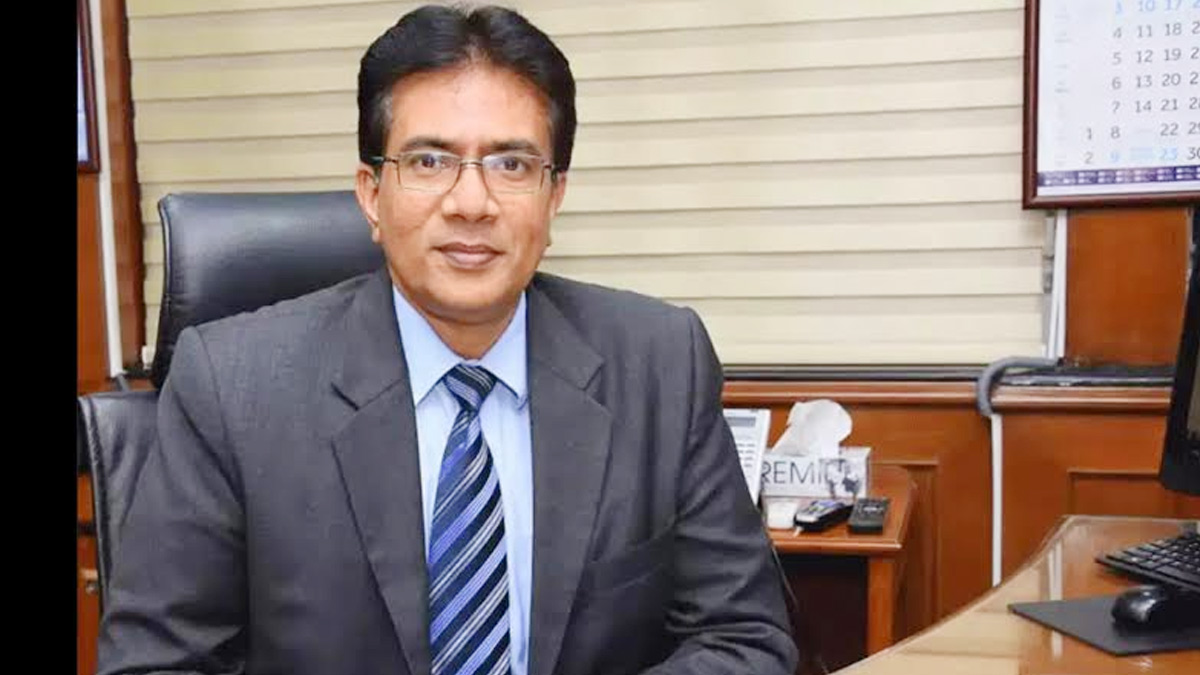
MUMBAI: YES Bank is done rebuilding. Now it wants to grow. The private sector lender has appointed Vinay Muralidhar Tonse as managing director and chief executive officer-designate, with RBI approval secured and a start date of April 6, 2026 confirmed. The three-year term signals the bank’s intent to shift gears from crisis recovery to full-throttle expansion.
Tonse, 60, is no stranger to scale. Most recently managing director at State Bank of India, he oversaw a retail book of roughly $800bn in deposits and advances, one of the largest in the country. Before that, he ran SBI Mutual Fund from August 2020 to December 2022, a stint that saw assets under management surge from Rs 4.32 lakh crore to Rs 7.32 lakh crore across market cycles. Add stints in Singapore and four years leading SBI’s overseas operations in Osaka, and the incoming chief arrives with a genuinely global CV.
His academic grounding is equally solid: a commerce degree from St Joseph’s College of Commerce, Bengaluru, and a master’s in commerce from Bangalore University.
The appointment follows an extensive search and evaluation process by the bank’s Nomination and Remuneration Committee. NRC chairperson Nandita Gurjar said the committee unanimously backed Tonse, citing his leadership track record, governance credentials and ability to drive the bank’s next phase of transformation.
Non-executive chairman Rama Subramaniam Gandhi was unequivocal. “I am certain that Vinay Tonse, with his vast experience as a senior banker, will propel YES Bank to its next phase of growth,” Gandhi said, adding that the bank remains focused on strengthening its retail and corporate banking franchises and expanding its branch network.
Rajeev Kannan, non-executive director and senior executive at Sumitomo Mitsui Banking Corporation, the bank’s largest shareholder, said Tonse’s experience across retail, corporate banking, global markets and asset management positioned him well to lead the lender. SMBC said it looks forward to working with Tonse and the board as YES Bank pursues its ambition of becoming a top-tier private sector lender anchored in strong governance and sustainable growth.
Tonse succeeds Prashant Kumar, who took the helm in March 2020 when YES Bank was in freefall following a severe financial crisis, and spent six years painstakingly stabilising the institution, rebuilding governance and restoring operational scale. Gandhi was generous: “The bank remains indebted to Prashant Kumar, who is responsible for much of what a strong financial powerhouse YES Bank is today.”
Tonse, for his part, struck a purposeful note. “Together with the board and my colleagues, I remain deeply committed to creating long-term value for all our stakeholders,” he said, pledging to build on Kumar’s foundation guided by his personal motto: Make A Difference.
Beyond the balance sheet, Tonse played cricket at college and club level and represented Karnataka in archery at the national championships — sports he credits with teaching him teamwork, situational leadership, discipline and focus. In quieter moments, he reaches for retro Kannada music, classic Hindi songs, and the crooning of Engelbert Humperdinck, Mukesh and Kishore Kumar.
YES Bank has its steady-handed rebuilder in Kumar to thank for survival. Now it has a scale-obsessed growth banker at the wheel. The next chapter starts April 6.