Digital
Google rolls out $15B AI, education and connectivity plan for India
AI tools for 11 million students, new subsea cables, and a national skilling push.
NEW DELHI: Google is backing its words with action. In a major push to future-proof the world’s most populous nation, Google DeepMind has partnered with the Indian government on a large-scale AI initiative.
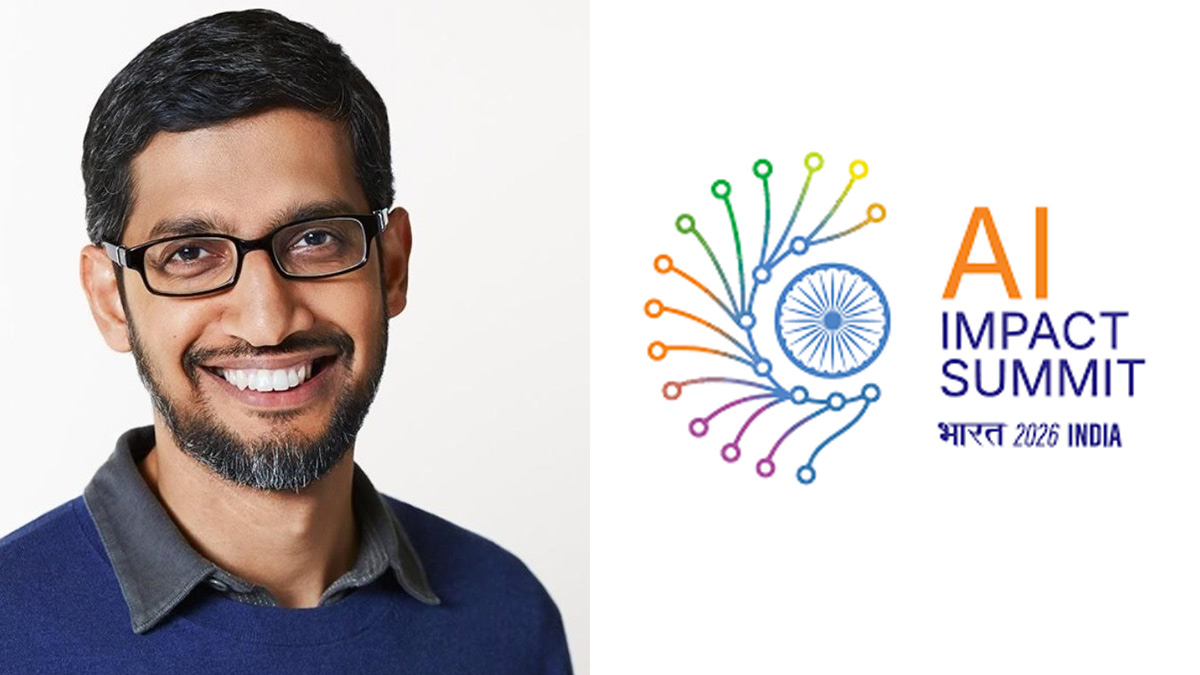
Announced by CEO Sundar Pichai at the India AI Impact Summit, the deal is less of a gentle nudge and more of a full-throttle sprint into the digital age. Part of Google’s $15 billion commitment to South Asia, the plan aims to weave artificial intelligence into the very fabric of Indian daily life, from the deep ocean floor to the back of the classroom.
The most heart-warming slice of this digital pie is the focus on the next generation. Google is partnering with 10,000 Atal Tinkering Labs, effectively dropping high-tech AI tools into the laps of roughly 11 million students.
The goal? To introduce generative AI assistance in schools, ensuring that the homework of the future is powered by more than just caffeine and late-night panic.
While the kids are busy with AI in the classroom, Google is busy under the sea. The newly minted India-America Connect Initiative involves laying down serious hardware, specifically, new subsea cable routes.
These digital arteries will link India to Singapore, South Africa and Australia. By adding four more strategic fiber-optic routes connecting the U.S. to the Southern Hemisphere, Google is essentially building a “data superhighway” to ensure India’s AI capabilities don’t get stuck in traffic.
Knowing how to use a tool is just as important as owning it. To bridge the gap, Google is launching its most ambitious skilling program yet: the Google AI Professional Certificate. This program is designed to help the workforce master AI without needing a PhD in robotics.
With full-stack connectivity and a massive investment on the table, India isn’t just joining the AI race; it’s looking to set the pace.

Digital
Google partners with Adani and Airtel to build India’s largest AI data centre
The three-campus complex, built with Adani and Airtel, is India’s largest-ever technology infrastructure investment
Visakhapatnam: Google has broken ground on what it is billing as India’s largest-ever technology infrastructure project: a gigawatt-scale artificial intelligence hub in Visakhapatnam, Andhra Pradesh, built in partnership with AdaniConneX and Nxtra by Airtel. The ceremony at Tarluvada on 28th April marked the start of construction on a three-campus data centre complex that sits at the heart of a $15 billion investment Google has committed to deploying across India between 2026 and 2030.
The numbers are staggering by any measure. Nearly 1 gigawatt of compute capacity at a single location, three data centre campuses, a fibre-optic expansion under the America-India Connect initiative, and a long-term clean energy strategy designed to feed new renewable supply into the national grid. Google says the project will help India hit its target of 500 gigawatts of non-fossil fuel capacity by 2030 while delivering the high-performance, low-latency infrastructure that businesses need to build and scale AI-powered services.
The groundbreaking drew a formidable gathering of political and corporate India. Union minister for information technology Ashwini Vaishnaw, Andhra Pradesh chief minister N. Chandrababu Naidu and state IT minister Nara Lokesh attended alongside Google Cloud chief executive Thomas Kurian, Adani Group directors Karan Adani and Jeet Adani, and Bharti Enterprises vice chairman Rakesh Mittal.
Vaishnaw framed the project in terms of national ambition. “The India AI hub and three subsea cables landing in Visakhapatnam will become very important infrastructure for the country’s journey forward,” he said, adding his thanks to Google for its “continued trust in India.” Naidu was equally bullish, describing Andhra Pradesh as “India’s premier investment destination” and the Vizag hub as a cornerstone of the state’s technology corridor. “Our vision goes beyond attracting investment,” he said. “We want local talent, startups, and enterprises to become active partners in this technology-driven growth story.”
Kurian called the groundbreaking “a powerful realization of our shared vision with the Indian government, and an inflection point for the country’s AI-native future.” Jeet Adani was characteristically direct: “When energy becomes more affordable and increasingly powered by clean sources, intelligence becomes more accessible, and that is how India will lead the next phase of digital growth.” Gopal Vittal, executive vice chairman of Bharti Airtel, said the full stack of data centres, green power, pan-India fibre and a next-generation cable landing station would enable “large-scale, world-class AI infrastructure in Vizag.”
The project was first announced in October 2025. AdaniConneX and Nxtra by Airtel will lead construction of the data centre buildings and connecting infrastructure, with Google deploying its AI capabilities on top.
Beyond the hardware, Google has announced a substantial package of community programmes. On water, it is partnering with Sponge Collaborative on a watershed management plan linking coastal ecosystem restoration with clean drinking water systems, including reverse osmosis plants and Water ATMs, for local residents. On livelihoods, a tie-up with the Sambhav Foundation will equip more than 1,000 fisherfolk with GPS navigation, weather-forecasting tools, cold-chain management training and UPI-based financial literacy. The Google Udaan India Fund, run through ChangeX, will provide direct grants to local schools and social enterprises for AI skilling labs and digital literacy programmes. The NARI Shakti programme, developed with the Learning Links Foundation, will support more than 10,000 women entrepreneurs from low-income backgrounds in building micro-enterprises. The Skills Trade and Readiness programme will prepare more than 1,000 local workers for construction, welding and facility operations roles, while a parallel tie-up with ICT Academy will train more than 1,200 students and educators in cloud computing and generative AI.
The groundbreaking was accompanied by the Bharat AI Shakti Conclave, a conference organised with the Andhra Pradesh government and Nara Lokesh, bringing together suppliers, industry partners and infrastructure firms to map how Google’s anchor investment can be turned into a broader economic value chain for the region. The conclave’s central theme was building an AI industrial corridor, with a local-first procurement approach and the integration of regional small and medium enterprises into Google’s global operational frameworks.
Every major technology company in the world has been courting India. What sets Vizag apart is the sheer scale of the commitment and the deliberate effort to build an industrial ecosystem around it rather than simply plant servers in a field. Google is not just betting on India’s digital future; it is trying to build the factory floor on which that future gets made. Whether the $15 billion translates into genuine local opportunity, or merely into an impressive data centre humming quietly on the Andhra Pradesh coast, will depend on whether those community programmes prove as durable as the hardware. The groundbreaking, as ever, is the easy part.