Brands
GoaFest 2025: Brands swipe right on GenZ – Spotify, Nivea and Saregama decode the next big consumer wave

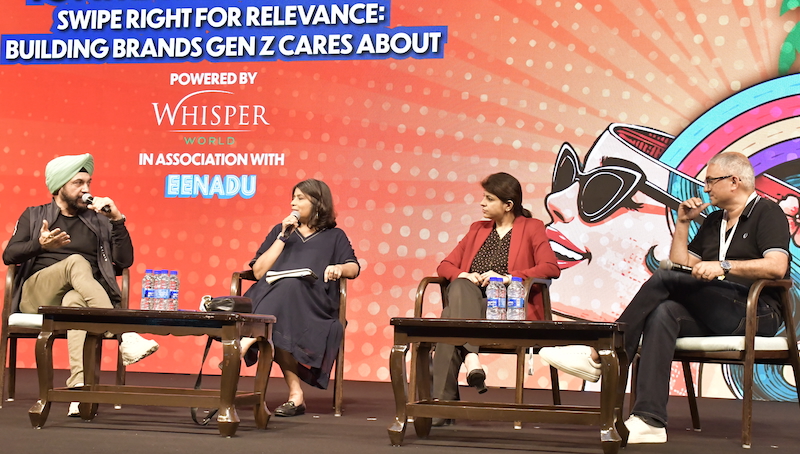
MUMBAI: At Goafest 2025, the panel titled ‘Swipe Right for Relevance: Building Brands Gen Z Cares About’ brought together three brand leaders and one big question: How do brands win over a generation raised on infinite scrolls, sceptical of polished campaigns, and loyal only to authenticity?
Moderated by journalist and producer Anuradha SenGupta, the panel featured Spotify India MD Amarjit Singh Batra, Nivea India MD Geetika Mehta, and Saregama India MD Vikram Mehra. Together, they delivered a candid crash course in decoding India’s most attention-deficit yet value-driven demographic.
Batra opened by stating the obvious: Gen Z isn’t just part of Spotify’s strategy—they are the strategy. Over 50 per cent of Spotify’s listeners in India are under 25. “They’re not just listeners, they’re the creators, the curators, the interns, and our future employees,” he said. Spotify’s recent early career postings attracted 3,000 applicants in a few hours—a sign of cultural stickiness few brands can claim.
Mehta called Gen Z “discerning, not distracted,” adding, “If you give them something of value, they’ll stay longer than six seconds. If you don’t, they’ll scroll faster than your media spend”. For Nivea, that has meant rethinking everything from product development to influencer selection. She admitted, “We never imagined handing the brand to 500 micro-influencers. It’s scary. But it works. We’ve learned to let go.”
Mehra brought the data to the drama. “Eighty percent of Saregama’s digital engagement comes from Gen Z,” he revealed. But he didn’t stop there. At Saregama, anyone over 30 is officially banned from making music selection decisions. “Every song I pick flops,” he joked. “So we gave the reins to people who are the audience.”
The panel underscored several hard truths: celebrities don’t sell to Gen Z anymore; authenticity beats aspiration; brand values must go beyond the packaging; and content must be real, not rehearsed. “We don’t just test ads,” said Mehta. “We test brand values—and Gen Z fact-checks.”
Social listening emerged as a key tool. Batra said, “What Gen Z memes or shares tells us more than any focus group. But attention is expensive—you have to earn it.” Mehra warned against boardroom-led branding, urging top management to “let go” and hand creative control to younger teams.
As the session closed, panellists shared their Gen Z frustrations. Mehra struggled with their work-life boundaries (“They don’t answer calls after 7 pm”). Mehra cited their need for constant senior engagement. Mehra found it tough to keep up with their multitasking and content standards. “You really have to wow them—just being good isn’t good enough.”
Gen Z may be the toughest audience yet—but they’re also the most rewarding. And as Goafest day one showed, brands that don’t speak their language may soon be left un-sampled and unused.
(Pictured above: From left to right – Amarjit Singh Batra, Anuradha SenGupta, Geetika Mehta & Vikram Mehra.)