MAM
Gloob decor launches Flipspaces


Mumbai: Gloob Decor, a leading brand in home décor and home improvement industry with more than 500 channel partners in 100 cities across India, today announced it has sold over 50 lakh rupees of Flipspaces licenses on its launching day.
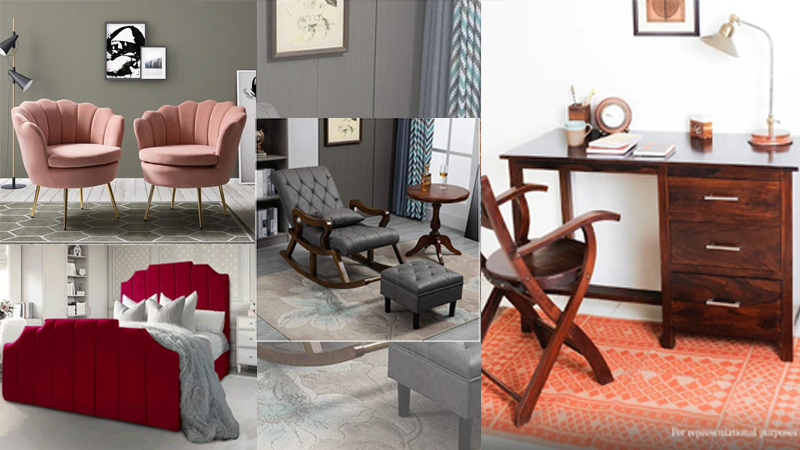
Flipspaces ( www.flipspaces.com ), which was launched on 1st November 2014, is India’s first multi-category Home Decor Visualizer application in home improvement market with a collection of more than two lakh product variants ranging from wallcoverings, clocks, sculptures, furniture, canvas frames and other home accessories. The web based application is designed exclusively for home décor and home improvement consumer market targeting architects, interior designers, contractors, developers, home décor store owners and other industry players. It can also emerge as a strong platform for all vendors, suppliers and other major stake holders in home décor industry.

Flipspaces allows users to visualize home décor products in relevant environments sorted by type of space (home, office, school) or even the colour tone of an environment. Flipspaces further aims at replacing the traditional physical catalogs reducing the cost and dependency on it. As the cost involved with traditional catalogs is significant, companies usually charge multiple lakhs of rupees for the catalogs only.
Kunal Sharma, Founder and Director, Gloob Décor said, “The market for tech-based HDV (Home Décor Visualizer) can be pegged at about 10,000 Crore in India alone. The sales figure over 50 lakhs rupees on the launching day is just indicative of the market potential of technology in this space.”
Mr. Ankur Muchhal, Co-founder, Managing Director pointed out, “we feel that the consumer experience for while buying home décor can be hugely improved than the std image plus description model which is widely prevalent now. Flipspaces envisions an augmented reality feature which will firmly establish Gloob as a leader in the technology aided home improvement distribution. We have a very strong R&D team which is coming up with new modules which can further disrupt distribution in the home décor market.”
Mr. Vikash Anand, Parter and Director, Sales added, “Our background in technology and product design along with a strong Pan-India sales presence gives us an extra edge to gain market entrenchment faster than any other new player. The web based application is designed based on extensive market research and customers’ feedback and has the ability to disrupt the market redefining the product buying experience in home improvement from raw material selections to visualizations to cost analysis.”
Mr. Mrinal Sharma, Partner and Director, International Sales and Strategic Alliances, added, “we are looking to explore partnerships with like- minded International Partners for the distribution of this application. Flipspaces has the potential to becoming a major change-catalyst in the global home improvement industry pegged close to $ 550 billion.”
Advantages of Flipspaces:
India’s first home décor visualization application
Substitutes physical catalogs which are costly, heavy and restrictive in merchandizing
Offers huge product collections and variants for any level of interior designing
Allows sorting by space, theme, colour and product category
Offers high quality visualization in relevant environments
Allows independent pitching for sales with login ID and password to anyone, anywhere
Helps copyright by time bound login to prevent sharing and copying
Offers free shipping for most products listed in the catalog
Supports for turn-key project implementation in key cities
Allows creating quotations at consumer end with features of tracking quotations and invoice
Offers sales reporting and task management system



MAM
WPP appoints Estée Lauder’s Anne-Isabelle Choueiri as chief transformation officer
Former Estée Lauder executive to lead operations, technology and culture overhaul under WPP’s three-year growth plan

LONDON: WPP has appointed Anne-Isabelle Choueiri as chief transformation officer in a newly created role tasked with delivering the group’s Elevate28 strategy.
Choueiri joins from The Estée Lauder Companies, where she led enterprise-wide strategic initiatives, including the “One ELC” operating model and major upgrades to enterprise marketing, data and analytics capabilities. She also led the redesign of enterprise technology teams and served on the company’s AI taskforce, driving AI strategy, adoption and value realisation across the business.
At WPP, she will be responsible for designing, implementing and embedding the operating model behind Elevate28, the company’s three-year growth plan unveiled in February 2026. She will lead efforts to improve innovation, efficiency and integration across WPP’s client offerings, with a focus on delivering agile, outcome-driven solutions and measurable growth.
Choueiri will oversee organisational transformation across the group, working closely with product and enterprise technology teams to deploy AI, data and technology to build new capabilities and improve operational performance. She will also work with the people function to embed cultural change, strengthen an agile performance mindset and support talent development across the organisation.
Before joining Estée Lauder, she held senior roles across consulting and digital agencies, including at Accenture, Masaï (a Bain & Company spin-off), and Kearney, with experience spanning strategy, data and digital marketing transformation.
Cindy Rose, chief executive officer of WPP, said Choueiri brings a strong track record of leading large-scale transformation across operations, technology and culture, adding that her appointment will help accelerate the group’s next phase of growth under Elevate28.
Choueiri said WPP’s strategy represents an ambitious opportunity to reshape how the company operates and delivers for clients, adding that she looks forward to building integrated solutions and fostering a culture of innovation and change.
She will be based in New York and will join WPP’s executive committee.







