MAM
Gen Z takes beauty beyond metros as Myntra reports 200 per cent K Beauty growth
Half of Gen Z beauty buyers hail from Tier 2 and 3 cities as SPF, minis and ingredient led skincare reshape shopping habits


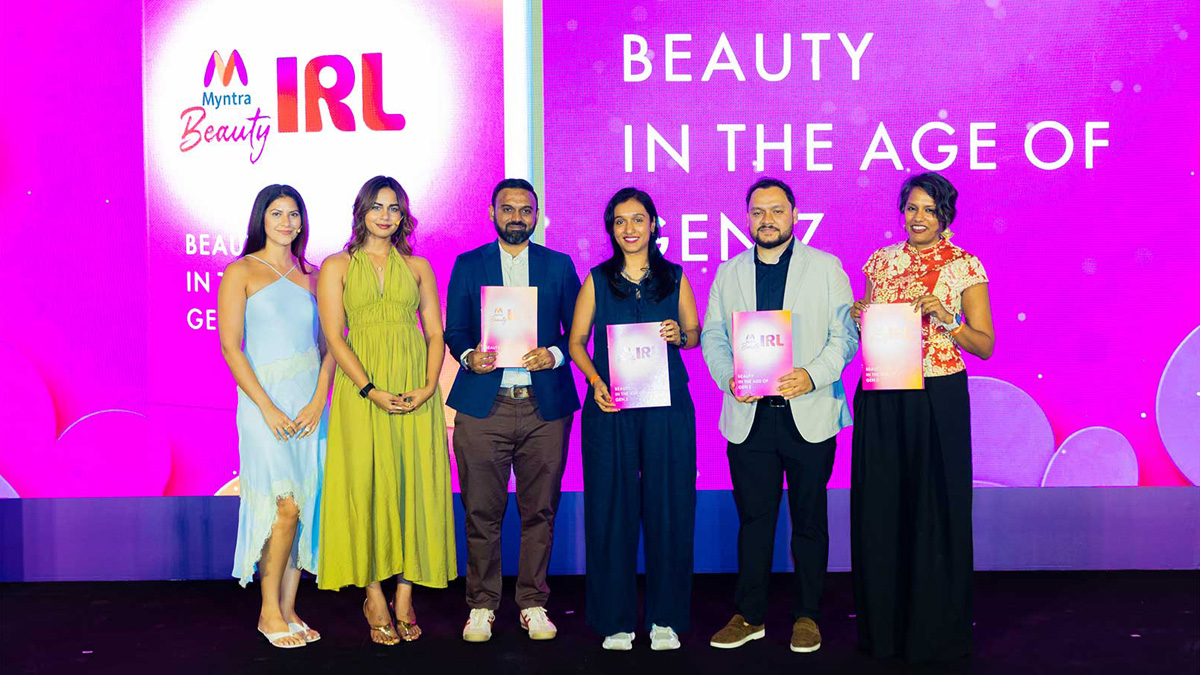
MUMBAI: For Gen Z, beauty is no longer just skin deep, and the shopping basket tells the story. From sun protection becoming a daily ritual to premium make-up finding new buyers through mini-sized products, India’s youngest adult consumers are reshaping the beauty market, with demand extending well beyond metropolitan cities. Myntra’s latest report, ‘Beauty in the Age of Gen Z’, finds that half of its Gen Z beauty buyers live in Tier 2 and Tier 3 cities, while demand for Korean beauty products has surged 200 per cent year on year.
The report, unveiled at Myntra Beauty IRL in Mumbai, draws on platform data, purchasing behaviour and search trends between August 2025 and August 2026. It paints a picture of a generation that is increasingly interested in ingredients, product efficacy and personal expression, rather than relying on brand names alone.
Gen Z and millennials are both contributing to growth in beauty and personal care on Myntra, but Gen Z is giving the category a 75 per cent higher share of its wallet. Its beauty and personal care spending per customer has risen 1.2 times year on year, alongside a growing customer base. Beauty now accounts for roughly one in five units ordered on the platform, while the category is growing at twice the rate of the online beauty market, according to Myntra.
The numbers suggest that beauty is becoming a more regular part of shopping rather than an occasional indulgence. Skincare, make-up and haircare are increasingly tied to everyday routines, social occasions and individual identity, giving brands more opportunities to build repeat relationships with younger consumers.
For this generation, however, looking good increasingly starts with protecting the skin. Orders for sun protection factor (SPF) products rose 60 per cent year on year among Gen Z shoppers, while searches for spray sunscreens increased 80 per cent. Searches for ingredient-led sunscreens grew 70 per cent, and those for tinted sunscreens rose 60 per cent.
The shift points to a move away from treating sunscreen as a seasonal purchase towards making it part of a year-round skincare routine. Product texture is also influencing choices, with gel-based, fragrance-free and non-sticky formulations attracting interest. Ingredients such as Centella asiatica, copper peptides, azelaic acid and panthenol are featuring more prominently in the search for products that meet specific skincare needs.
Myntra senior director for beauty and personal care Deepak Joshi described Gen Z as a “skin-first generation”, saying younger shoppers increasingly want to understand what a product contains and what it can do for their skin. He said the emphasis on prevention rather than correction was helping turn sun protection into a year-round habit.
The appetite for more informed shopping is not stopping consumers from experimenting with premium products. Instead, they are finding smaller ways to try them before committing to full-sized purchases.
Mini products accounted for 14 per cent of luxury beauty units sold on Myntra, led by lipstick, perfume and face primer. More strikingly, 53 per cent of luxury make-up orders included a mini. Brands such as M.A.C, Kayali, Smashbox and Salvatore Ferragamo acquire more than half of their new customers through mini products, according to the report.
For shoppers, minis offer a lower-commitment way to explore premium brands. For companies, they can serve as an entry point for first-time buyers who may be curious about a product but unwilling to spend on a full-sized version without trying it first. The format is helping luxury beauty make its way into more shopping baskets without requiring consumers to make a large initial outlay.
The discovery process itself is changing, too. Gen Z is more likely to scroll through content, watch demonstrations and discover products through creators than to begin with a direct search for a particular item. Myntra has around 82,000 active beauty creators, while user-generated beauty content on the platform has grown 40 per cent year on year. Nearly two in three new beauty creator registrations over the past four months were from Gen Z.
Myntra head Sharon Pais said younger consumers were discovering new products through creators and Korean beauty trends, while making choices based on ingredients and efficacy. She added that brands would need to reach shoppers early, simplify discovery and earn trust through their products and formulations.
The influence of creators is also changing how beauty trends travel. A product can gain attention through a video or recommendation and quickly move from online discovery to purchase. For brands, this creates opportunities to reach consumers through communities and content, although attention alone does not guarantee repeat buying. Product performance and consumer confidence remain important to keeping shoppers coming back.
Geography is another major part of the story. Half of Gen Z’s beauty buyers on Myntra are based in Tier 2 and Tier 3 cities, where shopping baskets include serums, toners, sunscreens and hair masks alongside everyday essentials. These cities also account for half of the platform’s international beauty demand.
Ludhiana, Patna, Bhopal, Indore, Guwahati, Surat, Varanasi and Imphal are among the cities driving growth. The trend challenges the assumption that demand for premium and international beauty products is concentrated mainly in metropolitan markets. Younger consumers in smaller cities are also exploring specialised skincare, premium make-up and products influenced by global beauty trends.
Korean beauty, or K-beauty, is one of the clearest examples of that appetite for discovery. Demand for K-beauty products on Myntra grew 200 per cent year on year, while searches increased by more than 300 per cent. The platform now offers more than 1,000 stock-keeping units (SKUs) across over 90 K-beauty brands, with more than 30 brands added in the past year.
The category’s appeal reflects the growing interest in ingredient-led routines, different formulations and beauty trends originating in international markets. For retailers, the challenge is to turn curiosity into sustained demand by helping shoppers navigate an expanding range of products and identify those suited to their needs.
Haircare is also benefiting from the shift towards more specialised routines. Orders for hair masks grew 110 per cent year on year, compared with 59 per cent growth for conditioners. The gap suggests that shoppers are looking beyond basic cleansing and conditioning towards products aimed at more targeted haircare needs.
Men’s skincare is another category gaining ground, with orders rising 78 per cent year on year, led by Gen Z. The growth points to a widerening definition of the beauty consumer, as skincare becomes a more established part of men’s personal care routines.
The shift is also creating opportunities for Indian direct-to-consumer (D2C) brands. Myntra hosts 700 pure-play D2C beauty brands and 3,000 emerging D2C names. The D2C beauty segment has grown 68 per cent so far in the 2026 financial year, with brands such as Plum, Minimalist, Foxtale, The Derma Co. and Chemist at Play among those driving growth.
Gen Z shoppers are 25 per cent more likely to try an indigenous or D2C brand, according to Myntra. Millennials are also supporting these businesses, but younger consumers are among the quickest to experiment with home-grown labels. The trend gives emerging brands an opportunity to compete for attention alongside established international names, particularly when their products offer a clear proposition around ingredients, efficacy or price.
Repeat purchases are reinforcing the category’s momentum. Repeat Gen Z orders on Myntra have risen around 70 per cent this year, and the platform said repeat beauty shoppers and repeat apparel shoppers are more often than not the same people. Beauty also brought in nearly half a million new customers on Myntra in May 2026 alone.
The platform is using technology and faster delivery to support the shopping journey. Myntra offers around 2.5 lakh styles from more than 4,500 brands, including over 360 international brands. Its Virtual Try-On feature makes shoppers twice as likely to buy, while its Skin Analyzer lifts conversion by around 58 per cent, according to the company. Beauty on M-Now spans around 600 brands, with delivery available in as little as nine minutes.
These features are designed to reduce friction between discovering a product and deciding to purchase it. Virtual tools can help shoppers assess products before buying, while skin analysis offers a more tailored route through the available range. Quick delivery, meanwhile, caters to consumers who want products without waiting for a conventional online order.
Myntra vice-president of marketing Deepash Jain said Gen Z did not necessarily begin with a search for a product, but often discovered items while scrolling through content. He said this behaviour influenced everything from the platform experience and brand selection to the journey after purchase. Myntra, he added, had opened its creator ecosystem to people who wanted to talk about products they believed in, allowing trends to emerge organically rather than being manufactured.
The next wave of demand could come from ingredients and hybrid products that combine different functions. Myntra’s report identifies lactic acid, tranexamic acid and foundation products with SPF as items on Gen Z’s wishlist. These emerging interests suggest that consumers will continue to look for products that fit more specific routines while combining convenience with targeted benefits.
Myntra said its focus would be on scaling the category and increasing its share through better pre-purchase and post-purchase experiences, a stronger creator ecosystem through Myntra GlamStream, and continued growth across D2C, luxury, international beauty, non-metro markets and first-time online beauty shoppers.
The report was launched alongside a panel discussion titled ‘The New Indian Beauty Consumer’. Its market estimates, sourced from Redseer, put India’s beauty market at around $23 billion, with the potential to grow to approximately $40 billion. India currently spends around $15 per person on beauty, compared with $38 in China and $383 in the US.
The difference highlights the market’s potential for expansion, although translating that headroom into sales will depend on consumer spending power, product accessibility and the ability of brands to earn trust. The opportunity is not simply to persuade young shoppers to buy more, but to give them products and experiences that justify repeat purchases.
Gen Z’s beauty habits are therefore changing more than what goes into the shopping basket. They are influencing how products are discovered, how premium brands attract first-time buyers, how smaller cities participate in global trends and how Indian labels compete for attention. In this market, the winning formula may be less about selling a beauty ideal and more about helping consumers find what works for them.