
Brands
FSSAI proposes single phase front of pack warnings for packaged foods
Regulator seeks four months for rules and gives food firms 365 days to transition


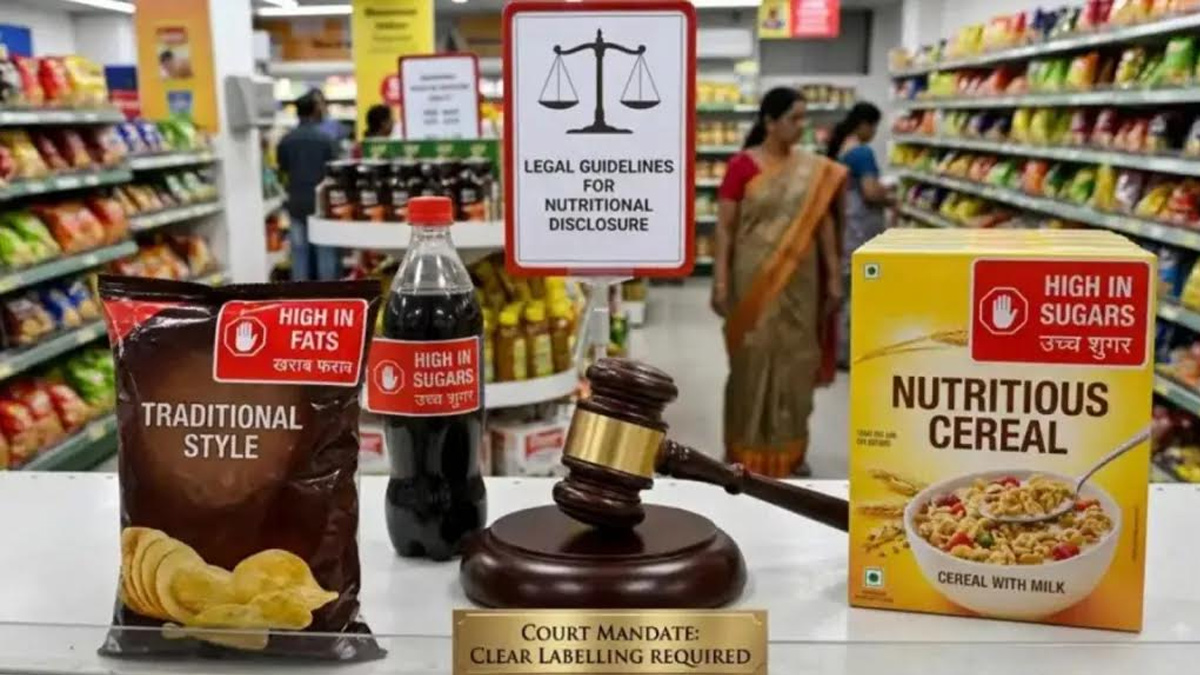
MUMBAI: The writing may soon be on the pack, and this time it could come in a red hexagon. The Food Safety and Standards Authority of India (FSSAI) has proposed a single-phase rollout of front-of-pack nutrition labelling (FoPL), moving away from its earlier two-stage approach and bringing products exceeding the threshold for even one nutrient of concern under the proposed warning system.
Under the latest proposal placed before the Supreme Court, packaged foods crossing the prescribed threshold for added sugar, added fat or salt would carry a front-of-pack warning. The move brings products high in one, two or all three nutrients into a single implementation framework rather than introducing the warnings in stages.
FSSAI has sought four months to issue and finalise the draft regulations. The process will include a mandatory 60-day period for stakeholder comments through domestic consultation and the World Trade Organization (WTO) platform.
After examining the feedback, FSSAI will seek approval from the Food Authority before the final notification is sent to the Ministry for publication in the official gazette.
Food business operators would then receive a 365-day voluntary implementation period. FSSAI said the transition is intended to prevent commercial hardship for companies that already have stocks of pre-printed packaging material.
The proposed warning comes with a distinct visual identity: a red hexagon on a white square background, positioned prominently at the top-left of the front of the pack. If one nutrient crosses the prescribed threshold, the relevant nutrient would be named inside the hexagon. If two or three nutrients cross the limits, all applicable nutrients would be identified within the same symbol.
FSSAI said the format is broadly similar to the system adopted in Canada.
The proposed thresholds for added sugar, added fat and salt are based on the Dietary Guidelines for Indians, 2024, issued by the Indian Council of Medical Research-National Institute of Nutrition (ICMR-NIN).
The regulator has also proposed differentiating between added sugar and total sugar, as well as added fat and total fat. Trans fat would continue to be treated separately under existing regulatory provisions.
The latest proposal comes after the Supreme Court sought greater clarity on the FoPL framework. In its September 10 order, the court sought responses from FSSAI on 13 aspects, including the basis for nutrient thresholds, the warning’s design, colour, size and placement, pictorial representation, treatment of additives, implementation timelines and nutrition literacy.
The court had also questioned the earlier two-phase model.
FSSAI’s August 28 proposal had envisaged an initial phase covering products high in two or more nutrients of concern, followed by a second phase extending warnings to products high in any one nutrient. The latest affidavit effectively folds both categories into one proposed implementation framework.
There are also rules around how hard the warning should be to miss. FSSAI has proposed that the warning be displayed in a font at least one point larger than the nutrition information table on the back of the package.
The regulator has opposed separate pictorial symbols for individual nutrients, arguing that multiple symbols could create confusion when a product exceeds thresholds for more than one nutrient. Instead, the applicable nutrients would appear within the same hexagonal warning.
FSSAI has also maintained that the proposed FoPL system would not, by itself, lead to greater use of preservatives, emulsifiers or other additives. Such ingredients, it said, are already governed by food safety regulations.
The proposed framework is being considered in a case arising from a petition by Kerala-based 3S and Our Health Society, which sought mandatory front-of-pack warnings for packaged foods, particularly those high in fat, sugar and salt.
The Supreme Court has previously considered front-of-pack labelling as a measure that could help consumers make informed choices and contribute to healthier food environments.
The matter is scheduled to come before the Supreme Court on September 28, when FSSAI’s latest affidavit is expected to be considered. For food companies, the clock could therefore start ticking well before the warning labels themselves begin appearing on shelves.






