MAM
From startup to success The Starter Labs’ evolution in digital marketing

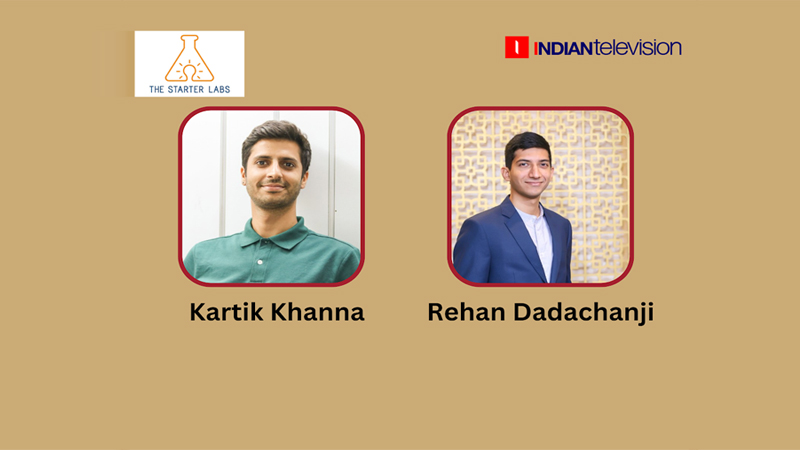
Mumbai: In the fast-paced world of digital innovation, one name stands out: The Starter Labs (TSL). established in 2016 by visionaries Kartik Khanna and Rehan Dadachanji, TSL has rapidly become a force to be reckoned with in the Zoo Media network. Collaborating with over 250 esteemed brands, including industry giants like Cosco and Cartoon Network, TSL isn’t just a company – it’s a dynamic fusion of cutting-edge services, from D2C Strategy to Growth Marketing and more.
But what truly sets TSL apart is its pioneering role in the evolution of social commerce. No longer confined to mere transactions, it’s a lifestyle, a movement that intertwines social interaction and e-commerce in unprecedented ways. Picture influencer collaborations, shoppable posts, and interactive live experiences – all at your fingertips. In this brave new world, TSL isn’t just leading the way; it’s shaping the future of how we connect, engage, and experience commerce. Welcome to the forefront of digital transformation.
Indiantelevision.com in an email interaction spoke to The Starter Labs (Zoo Media) founders Kartik Khanna & Rehan Dadachanji.
Edited excerpts
On The Starter Labs’ evolution since its founding in 2016, both in terms of services offered and the scale of its operations
While it’s hard to summarise our seven-year journey, three things stand out more than most:-
Results we deliver
We’ve always been an impact-focused agency, and strive to be co-responsible for our clients’ output. Over the years, this has only grown and we now find ourselves identifying goals and flagpoles well before we kick off with execution. From launching some of India’s coolest startups to delivering high ROAS (Return on AdSpends) for some global juggernauts, we’ve done it all!
Scale of operations
From a team of two of us and a part-time employee in 2016 to a team of nearly 60 us across the Content, Media, and Technology departments, we’ve been able to consistently grow our team year after year.
Our team’s capabilities
A mark of pride for us is to see how much our people have grown. A case in point is our Account Director Arbaaz Shaikh, who started with us 4 years ago as an account executive, and now oversees 20+ client operations and leads a team of over 15 people at the company. Like Arbaaz, we see a lot of our teams constantly improving not just as marketing professionals, but as well-rounded human beings.
On the acquisition of The Starter Labs by Zoo Media in 2022 and the partnership influencing The Starter Labs’ approach and strategies in the digital marketing landscape
There’s so much intelligence within the Zoo ecosystem – and that’s not just the people, but also the learnings, intel, processes, workflows, etc. – and that’s given us incredible insight into each industry and category we work with. Normally, agencies are very secretive about the nuances in their modus operandi and keep their prized practices under lock and key, so the opportunity to interact with founders and business heads, daily, operating in a complimentary space has enabled us to evolve our approach and incorporate a lot of the big brand thinking into our agile workflows.
On emerging trends or challenges in the direct-to-consumer (D2C) space that The Starter Labs is currently addressing or keeping an eye on
At The Starter Labs, we are continuously monitoring the dynamic direct-to-consumer landscape. One prominent trend in our focus is the increasing importance of sustainability and eco-consciousness among consumers. Sustainable practices and products have become a significant driver for many D2C brands, and we help our clients adapt to this by developing eco-friendly strategies and messaging.
Subscription models within D2C brands have also skyrocketed since the start of the year. All primarily done from the point of increasing lifetime value so it’s only natural for every D2C brand to try and get on that bandwagon. From furniture to F&B, fashion to automobiles, and personal care to e-learning, everyone is building subscription or membership models.
Also, personalisation remains a top priority for D2C brands. Consumers expect tailored experiences, and we are leveraging advanced data analytics and AI to help our clients customise their offerings and marketing efforts. The challenges of data privacy and ensuring responsible use of customer data are crucial for us as compliance and consumer trust are essential.
Lastly, the rise of social commerce and the blurring lines between e-commerce and social media are reshaping the D2C landscape. We’re exploring innovative ways to integrate social commerce into our strategies to help our clients engage with customers spending a significant portion of their online time.
On Zoo Media fostering collaboration and synergy among its various agency brands to provide comprehensive solutions to client
At Zoo Media, our approach to fostering collaboration and synergy is rooted in a culture of open communication and a shared commitment to our client’s success. We operate as a collective network of agency brands, each with its unique expertise. To provide comprehensive solutions, we regularly convene cross-disciplinary teams. Our agencies collaborate seamlessly by sharing insights, data, and best practices. This approach enables us to harness the collective knowledge and creativity of our diverse talent pool. By breaking down silos, we ensure that our clients benefit from a holistic approach that combines the strengths of each agency brand, resulting in innovative and integrated solutions that address their specific needs. We also invest in technology and tools that facilitate collaboration, allowing our teams to work efficiently across geographical locations. This collaborative spirit is at the heart of our success in providing comprehensive solutions to our clients.
On strategies or best practices that the network employs to ensure each agency maintains its distinct identity and expertise while benefiting from the larger network’s resources
At an individual agency level, we all know what our key areas of impact are and since all of the agencies are offering specific solutions for different aspects of the digital or experiential space, we’re very mindful of stepping on each other’s toes. Theoretically speaking, any brand looking to leave a mark can benefit from every single agency within the network, so there’s a proactive effort to loop in the agency that is a thought leader in their respective area of work. So not only do we end up working together, but each agency gives the other the perfect platform to build, and deliver sustainable scalability.
On social commerce transforming the way consumers interact with brands on a daily basis
Social commerce has transformed how consumers engage with brands daily. It blurs the lines between discovery, purchase, and social interaction. Brands are no longer confined to traditional e-commerce platforms; they can now meet consumers where they are—on social media. Consumers can discover products through shopping posts, live streaming, and influencer endorsements, turning their daily social media scroll into a shopping experience. Additionally, social commerce fosters a sense of community and authenticity. Consumers can seek peer reviews and engage directly with brands, making the buying process more interactive and trustworthy. The convenience of in-app purchasing and integrated payment options further simplifies the buying journey. Brands that understand the nuances of social commerce are leveraging these trends to create a seamless and engaging shopping experience, transforming how consumers interact with them on a daily basis.
On identifying the right influencers for a particular D2C brand when it comes to micro-influencers, and the metrics that are used to measure the success of influencer-driven campaigns
Identifying the right micro-influencers for a D2C brand is a nuanced process. At The Starter Labs, we start by thoroughly understanding the brand’s target audience, values, and goals. Then, we look for micro-influencers whose values align with the brand and whose followers represent the desired demographic. We consider factors such as engagement rates, authenticity, and the influencer’s content quality. We also assess their audience demographics to ensure a match. Collaboration history and the influencer’s ability to create genuine connections with their followers are vital. To measure the success of influencer-driven campaigns, we rely on a combination of key performance indicators (KPIs) tailored to the campaign’s objectives. Metrics can include click-through rates, conversion rates, social engagement, reach, and, most importantly, ROI. We use these data points to assess the impact of the campaign and make data-driven adjustments for future campaigns.
On The Starter Labs ensuring the narratives created for D2C brands come across as genuine and resonate with the target audience as storytelling is often associated with authenticity.
Authentic storytelling is at the core of our approach at The Starter Labs. We ensure that narratives resonate with the target audience by conducting in-depth research, customer profiling, and ensuring each piece of communication works towards solving a brand problem (or achieving the brand’s objective). This allows us to understand the audience’s values, pain points, or aspirations and tie it back into how the brand is helping potential customers. We work closely with our clients to unearth the genuine stories and unique value propositions of their brands. Authenticity is built on a foundation of truth, so we ensure that every narrative aligns with the brand’s identity and values.
Additionally, we emphasise user-generated content and customer testimonials to showcase real experiences and build trust. Our creative teams craft narratives that are relatable, emotionally engaging, and culturally relevant to establish a strong connection with the target audience. Eventually, we let the data guide us on what works and what doesn’t, no matter how strongly we believe in something. Every campaign and piece of work has metrics and benchmarks attached to it, and we simply don’t accept not achieving those benchmarks.
On the role that emerging technologies such as AR and VR play, and The Starter Labs incorporating these technologies into their strategies
Augmented reality (AR) and virtual reality (VR) are transformative technologies that offer exciting possibilities for brands. At The Starter Labs, we see AR and VR as tools to create immersive and interactive experiences that enhance customer engagement. We incorporate AR and VR into our strategies by tailoring their use to our clients’ objectives. For instance, AR can be used for virtual try-ons in the fashion and beauty industry, allowing customers to visualize products before purchase. VR can create immersive brand experiences or virtual showrooms for products. These technologies also enable storytelling more compellingly. We leverage AR and VR to tell brand stories and create memorable moments for customers. Also, we closely follow the latest advancements in AR and VR to stay at the forefront of innovation, ensuring that our clients benefit from the most cutting-edge and effective applications of these technologies in their marketing efforts.
On The Starter Labs setting itself apart from other agencies, and your USP benefitting your clients
Our philosophy has always been to work alongside brands as partners in order to impact brands’ bottom line through various stages of their life cycle. In fact, we founded The Starter Labs with the aim of creating business impact. We didn’t want to be another ‘digital agency’ that offered a fixed number of creatives. Each piece of work is aimed at enabling the brand to solve a problem or achieve a larger business goal.