MAM
From script to society: How a holistic education breeds better filmmakers in advertising

Mumbai: The integration of storytelling into our digital reality is seen as a defining feature by data scientists, highlighting the increasing significance of stories as valuable virtual commodities that encapsulate the essence of a society’s culture and identity. It delves into various societal domains, including politics, environment, religion, economy and language, offering a comprehensive understanding of human existence from the microcosm of family units to the macrocosm of complex societal structures.
In media and film, we uncover how storytelling has become a defining characteristic in our increasingly digitised landscape. From politics to language and personal anecdotes to global issues, storytelling transcends boundaries to offer a holistic understanding of human existence. Crafting a compelling story is described as a blend of artistic expression and technical skills, requiring a deep understanding of narratology and an interdisciplinary perspective. Cultural agencies foresee storytelling emerging as a highly coveted skill in the 21st century, emphasising its pivotal role in conveying intangible aspects of culture and societal narratives.
Taking some cases from brands like Soul Flower, Domestic, Jnanapravaha and Bamboo U, their one-to-one network-based advertising is relevant, cost-effective and innovative in connecting and appropriating the idea of advertising in the social domain. It validates the nature of advertising and the true intent for finding business while not mellowing down their ideological standpoint.

The enduring relevance of media in contemporary society and the imperative of holistic education in nurturing filmmakers equipped to craft narratives that resonate with audiences and shape cultural discourse have never been so crucial. The world’s impacting research investigates the transformative journey of moving image, exploring how holistic education cultivates proficient filmmakers to become adept at storytelling in general and specifically advertising.
This is why formal education in filmmaking has a huge role to play. Through such courses, they delve into the fusion of artistic expression and technical prowess essential for crafting compelling narratives, drawing from insights in narratology and interdisciplinary studies.
Formal courses in filmmaking traverse diverse societal domains, ranging from politics to language, providing a holistic comprehension of human existence. The evolving advertising landscape underscores a shift from traditional heavy production to personalised influence-based approaches, creating opportunities for independent and knowledgeable storytellers.
In light of the enduring significance of media and the evolving advertising landscape, this research underscores the critical role of holistic education in nurturing filmmakers equipped to shape cultural discourse and engage audiences effectively. In today’s fast-paced digital age, effectively conveying cultural nuances and societal narratives is more critical than ever.
Education in advertising has traditionally followed a structured path, focusing on technical skills rather than holistic development. However, this approach often limits the creativity and innovation necessary for compelling storytelling in today’s dynamic landscape. The shift towards holistic education recognises the importance of nurturing well-rounded individuals who can craft compelling narratives that resonate with diverse audiences.
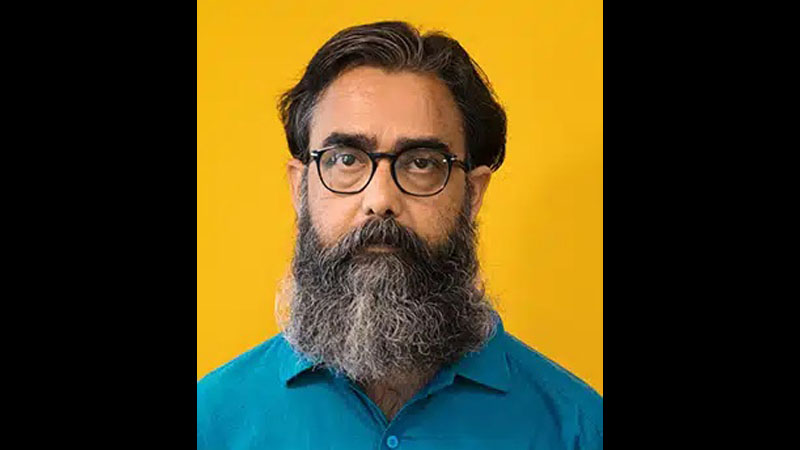
The article has been authored by Anant National University assistant professor and head of the centre for moving image – Prof Akash Gaur.





MAM
Lego brings Messi, Ronaldo, Mbappé, Vinicius together
Campaign clocks 314 million views ahead of FIFA World Cup 2026 buzz.

MUMBAI: Four legends, one frame and not a single tackle in sight. Lego has pulled off a crossover few thought possible, uniting Lionel Messi, Cristiano Ronaldo, Kylian Mbappé and Vinícius Júnior in a single campaign ahead of the FIFA World Cup 2026 only this time, they’re building dreams brick by brick.
Titled “Everyone wants a piece”, the campaign features the quartet assembling a Lego version of the World Cup trophy, before placing miniature versions of themselves atop it, a playful nod to football’s ultimate prize. Shared widely across social media, the ad carries a pointed disclaimer: it is not AI-generated, a subtle but telling signal in an era where even reality is often questioned.
The numbers tell their own story. The campaign has already crossed 314 million views on Instagram across the players’ accounts, with fans hailing it as a rare, almost nostalgic moment particularly for the reunion of Messi and Ronaldo, whose last shared campaign ahead of the 2022 World Cup became one of the platform’s most-liked posts.
Beyond the film, Lego is extending the play with exclusive, player-themed sets tied to each of the four stars, part of a broader football-led programme designed to ride the global momentum building towards 2026. The idea, as echoed by the players themselves, leans into the parallels between football and play experimentation, creativity, failure, and triumph.
Messi described the sets as a way to bring on-pitch moments into an imaginative, hands-on world, while Ronaldo called the transformation into a Lego figure a rare honour, blending sport with storytelling. Vinícius, meanwhile, struck a more personal note, recalling childhood moments of building with Lego and framing creativity as a universal language that transcends borders.
The timing is no accident. With the 2026 World Cup set to run from June 11 to July 19 across the United States, Canada and Mexico, and featuring an expanded 48-team format, global anticipation is already building. Argentina, led by Messi, will enter as defending champions, adding another layer of intrigue.
For Lego, the campaign does more than celebrate football, it taps into its mythology. Because when icons become figurines and rivalries turn into play, the beautiful game finds a new kind of pitch. one built, quite literally, by hand.






