Brands
From Rhône Valley to India: M. Chapoutier’s Journey of Award-Winning Wines

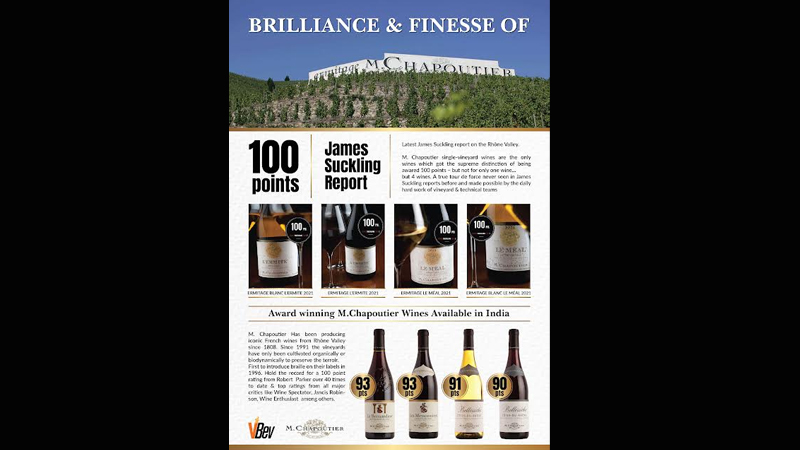
Mumbai – M. Chapoutier, a name synonymous with exceptional wines and a deep respect for terroir, proudly announces its winning wines from the James Suckling Report. Celebrating a rich history dating back to 1808, the brand continues to garner global acclaim, solidifying its reputation as a leader in the wine industry.
Originating in the picturesque Tain-l’Hermitage, Rhône Valley, France, M. Chapoutier was first established as “Calvet et Compagnie” and has evolved through generations. The partnership of Marius Chapoutier and Rodolphe Delépine in 1897 marked a significant milestone, birthing “Delépine et Chapoutier,” which began exporting wines to Europe. By 1922, Marius Chapoutier had taken sole ownership, renaming the company “Chapoutier et Compagnie,” and setting the stage for future success.
Michel Chapoutier, a pioneer in biodynamic viticulture, took over the reins in 1990. His commitment to a holistic and sustainable approach to agriculture continues to be a cornerstone of M. Chapoutier’s winemaking philosophy. This innovative approach, inspired by 19th-century scientist Rudolf Steiner, emphasizes natural processes and the interconnectedness of all living things, ensuring the production of exceptional quality wines.
While deeply rooted in the Rhône Valley, M. Chapoutier has expanded its presence globally. This has allowed the company to produce a diverse portfolio of wines catering to various palates, all while maintaining the family’s core values and commitment to quality.
Today, M. Chapoutier remains a thriving family business led by Michel Chapoutier, his wife Corinne, and their children, Mathilde and Maxime. Their dedication ensures M. Chapoutier continues to be a respected and influential name in the world of wine.
M. Chapoutier takes great pride in its numerous accolades. In 2019, the estate was ranked 5th in the “World’s Most Admired Wine Brands” by the British magazine “Drinks International.” Since the first edition of this ranking in 2011, Chapoutier has been the top French brand five times in nine years, highlighting its exceptional quality and innovative practices.
In the latest James Suckling report on the Rhône Valley, M. Chapoutier’s single-vineyard wines achieved an unprecedented feat: four wines were awarded a perfect 100 points. This remarkable accomplishment, never before seen in James Suckling reports, is a testament to the daily hard work of the vineyard and technical teams.
Now, Indian wine enthusiasts can now savor a selection of M. Chapoutier’s finest offerings, including:
● La Bernardine Rhône Valley – Châteauneuf-du-Pape
● M. Chapoutier Les Meysonniers AOP Crozes-Hermitage, Rhône Valley
● M. Chapoutier Côtes-du-Rhône “Belleruche” White
● M. Chapoutier Côtes-du-Rhône “Belleruche” Red
● M. Chapoutier Bila Haut
● Marius Red
● Marius White
VBev CEO, Sumedh Singh Mandla says “We are thrilled to bring the award-winning wines to the Indian market. We look forward to reaching out to the Indian audience and celebrating our love for exceptional wines.”
With these award-winning wines both M. Chapoutier and VBev are excited about the prospects of further expanding their presence in the dynamic and evolving Indian market.






