Brands
French Bloom races ahead as Formula 1’s first alcohol-free fizz partner


MUMBAI: Formula 1 has uncorked a new kind of partnership, naming French Bloom its first official non-alcoholic sparkling wine partner. The collaboration brings bubbles without the buzz to Grand Prix weekends, offering an inclusive and elevated way to toast every lap, podium and party.
From the 2025 season, French Bloom’s award-winning cuvées will be served across Paddock clubs, the F1 Garage and hospitality spaces, marking a milestone in the sport’s partnership with LVMH. The maison, co-founded by Maggie Frerejean-Taittinger and model Constance Jablonski, is the first alcohol-free brand backed by Moët Hennessy, which acquired a minority stake last year.
“Our sparkling cuvées unite centuries of French winemaking savoir-faire with cutting-edge innovation,” said Frerejean-Taittinger. “This partnership celebrates intention, sophistication and the future of how we raise a glass.”

With Netflix’s Drive to Survive fuelling global fandom and a surge of younger, more diverse audiences, the move reflects changing tastes. Millennials, gen z and female fans are driving demand for luxury choices that balance indulgence with moderation. French Bloom, crafted from organic Chardonnay and refined through an innovative dealcoholisation process, answers that call with style.
Formula 1’s chief commercial officer, Emily Prazer, added, “The addition of French Bloom brings variety to our hospitality portfolio and ensures every guest experiences true luxury at our races.”
Beyond bubbles, the tie-up carries a green note. French Bloom’s commitment to organic ingredients and reduced production impact dovetails with F1’s net zero carbon by 2030 goal.







Brands
KKR sixes to power EV charger rollout under VIDA campaign
Cricket meets clean mobility as big hits spark India’s charging growth
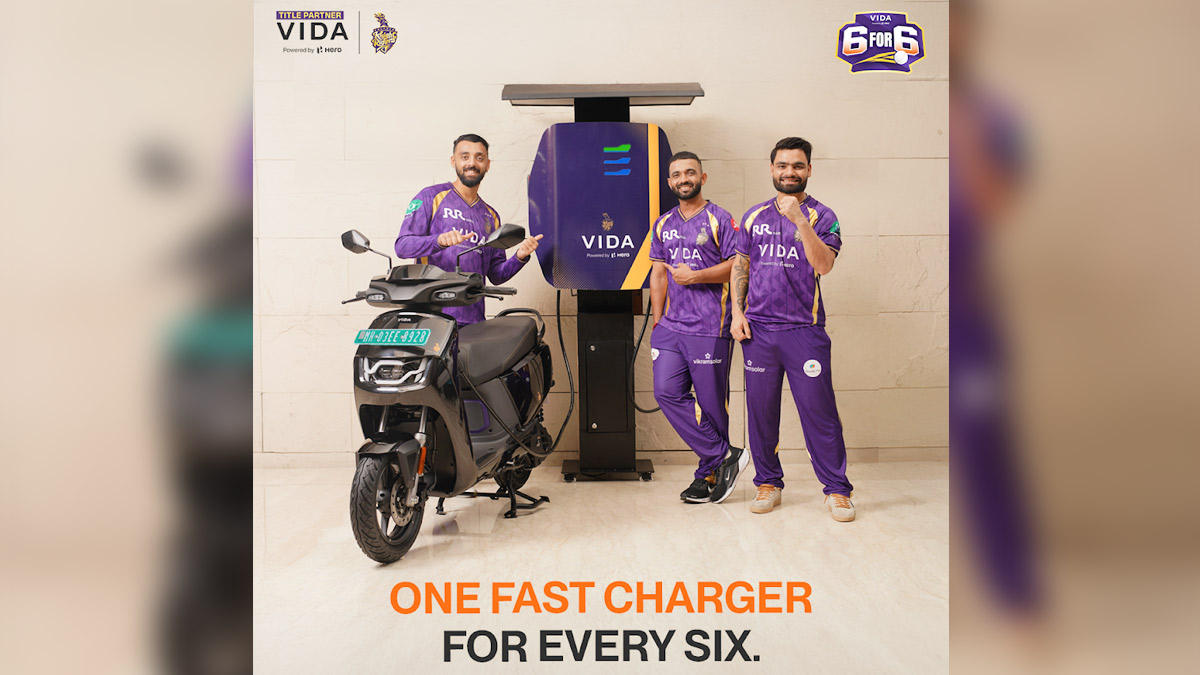
NEW DELHI: VIDA, the electric mobility arm of Hero MotoCorp, has teamed up with Kolkata Knight Riders to launch a campaign that turns cricketing flair into real-world impact.
Titled ‘6 for 6’, the initiative promises to install a 6kW fast EV charger for every six hit by KKR during the ongoing Indian Premier League season. The idea is simple but powerful, as each big hit on the field contributes directly to expanding India’s fast-charging infrastructure.
The campaign builds on VIDA’s growing network, which already spans over 5,300 fast-charging points across more than 430 cities. With EV adoption gaining pace, the brand is using cricket’s mass appeal to accelerate both awareness and infrastructure growth.
Explaining the thinking behind the move, Hero MotoCorp emerging mobility business unit chief business officer Kausalya Nandakumar said, “Cricket has an incredible ability to unite and inspire millions across the country. With the ‘6 for 6’ campaign, we are turning every big hit on the field into a step towards a cleaner and a more accessible mobility future.”
She added that VIDA’s expanding fast-charging network and removable battery technology are designed to make EV ownership more convenient and practical for everyday users.
From the franchise’s side, the campaign is also about giving on-field moments a larger purpose. Kolkata Knight Riders chief executive officer Venky Mysore said, “The ‘6 for 6’ campaign exemplifies the potential of sport as a platform for meaningful, real-world impact. By linking every six to the expansion of EV charging infrastructure, this partnership transforms fan excitement into tangible progress.”
As part of the rollout, VIDA has introduced co-branded charging stations in KKR’s signature colours, with a flagship installation unveiled alongside team players. The chargers are designed for quick top-ups, powering VIDA scooters from zero to 80 percent in about an hour, while also being positioned along key highways to support longer journeys.
The initiative also taps into VIDA’s removable battery system, which allows users to charge using standard household plug points, adding flexibility to the charging ecosystem.
By blending the thrill of cricket with the urgency of clean mobility, VIDA and KKR have found a neat way to make every six count twice, once on the scoreboard and again on India’s road to an electric future.








