MAM
Franklin Templeton, Bira 91, HelpAge India & Adventures Beyond Barriers Foundation join hands with Tata Mumbai Marathon 2020
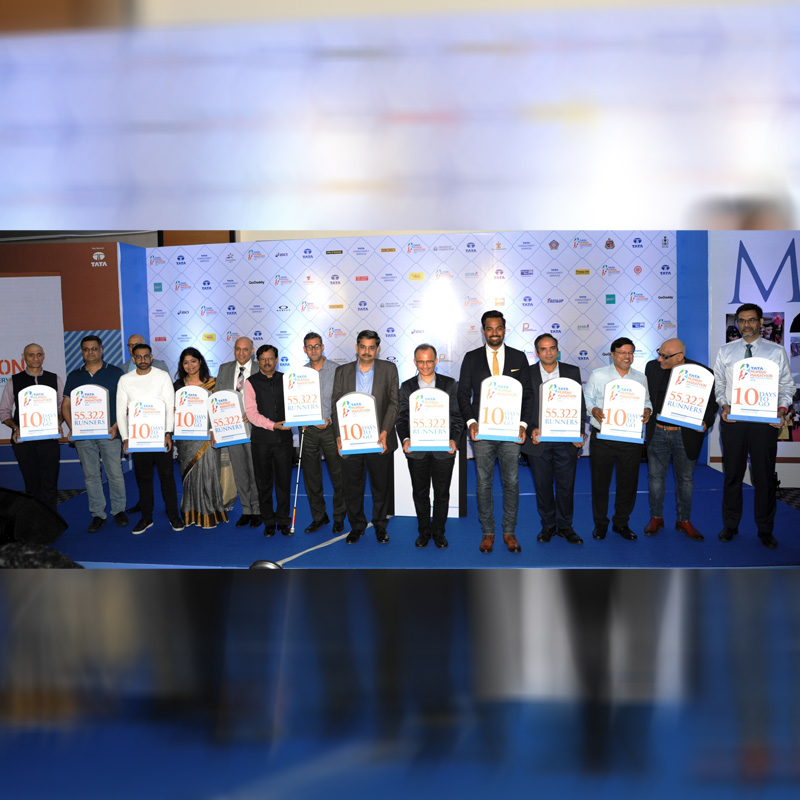
MUMBAI: Countdown to the 17th edition of Asia’s prestigious World Athletics Gold Label Road Race Tata Mumbai Marathon (TMM) has well and truly begun. First time in Indian distance running history 55,322 runners will stand in unison at the start line of the event and serve as an inspiration to #BeBetter. Credited for many firsts and the pride of the country, TMM has not only put Mumbai, but also India on the global distance running map.
Running is the fastest growing urban sport and the participation numbers at the 2020 edition of TMM is a testimony to this – 19% increase in total participation. 9,660 runners in the full marathon, 15,260 runners in Half Marathon, 19,707 runners in the Dream Run, 8,032 runners in 10K, 1,022 runners in Senior Citizen Run and 1,596 runners in Champion with Disability. Women participation has surged to 35%, while the outstation participation and full marathon participation saw a growth of 22% and 15% respectively.
Harish Bhat, Brand Custodian, Tata Sons, said, “Tata Mumbai Marathon is one of the largest and most exciting sporting events worldwide, with the run finding pride of place on the running calendar of elite global marathoners. This run is a beautiful symphony of humanity that celebrates the spirit of unity in diversity, inspiring both young and old alike while shaping a healthy world. This platform has helped the Tata group to increase our engagement with the community, raise funds for charity as well as create societal awareness about the necessity of good health and fitness. He further added, “It feels fantastic to experience the enthusiasm of the participants, consistently pushing the boundaries, and inspiring the human spirit. Looking at the response of the audience, we expect this year’s edition to be larger and better.”
CHAMPIONS AT THE START LINE: The USD$420,000 event will see in action defending champions Cosmas Lagat of Kenya and Worknesh Alemu of Ethiopia headline the international elite athletes’ line-up. Their winning timing of 2:09:15 and 2:25:45 is the second fastest timings in Mumbai Marathon history.
Leading the Indian elite men full marathon line-up is Army’s Srinu Bugatha, who won the Airtel Delhi Half Marathon and the Tata Steel Kolkata 25K 2019 editions, finishing the races in 1:04:33 and 1:18:31, respectively in last two months. Challenging him will be Rashpal Singh, Silver Medalist in Kathmandu South Asian Games 2019 along with Rahul Pal, winner of the Pune International Marathon 2019.
The Women’s full marathon line-up has Olympian and Arjuna Awardee, Sudha Singh, eyeing to add to her 3 TMM titles and firmly set on a hat-trick this year. Sudha won her first title in 2016 and after a year’s gap, she was champion in 2018 and 2019. Sudha will be challenged by Jyoti Gawte who won the Mumbai Marathon in 2017.
In the men’s half marathon category, Avinash Sable, 3,000 steeplechase national record holder, who shattered his own national record at World Championship at Doha in October & qualified for Tokyo 2020 Olympics will lead the field along with Shankar Man Thapa, who was the runner-up in 2019. Likewise, in the women’s half marathon, veteran athlete Swati Gadhave will face stiff opposition from 2019 runner-up & winner of 2018 edition, Monica Athare.
Vivek B Singh, Joint Managing Director, Procam International said: “More than 9000 runners doing the full marathon and crossing the 50,000 mark for total number of participants – both are humbling milestones for us. To see India, embrace running is a dream come true for us. We are thankful to the Government of Maharashtra, Mumbai Police, MCGM, our sponsors and our runners who have given their rock-solid support in the incredible journey of the Tata Mumbai Marathon. We wish all the participants a successful and enjoyable race day!”
2020 HIGHLIGHTS
TIME PERFORMANCE BONUS FOR INDIAN ATHLETES: TMM has always been a springboard for Indian athletes and the platform has managed to get the best out of them. With the same aim, this year, a Time Performance Bonus has been introduced for the Indian Elites.
|
|
At km mark |
Time cut-off |
Bonus |
|
Indian Elite men |
10K |
Under 00:32:00s |
₹ 40,000 |
|
|
20K |
Under 01:03:30s |
₹ 40,000 |
|
|
30K |
Under 01:35:00s |
₹ 40,000 |
|
Indian Elite women |
10K |
Under 00:37:10s |
₹ 40,000 |
|
|
20K |
Under 01:15:00s |
₹ 40,000 |
|
|
30K |
Under 01:51:00s |
₹ 40,000 |
NEW BRANDS FOR 2020: The culture of road-running in India has grown tremendously. This has opened an avenue for new brands and innovative associations. This year, Procam takes pride to announce four such new beginnings. Franklin Templeton, one of India’s largest* fund houses as Investment Partner (*Source: AMFI Website (based on AAUM as on September 30, 2019); Bira 91, one of India’s fastest-growing craft beer brands, as the official Companion; HelpAge India, an NGO that extensively works for the cause and care of Silvers, as the event’s Institution Partner for Senior Citizens category and Adventures Beyond Barriers Foundation, an NGO that works extensively towards inclusion via sports for persons with and without disability as its Inclusion Ally, to encourage Persons with Disability in the Open 10K category.
The Tata Mumbai Marathon is also proud to have continued support from Sports Goods Partner ASICS; Channel Partner Star Sports; Hydration Partner Bisleri; Recovery Partner Volini Maxx; Domains and Online Presence Partner GoDaddy; Timing Partner Seiko; Energy Drink Partner Fast&UP; Hospitality Partner Trident Hotels; Print Partner The Times of India; Driven by ALTROZ from Tata Motors; Music Entertainment Partner 98.3 Radio Mirchi; Medical Partner Asian Heart Institute; Philanthropy Partner United Way Mumbai; CWD Facilitator ADAPT and Performance Eyewear Partner Oakley.
RUN YOUR WAY: This year at the Tata Mumbai Marathon create magic on race day by running your way. Individuals and groups across all race categories can express themselves in their own unique way. More than just running in costume, you can also express yourself via your favourite song, poetry on the pride for the city, showcase your favourite dance moves, a rap you’ve written, even your beliefs or a cause close to your heart or just about any other form of expression and talent that you would like to showcase on race day.
All you have to do is capture your expression via photograph or video on race day anywhere along the official holding area, race route or post finish area. Upload your expression with a short description before 6:00 pm on 19th January 2020 and stand a chance to win attractive cash prizes. For more details log on to: tatamumbaimarathon.procam.in/runners-information/run-your-way
MIRCHI GET ACTIVE EXPO: A one-stop destination for runners, the Expo will be organized at GTX Block Ground, Opp Citi Bank Bldg., Off Bharat Petrol Pump, Bandra (East), Bandra Kurla Complex from 15th to 18th January 2020. The Expo will be on between 10.30 a.m. and 7.00 p.m. on 15th to 17th January 2020, and on 18th January 2020 between 10.00 a.m. and 5.00 p.m. The Expo is also the venue for all confirmed participants from Mumbai and Outstation registered runners to come and collect their running bibs, study in detail race day instructions, familiarize themselves with all the timelines, approach plans, layout plans, security arrangements, traffic restrictions, road closures and other provisions that will come into force on Race Day.
TATA IN SPORTS
Tata Group is a global enterprise with combined revenues of US $110.7 billion (2017-18), along with Tata Consultancy Services (TCS), one of the world’s leading IT services, consulting and business solutions organisations, are the title sponsor of the Tata Mumbai Marathon.
Sport has always been an integral part of the Tata group for over 75 years. Tatas association with multiple sports ranging from cricket, football, hockey, badminton, chess, athletics, mountaineering and motor racing, among others, has produced many award-winning sportspersons, helped the development of marginal communities and supported sporting teams, national and international events as well as training academies. The Tata Sports Club was set up in 1937 to encourage sports among its employee base across the country.
TCS is the sponsor of many premier global marathons across the world like, the TCS New York City Marathon, the TCS Amsterdam Marathon, and the TCS Lidingloppet (the world’s largest cross-country run), and the technology partner of marathons held in London, Chicago, and Boston — all part of the company’s effort to promote health and fitness in the communities, the world over.

MAM
MOTS-c: Metabolic Intelligence and Adaptive Stress Coordination
In recent decades, peptide research has expanded beyond classical endocrine and paracrine paradigms toward a more nuanced understanding of short peptides as informational entities with the potential of supporting research model-wide coordination. Within this evolving framework, mitochondrial-derived peptides have emerged as particularly intriguing signaling candidates, challenging traditional distinctions between genetic compartments and regulatory hierarchies. Among these peptides, MOTS-c occupies a singular conceptual position due to its unusual genetic origin, conserved sequence, and theorized role in metabolic and stress-adaptive communication.
Encoded within the mitochondrial genome rather than the nuclear genome, MOTS-c represents a departure from conventional peptide biosynthesis narratives. Investigations purport that this peptide may function as a molecular liaison between mitochondrial status and broader cellular decision-making networks. Rather than serving as a linear messenger with a single target, MOTS-c has been hypothesized to participate in multi-layered regulatory dialogues involving energy sensing, transcriptional modulation, and adaptive resilience.
Molecular Origin and Structural Context
MOTS-c is a short peptide composed of 16 amino acids, encoded within the 12S ribosomal RNA region of mitochondrial DNA. This mitochondrial origin distinguishes it from the majority of known regulatory peptides, which are typically derived from nuclear-encoded precursor proteins. Research indicates that the peptide’s sequence is highly conserved across populations, suggesting evolutionary pressure to maintain its functional integrity.
The compact structure of MOTS-c has led researchers to hypothesize that its biological relevance may arise not from structural complexity, but from signaling precision. Small peptides are increasingly studied for their potential to interface efficiently with intracellular sensors, transcriptional regulators, and metabolic enzymes. In this context, MOTS-c seems to act as a rapid-response informational unit, translating mitochondrial energetic status into broader regulatory adjustments within the research model.
Mitochondrial Communication Beyond Energy Production
Historically, mitochondria have been framed primarily as bioenergetic organelles responsible for ATP synthesis. Contemporary research, however, increasingly positions mitochondria as signaling hubs capable of influencing nuclear gene expression, redox balance, and metabolic prioritization. MOTS-c appears to align closely with this reconceptualization.
It has been theorized that MOTS-c may serve as part of a mitochondrial-to-nuclear communication axis, conveying information related to nutrient availability, energetic strain, or metabolic imbalance. Rather than operating through classical receptor-mediated pathways, the peptide seems to interact directly with intracellular signaling cascades or transcriptional machinery. Such interactions could allow mitochondrial signals to shape nuclear responses without reliance on traditional hormone-like dynamics.
Metabolic Coordination and Energy Sensing
One of the most extensively discussed domains of MOTS-c research involves metabolic regulation. Research suggests that the peptide may be linked to pathways governing glucose utilization, lipid handling, and overall energy efficiency. Specifically, investigations purport that MOTS-c might interact with cellular energy sensors involved in detecting fluctuations in nutrient availability.
Within this framework, MOTS-c has been hypothesized to support adaptive metabolic reprogramming under conditions of energetic challenge. Rather than forcing a single metabolic outcome, the peptide appears to assist in recalibrating pathway prioritization, promoting flexibility rather than rigidity. This property positions MOTS-c as a potential mediator of metabolic intelligence rather than a driver of isolated biochemical reactions.
Transcriptional Modulation and Nuclear Interaction
A particularly compelling aspect of MOTS-c research involves its theorized interaction with nuclear transcriptional processes. Research indicates that under certain conditions, the peptide is believed to translocate toward the nucleus, where it may support gene expression patterns associated with metabolism and stress adaptation.
Rather than acting as a transcription factor itself, MOTS-c appears to modulate transcription indirectly by interacting with regulatory complexes or chromatin-associated proteins. This mode of action would allow the peptide to fine-tune gene expression in response to mitochondrial signals, creating a feedback loop between energy status and genomic activity.
Stress Adaptation and Cellular Resilience
Beyond metabolism, MOTS-c has attracted attention for its potential involvement in adaptive stress responses. Research models exploring oxidative strain, energetic imbalance, and environmental pressure have prompted hypotheses that the peptide may participate in resilience-oriented signaling pathways.
It has been theorized that MOTS-c might assist in coordinating protective transcriptional programs during periods of metabolic or energetic stress. Rather than neutralizing stressors directly, the peptide appears to contribute to adaptive recalibration, enabling cells to maintain functional coherence under suboptimal conditions.
Implications for Cellular Aging and Longevity Research
Mitochondrial signaling has long been implicated in cellular aging-related research domains, particularly those involving metabolic decline and reduced adaptive potential. Within this context, MOTS-c has been proposed as a molecule of interest due to its apparent association with metabolic regulation and stress coordination.
Research indicates that mitochondrial-derived peptides may play roles in maintaining systemic coherence over time. MOTS-c, by virtue of its origin and signaling properties, could represent a component of long-term adaptive maintenance systems within the research model. Rather than targeting aging as a singular process, the peptide appears to support the balance between energy efficiency, repair prioritization, and adaptive flexibility.
Conclusion: MOTS-c as a Symbol of Mitochondrial Intelligence
MOTS-c represents more than a short amino acid sequence encoded within mitochondrial DNA. It embodies a paradigm shift in how regulatory peptides are conceptualized — not merely as messengers, but as integrators of metabolic information, stress signals, and adaptive priorities. Researchers interested in this product may find it online for research purposes.
References
[i] Lee, C., Kim, K. H., Cohen, P., & Yoon, Y. (2016). MOTS-c: A novel mitochondrial-derived peptide regulating muscle glucose metabolism and insulin sensitivity. Cell Metabolism, 24(3), 399–410. https://doi.org/10.1016/j.cmet.2016.07.012
[ii] Kim, K. H., Son, J. M., Benayoun, B. A., Lee, C., & Cohen, P. (2018). The mitochondrial-encoded peptide MOTS-c translocates to the nucleus to regulate nuclear gene expression in response to metabolic stress. Cell Metabolism, 28(3), 516–524.e7. https://doi.org/10.1016/j.cmet.2018.06.008
[iii] Lee, C., Zeng, J., Drew, B. G., Sallam, T., Martin-Montalvo, A., Wan, J., … Cohen, P. (2015). The mitochondrial-derived peptide MOTS-c promotes metabolic homeostasis and reduces obesity and insulin resistance. Nature Communications, 6, 8951. https://doi.org/10.1038/ncomms9951
[iv] Yen, K., Lee, C., Mehta, H. H., Cohen, P., & Barzilai, N. (2013). The emerging role of mitochondrial-derived peptides in metabolism and aging. Journal of Clinical Investigation, 123(10), 4521–4527. https://doi.org/10.1172/JCI68820
[v] Merry, T. L., Chan, A., Woodhead, J. S. T., Reynolds, J. C., Kumagai, H., Kim, S. J., … Ristow, M. (2020). Mitochondrial-derived peptides in energy metabolism. American Journal of Physiology – Endocrinology and Metabolism, 319(4), E659–E666. https://doi.org/10.1152/ajpendo.00209.2020
Disclaimer:This article has been published without the journalistic or editorial involvement of IndianTelevision.com, IndianTelevision.com Group, or any of its affiliated websites. IndianTelevision.com Group does not endorse, subscribe to, or take responsibility for the content, opinions, or views expressed herein.
Readers are further advised that Online Casino, Betting, Cryptocurrency products, Financial Investments/Engagements, NFTs, and products or calls-to-action related to Health, Booking, Wellness, and Food are largely unregulated and carry significant risk. There may be no regulatory protections or avenues for recourse in the event of financial losses or health-related risks arising from engagement with such products or services.
IndianTelevision.com Group expressly disclaims any responsibility or liability for the information, views, announcements, declarations, or affirmations presented in this article. By choosing to proceed, the reader acknowledges and agrees that they do so at their own discretion and risk, and expressly absolve IndianTelevision.com (IndianTelevision.com Group) from any potential legal claims, liabilities, or actions.
The content provided is solely for informational and awareness purposes.