MAM
FCB India’s Rohit Ohri’s advertising mantras

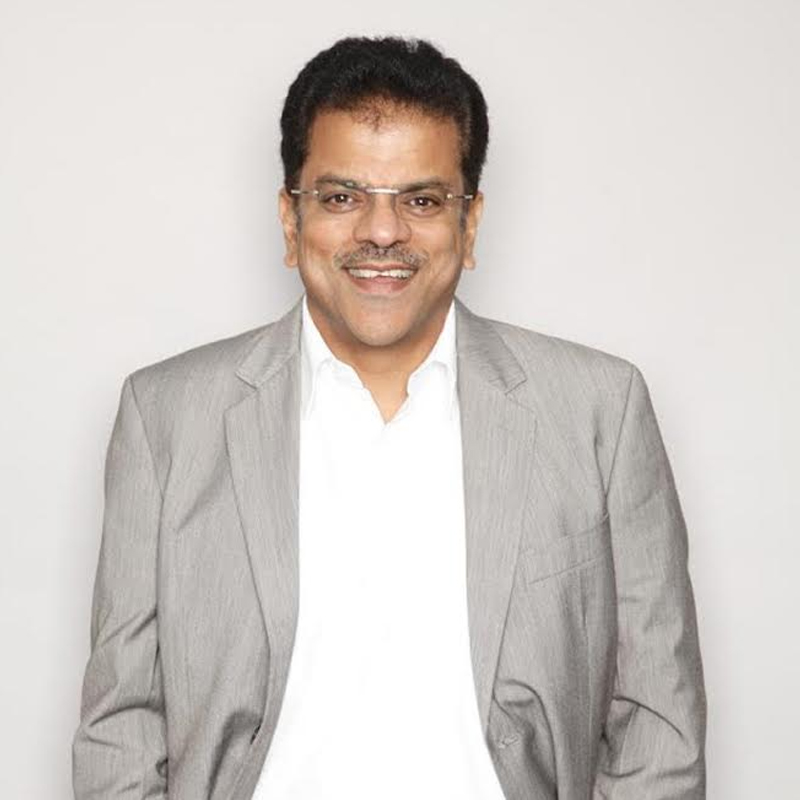
NEW DELHI: FCB India group chairman & CEO Rohit Ohri doesn’t need a long introduction. An ad veteran, with years of experience in the trenches, he has earned respect and his stripes over the past three decades.
Hence, when he got together with Indiantelevision.com founder CEO & editor-in-chief Anil Wanvar over in a virtual fireside chat on Saturday when the rest of the industry was putting its legs up, resting, one expected some interesting insights. And boy! did he provide them.
For instance, he revealed that he is not a great votary of working from home (WFH), which has become the norm now. He has accepted it as a necessity but is raring to get back to the office.

“I come from the pretty old school of advertising, and WFH is much harder because you’re doing so many things altogether,” he said. “Advertising is a people business. Yes, virtual meetings are good, we are getting more work done, and are saving on travel time. But the business of advertising requires ideas, which we get in casual interactions and in the face to face meetings and even in having fun. That constant interaction is essential to get the creative juices flowing more. I can't wait to get back.”
He, however, admitted that the past few months of lockdown and WFH have allowed him the opportunity to get involved in the larger set of business needs. Plus it has lent to a cleaning up of the environment something that millennials have really appreciated. “Nature is telling us it is possible to clean up your act and this realization has made an impact among people,” he revealed.
Ohri shared that he has learned all about advertising from his first boss Kolkata-based Response Advertising’s Ram Ray who passed away in November 2019.
“His skills, his passion, his attention for detail was impeccable, his eye for detail are qualities that I have never seen in many ad professionals,” he expounded. "Ray used to write letters to clients and employees, one of the best lessons I learned in business communication. He always had said if you don’t pay attention to your own brand and if the client sees shoddy communication how will you handle them? Ray took me under his wings, and I learned so many things.”
Ohri firmly asserted, as leaders of companies and organizations it’s our responsibility to mentor the next generation and leave a rich legacy.
According to him, Ogilvy’s Piyush Pandey brought about a change in the way creative brand advertising can be used to build organisations just like he did for Pidilite.
Read our coverage on Rohit Ohri
But he was also very clear that he lets FCB’s advertising output do the talking rather than sounding a bugle about its creative prowess. “I don't believe in the flamboyance of agencies at all, the flamboyance should be the brands,” he emphasised. “In my head, what work we do, and the best rewards are when the brands do well in the market. In my book, there’s no other flamboyance required. It is genetically against the way FCB is as an organization. We believe in solid partnership with clients.”
He believes that an agency’s role has evolved to become more of a marketing solutions provider. “It’s not just about advertising. It goes way beyond helping them solve any marketing problems. This is something FCB is known for since Anil Kapoor’s days,” he pointed. For instance, the decision to air old Amul commercials during Ramayan and Mahabharat on Doordarshan was something that both the FCB and the Amul team reached. “It was a nostalgic journey into the Amul history,” Ohri explained. ”And on many levels, AmulDoodhPeetaHaiIndia will go down in marketing history because of the way the brand behaved during this crisis. It built a new bond with the whole set of consumers. There was not a day when Amul Milk was off the shelves even during the lockdown. Even with consumers, it brought back the nostalgia, and everybody felt connected with the brand.”
Ohri shared that he is cautiously optimistic about the advertising industry’s propsects going forward. “We have a global freeze on recruitments or increments, everyone is holding together in these difficult times. But the good news is that clients are coming back and there’s a lot of pent up demand,” he revealed. “FMCG, automotive, white goods are a few categories that have seen improvements.
He pointed out that there’s a clear pathway that he has charted out for the FCB group (which includes FCB Ulka, FCB Interface, Lodestar UM, FCB Digital, and FCB Cogito). “We are not in the binge acquisitions game,” he said. “We work with partners to provide services to our clients who are satisfied with what we have to offer. That's the path we will continue to tread. Additionally, we have brought all our digital offerings in-house under the main agency. I believe that way we can work holistically together to offer clients a comprehensive solution.”






MAM
Lego brings Messi, Ronaldo, Mbappé, Vinicius together
Campaign clocks 314 million views ahead of FIFA World Cup 2026 buzz.
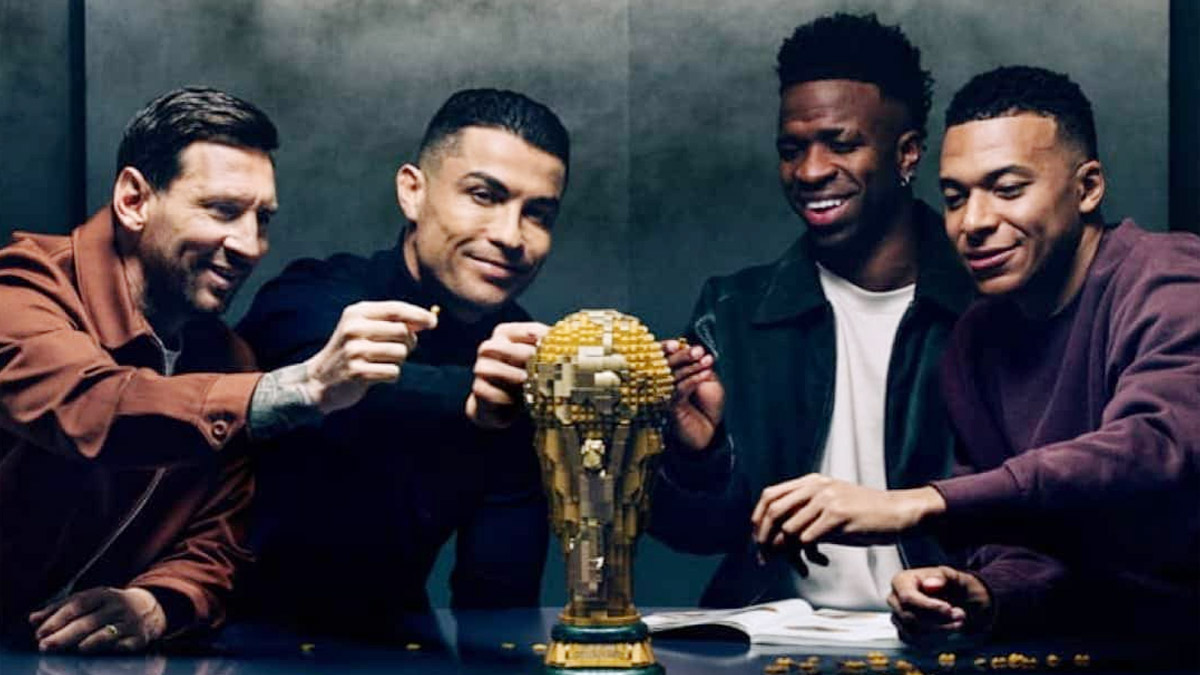
MUMBAI: Four legends, one frame and not a single tackle in sight. Lego has pulled off a crossover few thought possible, uniting Lionel Messi, Cristiano Ronaldo, Kylian Mbappé and Vinícius Júnior in a single campaign ahead of the FIFA World Cup 2026 only this time, they’re building dreams brick by brick.
Titled “Everyone wants a piece”, the campaign features the quartet assembling a Lego version of the World Cup trophy, before placing miniature versions of themselves atop it, a playful nod to football’s ultimate prize. Shared widely across social media, the ad carries a pointed disclaimer: it is not AI-generated, a subtle but telling signal in an era where even reality is often questioned.
The numbers tell their own story. The campaign has already crossed 314 million views on Instagram across the players’ accounts, with fans hailing it as a rare, almost nostalgic moment particularly for the reunion of Messi and Ronaldo, whose last shared campaign ahead of the 2022 World Cup became one of the platform’s most-liked posts.
Beyond the film, Lego is extending the play with exclusive, player-themed sets tied to each of the four stars, part of a broader football-led programme designed to ride the global momentum building towards 2026. The idea, as echoed by the players themselves, leans into the parallels between football and play experimentation, creativity, failure, and triumph.
Messi described the sets as a way to bring on-pitch moments into an imaginative, hands-on world, while Ronaldo called the transformation into a Lego figure a rare honour, blending sport with storytelling. Vinícius, meanwhile, struck a more personal note, recalling childhood moments of building with Lego and framing creativity as a universal language that transcends borders.
The timing is no accident. With the 2026 World Cup set to run from June 11 to July 19 across the United States, Canada and Mexico, and featuring an expanded 48-team format, global anticipation is already building. Argentina, led by Messi, will enter as defending champions, adding another layer of intrigue.
For Lego, the campaign does more than celebrate football, it taps into its mythology. Because when icons become figurines and rivalries turn into play, the beautiful game finds a new kind of pitch. one built, quite literally, by hand.






