Brands
EGOSS announces its new manufacturing unit
Mumbai: EGOSS, an Indian footwear brand, has announced its comprehensive expansion plan by acquiring a new state-of-the-art production unit at Agra. This expansion allows the introduction of advanced machinery and design for large-scale operation preparing to position them as a true global leader. Once operational, the unit would tremendously increase the manufacturing capacity to almost three million pairs from the current one million pairs a year, effectively structuring a means to increase domestic and international customer base. The new unit would also boost the ‘Make in India’ campaign and help raise the profile of Uttar Pradesh as an ideal investment destination. Agra, a GI-tagged city for leather footwear would also get another feather in its cap for being one of the leading cities in the world for footwear.
EGOSS has been a household name in India for decades, and it is now very strongly on the road to establishing a strong presence in the tier II and tier III cities and smaller towns within India. The brand is realising the full potential inherent in this market with its presence in the international market by exporting to the Middle East and Asian countries already.
By developing targeted strategies for these growing regions, EGOSS aims to become a ubiquitous symbol of comfort, style, and heritage across the nation and beyond. EGOSS understands that innovation is more than just technology. It is committed to continuously improving models while discovering new functional materials and technologies that bring increased comfort to users, without giving up on time-honored handmade tradition and excellence. Another prime focus is on sustainability, where EGOSS works on eco-friendly initiatives throughout its activities.
“We envision a world where crafted footwear is synonymous with our brand.” said EGOSS founder Ravindra Bhatia. “The proposed plan lets us reach that goal without compromising the intrinsic strengths built over the years. We are quite positive that with enhanced production capacity, coupled with strategic market expansion and a commitment to innovation, along with strong belief in being environment-friendly, EGOSS shall be synonymous with trust for generations to come.”
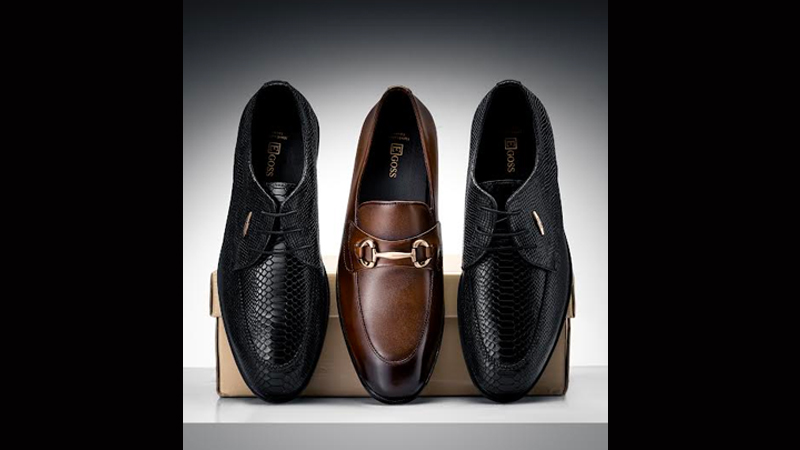
EGOSS identifies and adapts to evolving customer preferences. This translates into a commitment to monitoring trends and tailoring product lines to meet them, whether it’s the growing demand for sneakers or the increasing interest in vegan materials. The company operates three brands in footwear – EGOSS, Lafattio (luxury footwear), and Ladyboss by Egoss (women’s footwear) and is available online and at over 2000 plus outlets pan-India. The company also welcomes private labeling opportunities as it continues to expand its global footprint.

Brands
Estée Lauder to shed 10,000 jobs as new boss bets on digital shift
The cosmetics giant raises its profit outlook but stays silent on a possible merger with Spain’s Puig, as job cuts deepen and a three-year sales slump weighs on the turnaround
NEW YORK: Stéphane de La Faverie is not done cutting. Estée Lauder announced on Friday that it plans to eliminate as many as 3,000 additional jobs, taking its total redundancy programme to as many as 10,000 roles, up from a previous target of 7,000 announced a year ago. The company, which owns La Mer, The Ordinary, Tom Ford, and Aveda, employs roughly 57,000 people worldwide. The mathematics of what is now being contemplated is stark.
The fresh round of cuts is expected to generate a further $200 million in savings, bringing the total annual savings from the programme to as much as $1.2 billion before taxes. That money, De La Faverie has made clear, will be ploughed back into the turnaround.
A CEO in a hurry
De La Faverie, who took the helm in January 2025, inherited a company that had endured three consecutive years of annual sales declines. His response has been to move fast and cut deep. A significant portion of the latest redundancies reflects his push to reduce headcount at US department stores, long a cornerstone of Estée Lauder’s distribution model but now a channel in structural decline. In their place, he is accelerating the shift toward faster-growing online platforms, including Amazon.com and TikTok Shop, a pivot that is reshaping not just where Estée Lauder sells but how it thinks about its customers.
The numbers are moving in the right direction
Despite the pain, there are signs the medicine is working. Estée Lauder raised its profit outlook for the remainder of the fiscal year, guiding for adjusted earnings per share in the range of $2.35 to $2.45, above analyst estimates and a notable step up from the $2.05 to $2.25 range it had guided for in February. Organic net sales growth is expected to come in at 3 per cent, the company said, at the high end of the range it set out in February.
The share price tells a mixed story. After De La Faverie took charge, the stock surged nearly 60 per cent, buoyed by investor optimism that a longtime company insider could finally arrest the decline. But 2026 has been rougher: the shares have fallen 27 per cent this year, weighed down by disappointing February results and the overhang of unresolved merger talks with Spanish beauty giant Puig Brands SA. The company gave no additional details about those discussions on Friday, leaving the market to guess.
Silence on Puig
The proposed tie-up with Puig remains the most consequential unknown hanging over Estée Lauder. A deal with the Barcelona-based group, which owns brands including Carolina Herrera and Rabanne, would reshape the global luxury beauty landscape. But with nothing new to say and a turnaround still very much in progress, De La Faverie is asking investors to trust the process.
Three years of sales declines, 10,000 job cuts, and a merger that may or may not happen. At Estée Lauder, the overhaul has barely started.