Brands
Economic slowdown impacted ad spend in H2 2019

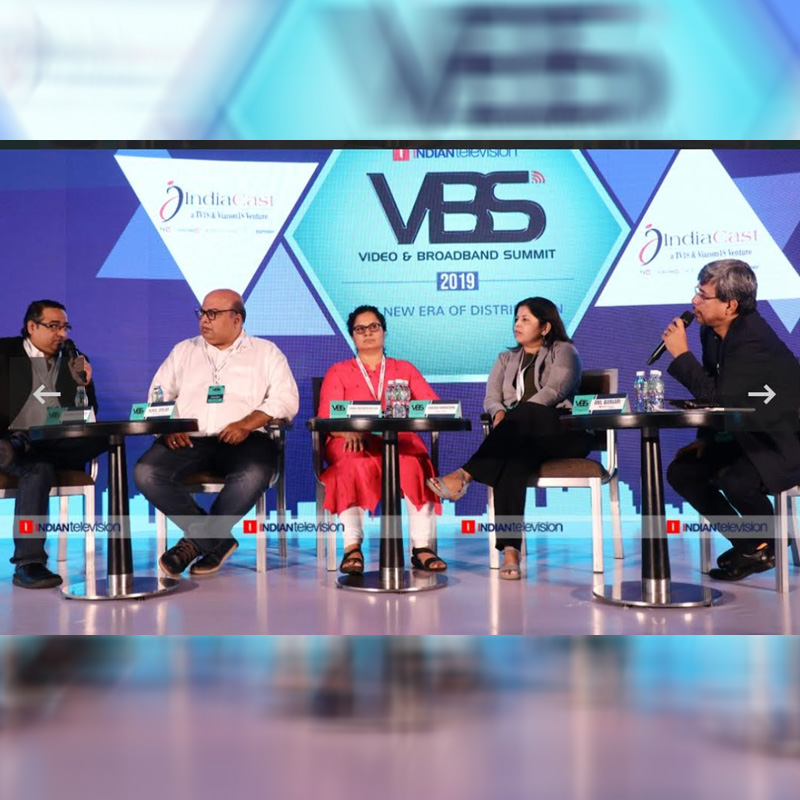
MUMBAI: Economic slowdown in 2019 brought the country, as well as the media industry, to a standstill. It visibly impacted advertising spends. This view was shared by advertisers present during the sixteenth edition of the Video and Broadband Summit 2019 that took place on 11 December in Mumbai.
The panel was moderated by indiantelevision.com founder, CEO and editor-in-chief Anil Wanvari, with panellists ITC Ltd head media and PR Jaikishin Chhaproo, Havas Media Group managing partner west and south Kunal Jamuar, Godrej Consumers Pvt Ltd VP and head of media services Subha Sreenivasan Iyer and Madison Media vice president Vandana Ramkrishna.
Chhaproo, in his opening statement, said, “There has been a yo-yo syndrome since January 2019 and the only two media-mela events (Indian Premier League and World Cup) in the first half of the financial year saw some advertisement growth.”

He further added that since June people have been quite cautious about advertisement spend.
Agreeing to Chhaproo’s perspective, Jamuar said, “2019 has been something like that of 2008 double dip. And, with respect to advertisement spend on television is as similar as of last year.” Many of Havas Media Group’s clients are from the auto and finance sectors.
All of the four panellists were of the view that along with other sectors, the advertisement spends on television has also been slow and has hardly seen any growth this year.
Accepting the slowdown in the market, Iyer said, “This year had made us re-look at all our advertising plans due to lack of resources and we have been far more prudent in terms of evaluating the need for further spend with quantifiable ROI."
Meanwhile, Ramkrishna believes that one of the reasons for the slowdown could be because of the poor performance of world economies.
According to Ramkrishna, her agency being associated with retail brands, the festive season has not turned up to be a happening one. Adding further, she said people are very cautious on spends and there’s a fear that the economy is going to crash.
However, despite facing a slowdown, Iyer said that in terms of volume, the company’s growth is very strong, which is a positive sign. This goes with competitors as well, especially, in the FMCG sector.
She added, “Consumers are not completely cutting down on their basic essentials, especially in segments where value for money is core.”
In the same context, ITC’s PR head said, “Consumers seek value for money and this is what is happening in the current economic situation. Moreover, there have been steady volumes all over.”
Ramkrishna, talking about NTO’s impact on advertising spend, said, “GEC and movie channels continue to be there and the new order has hardly affected the brands' television spends.” However, she pointed out that the smaller set of channels will certainly have an adverse effect.
GPCL’s media head said there has been a vast difference between DTH and cable networks in data capturing granularity and that helps brands to decide on advertising spends on television.
Havas Media’s managing partner questioned the importance of a proper measurement of audiences’ rating that has seen improvement after DTH’s existence. He said, “Today, niche channels are offering niche content, making the existing eco-system a bit difficult.”
Iyer said that companies are ready to test any medium, just that accurate third party data is needed.







Brands
ITC Sunfeast Farmlite launches Sugar Free Cookies range
New variants offer guilt-free indulgence for health-conscious snackers.

MUMBAI: ITC Sunfeast Farmlite is sweetening the deal for biscuit lovers who want to have their cookie and eat it too without the sugar. The better-for-you biscuits range from ITC Foods has expanded its portfolio with the launch of an all-new Sugar Free Cookies line, aligning with the company’s vision of ‘Help India Eat Better’. The range is designed for consumers who are rethinking sugar in their daily snacking but refuse to compromise on taste and indulgence.
The collection debuts with two tempting variants: Choco Nut Cookies and Hazelnut & Oats Cookies. Both are a source of protein and contain no trans-fat, while the Hazelnut & Oats variant is also lactose-free.
ITC Ltd. vice president (marketing), biscuits, foods division, Suraj Kathuria said, “At Sunfeast Farmlite, we believe mindful snacking should never come at the cost of indulgence. With this launch, we are catering to the growing need for guilt-free snacking while delivering a rich, satisfying cookie experience.”
ITC Ltd. vice president & head of food sciences for foods division Dr Shantanu Das added, “We have applied robust food science to develop cookies that are sugar-free while preserving the taste and texture consumers love.”
Each cookie comes in convenient single-serve packs to maintain texture and freshness. Both variants are available in 100g packs priced at ₹100 and can be found on quick-commerce platforms including Blinkit, Swiggy Instamart, and Zepto.
In a market increasingly leaning towards healthier choices, ITC Sunfeast Farmlite’s new Sugar Free Cookies prove that cutting sugar doesn’t mean cutting joy. For the health-conscious yet indulgent snacker, this could be the perfect bite-sized solution.






