Brands
Don’t think celeb-featured TV ads get customers to buy products: OnePlus’ Vikas Agarwal


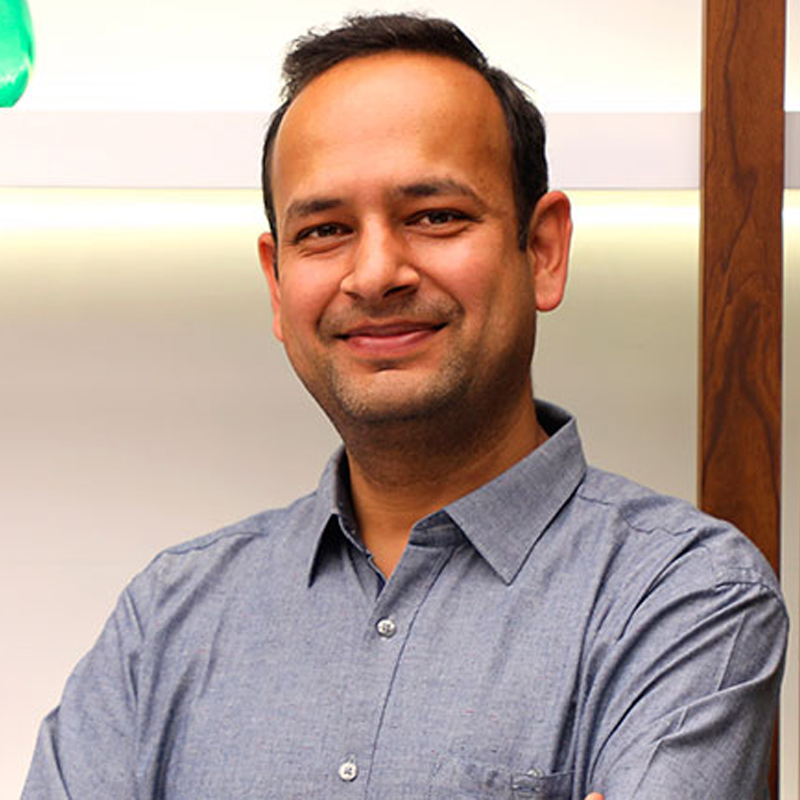
MUMBAI: India is the world’s second-largest smartphone market, a key battleground for a number of brands. As per a Counterpoint report, the premium smartphone market in the country saw a growth of 8 per cent in 2018 and leading the roost was a relatively younger brand OnePlus, holding 30 per cent of the market share.
Launched in December 2014 in India, OnePlus has been a mass favourite since day one. It has managed to leave behind its two key competitors, Samsung and Apple with a clear margin in just four years of its entry into the Indian market. Despite minimal advertising, it has managed to get all the eyeballs in its direction. Indiantelevision.com recently interacted with the brand's general manager for India, Vikas Agarwal to seek the recipe behind this delight of success and the way ahead.
Attributing this feat to the user-focussed approach the brand uses, Agarwal shared, “If we talk about premium segment smartphones in India, there were not many good options for users [before OnePlus launched]. It had been an under-served market. In fact, there were only two brands holding the market, Apple and Samsung. Other brands were not really focussing on this segment because they found it too difficult to penetrate. It is not easy to give products that the consumers would find good in all aspects and that is where OnePlus has done really well.”
He continued, “Our product doesn’t stand for one or two features. We offer an overall experience; be it design or build quality, or software, OnePlus is really good and that becomes our key differentiating factor.”
Agarwal also noted that India had always been the focus market for the brand. On being asked if there was a deliberate attempt to keep the pricing lower than its competitors in the country, he replied, “Pricing is not very relevant to us. We were sure from the beginning that we wanted to create a premium brand and offer the best possible products in that range. As I said, we are a user-focussed brand and we would never have wanted to take advantage of the user. So, we have been very honest and transparent depending on the product. We never have had a differential pricing strategy or product strategy for our phones in the Indian market. The same product is launched everywhere almost around the same date and almost at the same price.”
On being prodded about its marketing strategy and the budgets Agarwal shared that OnePlus doesn’t spend a lot on marketing and all the activities are looked after by an in-house team. Apart from that, its e-commerce partner looks after most of the digital campaigns. Its massive presence on Facebook, YouTube, and Twitter also helps.
He shared, “The core of our marketing strategy is word-of-mouth, irrespective of what we do on TV or on digital. We do not invest much in our marketing budgets. As we are a digital brand, we do not really spend in the open market offline or on any other omnichannel. We, in fact, do not do a lot of digital advertising as well. The ads are not really in focus for us. Thereby, we spend lesser than the rest of the industry. A large part of marketing happens on the Amazon platform that is a part of the channel. There, we help in contributing on to the ATL channels. And then there is social media, which is not a very expensive platform. The focus remains on emerging social media platforms like Instagram, LinkedIn or Quora.”
Elaborating more on the marketing strategies Agarwal commented, “For us, the marketing strategies are also a function of timing. So, when there is a launch we go a little heavy on marketing because then we have to maximise brand visibility. When there are seasonal sales like Diwali, Amazon does its own promotion as it is our sole e-commerce partner. Other than that it is just the community that we have earned with our products, which adds to the territory.”
He continued, “We are not big on TV because we don’t really think a customer requires a product because some celebrity is endorsing it. We did the Amitabh Bachchan campaign because we wanted to educate users that OnePlus is really the best at its mark in the country. The second and the third campaigns were done around the product launches when it was necessary to create national awareness about the new models.”
Agarwal concluded the discussion by sharing that 2019 is a big year because it is starting as number one in the market. He reckons that user expectations with the product have also increased. Agarwal said, “This year, we will be launching our first new product in the last 5 years, our smart TV. Second, we will be setting our biggest R&D centre globally in India. From a sales perspective, we will continue to strengthen our offline channels.”
He also shared that the brand will be investing in opening up new retail stores in the metro cities and increasing the count of its exclusive service centres. On the product front, OnePlus is looking towards contributing to the 5G boom that he sees as the future of telecom.