Brands
Digital is as important as traditional: Diageo


MUMBAI: Imagine any musical evening, whether it is soulful, hard core EDM (Electronic Dance Music) or just jam sessions. What goes well with music to get the party started, one may ask? The answer, liquor! Most liquor brands have cashed in on music by associating themselves with various concerts, sponsoring music festivals or even coming up with their own CDs.
Though alcohol is their main forte, India’s ban on direct advertising of the product forced them to position and market themselves through other products/services such as soda and music CDs that add negligible value to their sales.
Traditionally, alcohol beverage brands marketed themselves largely via print and television where they communicated a lifestyle and an attitude. But consumers today have multiple personalities and are more evolved resulting in brand using digital and social media platforms in a big way to communicate and be in tune with the audience. Diageo’s Amrit Thomas notes that digital is equally important for them as it is for any other brand in any given category.

When asked about how Diageo’s marketing and advertising budget has increased over the years, Thomas mentioned, “We are investing in our brand to build demand and manage a portfolio of brands and spends basis brand stage and requirements.”
Thomas does believe the impact of highway ban on liquor and GST has steered to subside now. “We are now looking at springing back from these events and project 2018 to be a good year for us.” The company is also strongly focused on its premium products and will be increasing its investment to boost the distribution and sale.
It is usually the media agency that creates a campaign for brands but in this case, the client decided to hand over the responsibility to Qyuki, which is a cross-platform media network across digital, live, TV and film. The company uses proprietary technology and analytics to discover and promote digital superstars and manages the end to end value chain for them across traditional and new media platforms. The tracks have been produced by Qyuki Media and creatively supported by DDB Mudra. Qyuki Media founder Samir Bangara mentions, “When you work with large brands they have a certain set approach on how much they want be involved in the project.There is a fine line between controlling the project and giving creative freedom and McDowell’s allowed us to get as creative as we wanted to, which is a rare brief to find nowadays.”
Today, India is the 3rd largest liquor market in the world, with an overall retail market size of $35 billion per annum. The annual consumption rate has increased steadily over the last six years and stands at 8.9 per cent as of 2017 and is growing at a CAGR of 8.8 per cent. The consumption is expected to reach 16.8 billion litres by the year 2022. The largest consumers come from the state of Haryana, Kerala, Karnataka, Himachal Pradesh and Andhra Pradesh. Although liquor brands advertise and promote their products in supermarkets and clubs, it is only limited to tier I and tier II cities The real challenge for them lies in advertising and pushing the brand in rural markets where the only platform they can use to create brand awareness is TV.
McDowell’s, a product from British alcoholic beverage company Diageo, launched its first ‘No.1 Yaari’ ad back in 2014 for its soda category and that was an instant hit. Keeping in tune with its philosophy of strengthening the bonds of brotherhood, McDowell’s has introduced its new sonic asset through ‘No.1 Yaari Jam’, a music platform with the release of five enchanting sound tracks. Shaped by ace music directors Salim & Sulaiman Merchant along with distinguished and renowned music artists from across India, these exhibit the spirit of Yaari that McDowell’s seeks to evoke amongst its customers across India.
Music is the largest genre that is consumed online with Youtube growing at the rate of 150 per cent year-on-year and drawing over 40 billion views per month. Hence, it was only fitting that McDowell’s decide to leverage digital superstars to perform in Yaari music videos. Bangara said, “Video content is exploding in India and with so much information thrown at us everyday on digital platforms, the only way a brand can break though the clutter is by creating content and not just advertising.”
The musical opus unfolds in five languages with Swarathma leading the jam in Karnataka, Mame Khan and band replicating their spellbinding symphonies in Rajasthan, Ishq Bector fashioning a foot tapping number from Punjab and Siddharth Mahadevan and Soumil Shringarpure weaving their magic in Maharashtra. The nationwide musical caravan concludes with Salim- Sulaiman and one of their oldest yaar Shaan. It took a dedicated eight months to come up with the masterpiece.
The music videos will be promoted on television, radio, OTT platforms, digital and all leading audio platforms including Saavn, iTunes, Gaana, etc





Brands
DeVANS sparks buzz with self-chilling beer can April Fools campaign
Godfather stunt racks up 7 million impressions, blending humour with hype
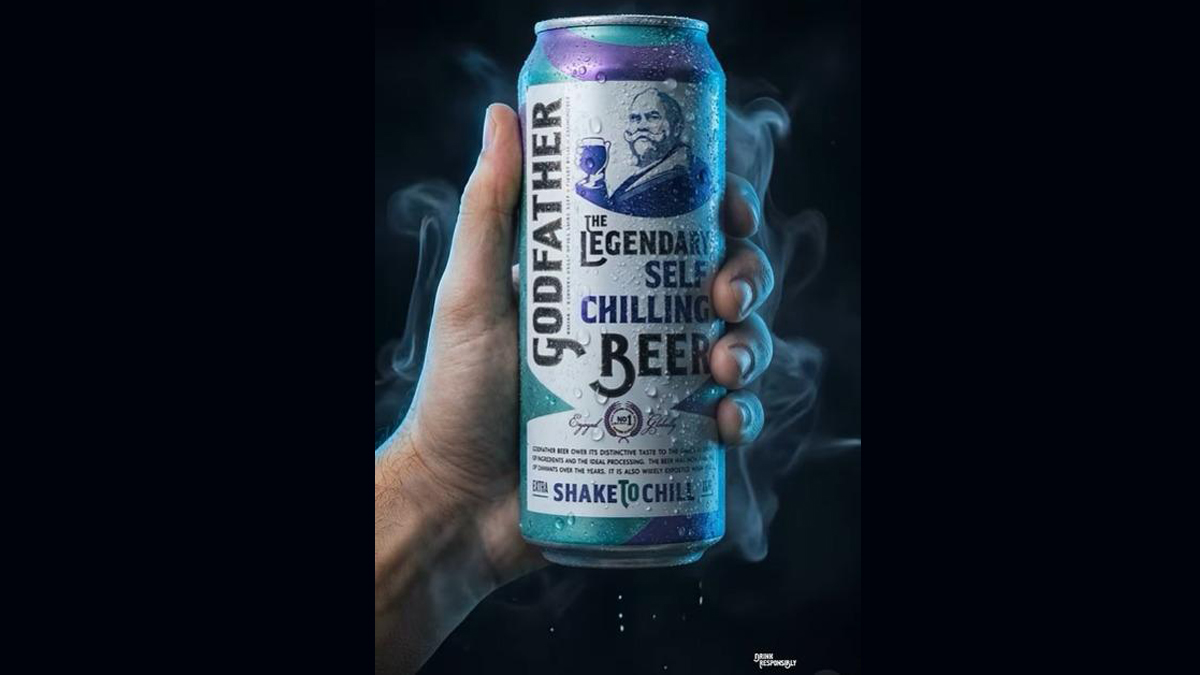
NEW DELHI: DeVANS Modern Breweries has stirred up the marketing pot with a playful yet high-impact campaign teasing a futuristic “self-chilling beer can” under its flagship Godfather label.
What began as a seemingly bold product innovation quickly turned into one of the most talked-about brand moments online, before being revealed as an April Fools’ Day prank. The reveal, however, did little to cool the buzz.
The campaign clocked over 7 million organic impressions across platforms including LinkedIn, Instagram, Facebook and X, with users debating whether the concept was a genuine breakthrough or clever marketing theatre. Thousands of shares and comments turned the idea into a full-blown conversation, drawing in both consumers and industry insiders.
The hook was simple but effective. A self-chilling can positioned as an on-the-go convenience product tapped into the imagination of younger, urban audiences. Add the timing around April Fools’ Day, and the campaign struck the perfect balance between curiosity and scepticism, keeping audiences guessing.
Marketing experts have pointed to the campaign as a case study in leveraging cultural moments. By leaving just enough ambiguity, the brand invited audiences to participate rather than simply observe, turning passive viewers into active contributors to the narrative.
“Godfather has always been an iconic brand, but iconicity must evolve to stay meaningful,” said DeVANS Modern Breweries chairman and managing director Prem Dewan. “The ‘Self-Chilling Can’ was our way of showing up in a cultural moment with confidence and a sense of humour.”
Beyond the numbers, the campaign signals a broader repositioning for Godfather. Long seen as a legacy beer brand, it is now leaning into youth culture, digital-first storytelling and topical engagement to stay relevant in a crowded alcobev market.
In a space where attention is fleeting, DeVANS has shown that sometimes the coolest idea is the one that keeps people guessing.






