MAM
Digital India is CASBAA India Forum 2016’s theme

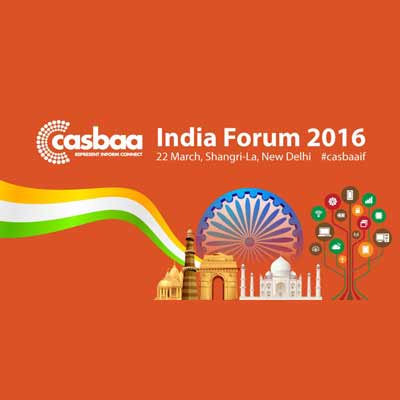
MUMBAI: On March 22 CASBAA will host local and international speakers at the India Forum 2016, its annual discussion panel. The speakers will focus on the fast-evolving Indian broadcasting industry in the advent of the Digital India initiative.
“The Government of India’s Digital India initiative has brought about a revolution in the country’s economy and has ushered in a plethora of opportunities for sectors to drive the overall digital revolution in India,” said CASBAA CEO Christopher Slaughter. “We see that digital content in India is at an inflection point and the nation is at the top of digital and high-definition (HD) adoption. Further, we have observed that the content creators and broadcasters are increasingly evaluating new media and content delivery alternatives and are planning significant capital expenditure to upgrade their infrastructure in the coming years.”
This year, corporate partners for the CASBAA India Forum 2016 include SES (Supporting Sponsor), AsiaSat, Diagnal, Eutelsat, MEASAT, Verimatrix, Videocon d2h and WWE Network (Sponsors).

“Digital India – The Four Phases of Cable Enlightenment” is this year’s theme for the CASBAA India Forum 2016. A diverse roster of expert speakers will discuss India’s continued growth, including such topics as digitization challenges, security aspects, Indian OTT industry, advertising trends in Digital India, impact of digital advertising on traditional media, satellite industry in India among others.
Several industry experts are expected to attend this event. Trai chairman R.S. Sharma is expected to deliver the opening keynote address. The inaugural address will be made by MIB Special Secretary J S Mathur and the industry keynote address will be delivered by Tata Sky MD and CEO Harit Nagpal (Industry Keynote). Others attending the event include TRAi’s Principal Advisor, Broadcast & Cable S K Gupta, MIB Joint Secretary -Broadcasting R. Jaya, APT Satellite sales director for Indian and Middle East Thomas Antony , AsiaSat CEO William Wade, BBC Global News COO Naveen Jhunjhunwala, Disney India Media Networks vice president Nikhil Gandhi, Eutelsat UK MD Nicholas Daly, Google India Industry director Nitin Bawankule, Hathway CEO Jagdish Kumar, Media, Hinduja Group CEO Anthony D’Silva, Intelsat India country manager Gaurav Kharod, MEASAT CEO Paul Brown-Kenyon, MEC South Asia managing director T. Gangadhar and Viacom18 Digital Ventures COO Gaurav Gandhi.



MAM
Lego brings Messi, Ronaldo, Mbappé, Vinicius together
Campaign clocks 314 million views ahead of FIFA World Cup 2026 buzz.
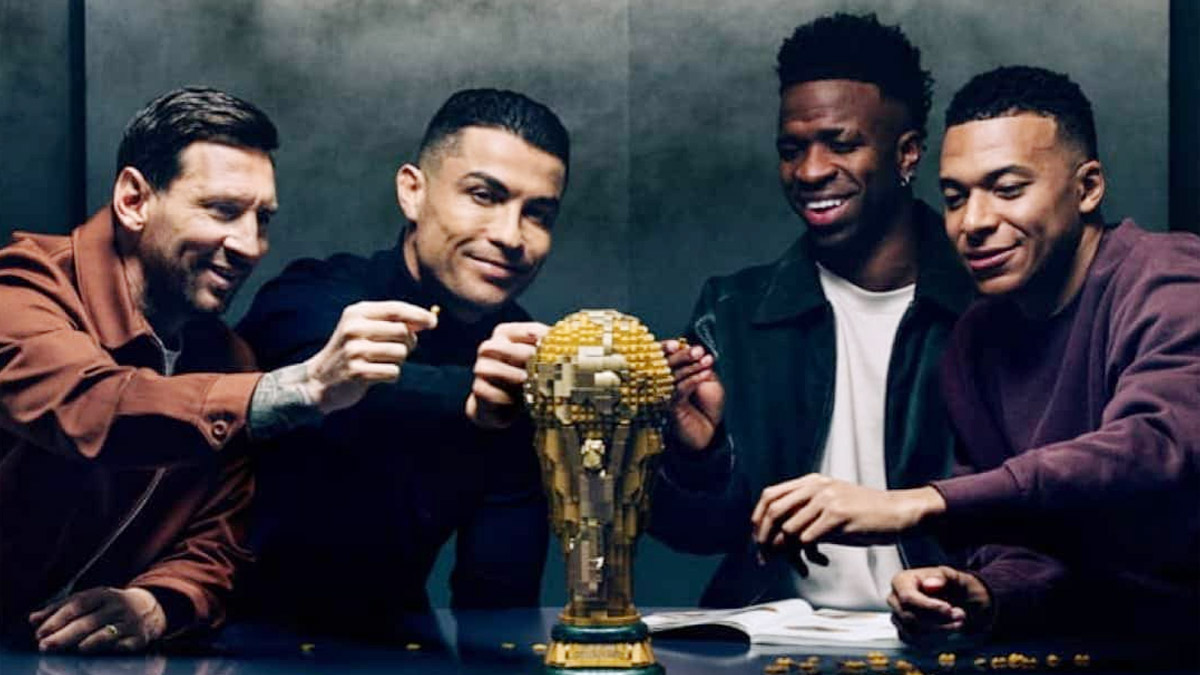
MUMBAI: Four legends, one frame and not a single tackle in sight. Lego has pulled off a crossover few thought possible, uniting Lionel Messi, Cristiano Ronaldo, Kylian Mbappé and Vinícius Júnior in a single campaign ahead of the FIFA World Cup 2026 only this time, they’re building dreams brick by brick.
Titled “Everyone wants a piece”, the campaign features the quartet assembling a Lego version of the World Cup trophy, before placing miniature versions of themselves atop it, a playful nod to football’s ultimate prize. Shared widely across social media, the ad carries a pointed disclaimer: it is not AI-generated, a subtle but telling signal in an era where even reality is often questioned.
The numbers tell their own story. The campaign has already crossed 314 million views on Instagram across the players’ accounts, with fans hailing it as a rare, almost nostalgic moment particularly for the reunion of Messi and Ronaldo, whose last shared campaign ahead of the 2022 World Cup became one of the platform’s most-liked posts.
Beyond the film, Lego is extending the play with exclusive, player-themed sets tied to each of the four stars, part of a broader football-led programme designed to ride the global momentum building towards 2026. The idea, as echoed by the players themselves, leans into the parallels between football and play experimentation, creativity, failure, and triumph.
Messi described the sets as a way to bring on-pitch moments into an imaginative, hands-on world, while Ronaldo called the transformation into a Lego figure a rare honour, blending sport with storytelling. Vinícius, meanwhile, struck a more personal note, recalling childhood moments of building with Lego and framing creativity as a universal language that transcends borders.
The timing is no accident. With the 2026 World Cup set to run from June 11 to July 19 across the United States, Canada and Mexico, and featuring an expanded 48-team format, global anticipation is already building. Argentina, led by Messi, will enter as defending champions, adding another layer of intrigue.
For Lego, the campaign does more than celebrate football, it taps into its mythology. Because when icons become figurines and rivalries turn into play, the beautiful game finds a new kind of pitch. one built, quite literally, by hand.






