MAM
Digital ad impressions grow fivefold since 2021: TAM AdEx report
Services leads with 45 per cent share as Instagram dominates publishers in 2025

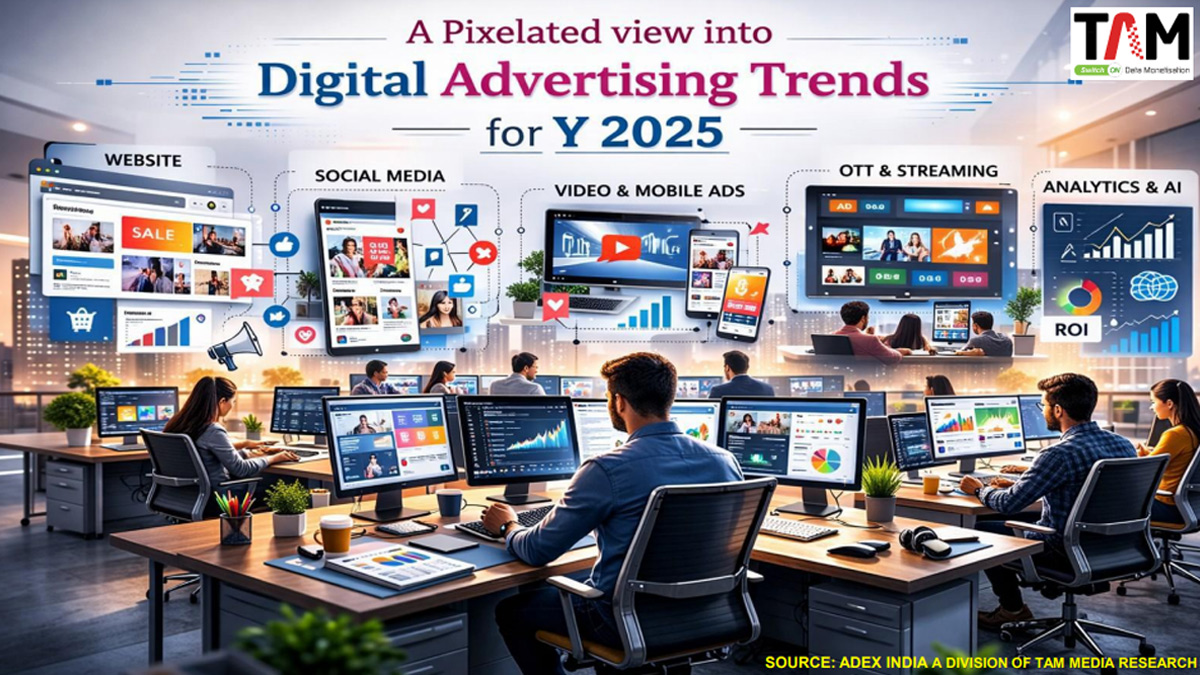
MUMBAI: If advertising once fought for eyeballs, today it is fighting for scrolls. And judging by the latest numbers, India’s digital ad market is not just scrolling forward, it is sprinting.
A new report by TAM AdEx reveals that digital advertising impressions in India have grown more than fivefold between 2021 and 2025, underscoring the extraordinary speed at which brands are shifting their marketing muscle online. On a year on year basis alone, impressions in 2025 expanded more than 2.5 times compared with 2024, suggesting the industry has entered a phase of rapid acceleration rather than steady growth.
The data paints a picture of an ecosystem where digital advertising is not merely expanding but reorganising itself around ecommerce, services and social platforms that now dominate consumer attention.

Quarter by quarter, the climb continues
The momentum held through the year. Quarterly trends show a steady rise through 2025, with the October to December quarter recording a 15 per cent increase over the January to March period. This consistent climb suggests that the digital advertising surge is not seasonal but structural, reflecting deeper shifts in how brands connect with consumers.
Behind this surge lies a widening advertiser base. More than 187,000 advertisers were active on digital platforms in 2025, indicating that the medium has become accessible not only to large corporations but also to mid sized brands and emerging digital businesses.
Services sector takes the lion’s share
When it comes to sector dominance, services remained firmly in the lead, accounting for a massive 45 per cent share of digital ad impressions in 2025.
Education followed with 7 per cent, while personal accessories, computers and retail each accounted for around 6 per cent. Banking, finance and investment contributed 5 per cent, with personal care and hygiene matching that share after entering the top ranks this year.
The automotive sector held 4 per cent, while personal healthcare and textiles or clothing rounded out the top ten with 2 per cent each.
Together, the top ten sectors accounted for 86 per cent of all digital ad impressions, highlighting how concentrated spending remains even as the advertiser pool widens.
Two sectors, personal care and personal hygiene and textiles or clothing, were new entrants to the top rankings in 2025, suggesting brands in lifestyle and consumer goods are increasingly embracing digital platforms to capture younger audiences.
Ecommerce leads the category race
Within individual categories, the ecommerce boom continues to shape advertising priorities.
Ecommerce online shopping emerged as the leading category, accounting for 12 per cent of total ad impressions. Other ecommerce driven categories also appeared prominently, including ecommerce services, ecommerce clothing and fashion, and ecommerce education.
Overall, the top ten categories together contributed 42 per cent of digital ad impressions, and five of them belonged to the services sector.
Growth rates among categories were striking.
Retail outlets for clothing and textiles recorded a sevenfold increase in ad impressions during 2025 compared with the previous year, while AV auxiliaries saw an elevenfold surge, the fastest growth among major categories. Ecommerce clothing and fashion grew five times, and readymade garments four times, signalling that fashion brands are rapidly intensifying their digital presence.
Flipkart tops advertisers and brands
At the advertiser level, the battle for attention looks much like the battle for online shoppers.
Flipkart.com topped the list of advertisers in 2025 with 3 per cent share of digital ad impressions, followed closely by Amazon Online India, also at 3 per cent.
Other major advertisers included Adobe Software India and Hindustan Unilever at 2 per cent each, while Reliance Retail, Fabindia, Myntra Designs, Razorpay Software, Nexxbase Marketing and Maruti Suzuki India each contributed around 1 per cent.
Notably, six of the top ten advertisers were new entrants compared with 2024, reflecting the churn and competitive intensity within the digital advertising space.
Among brands, Flipkart.com again claimed the top spot, followed by Amazon.in, Fabindia, Myntra.com and Razorpay. Other prominent brands included Ajio.com, Tata Cliq Fashion, Livspace.com, The Souled Store and Ikea.
Seven of the top ten brands belonged to the services sector, while three came from ecommerce online shopping, underlining how closely advertising spend tracks digital commerce activity.
Instagram dominates the publisher landscape
If advertisers are racing to be seen, Instagram is where most of them are being seen.
Among web publishers, Instagram accounted for a commanding 65 per cent share of digital ad impressions in 2025, dwarfing its closest rivals.
Facebook.com held 14 per cent, YouTube 8 per cent, and X.com 5 per cent, while the rest of the publisher ecosystem shared the remaining slice of impressions.
When platform formats are considered, Instagram display alone captured 64 per cent of impressions, reinforcing the platform’s central role in India’s digital advertising economy.
Programmatic takes over the ad engine
The mechanics of digital advertising are also evolving rapidly.
The report shows that programmatic buying dominated the transaction landscape, accounting for 95.8 per cent of total ad impressions. Ad networks contributed 1.5 per cent, while direct transactions and hybrid methods made up the remaining share.
Creative formats also showed clear preferences.
Single image ads dominated with an overwhelming 83 per cent share of impressions, followed by video ads at 10 per cent. Banner ads accounted for 3 per cent, while HTML5 creatives also captured 3 per cent. Carousels remained niche, with only 0.5 per cent share.
A digital advertising economy coming of age
Perhaps the clearest signal of digital advertising’s expansion lies in the emergence of entirely new advertisers.
More than 120,000 brands advertised exclusively in 2025 compared with the previous year, with Perplexity.ai topping the list of exclusive advertisers, followed by companies such as Mexc Global, Zencastr, Caffeine Inc and Smart Ecosystems Inc.
For an industry that once treated digital as an experimental add on, the message now appears unmistakable. The advertising playbook has shifted decisively to screens, feeds and stories.
Or, as the numbers suggest, the new advertising real estate is not on billboards or television breaks but somewhere between a thumb scroll and the next click.







MAM
Beacon Group appoints Dr Rajesh Patel as Group CEO
36-year healthcare veteran to lead Beacon Diagnostics, Vector Biotek, Biogeny.
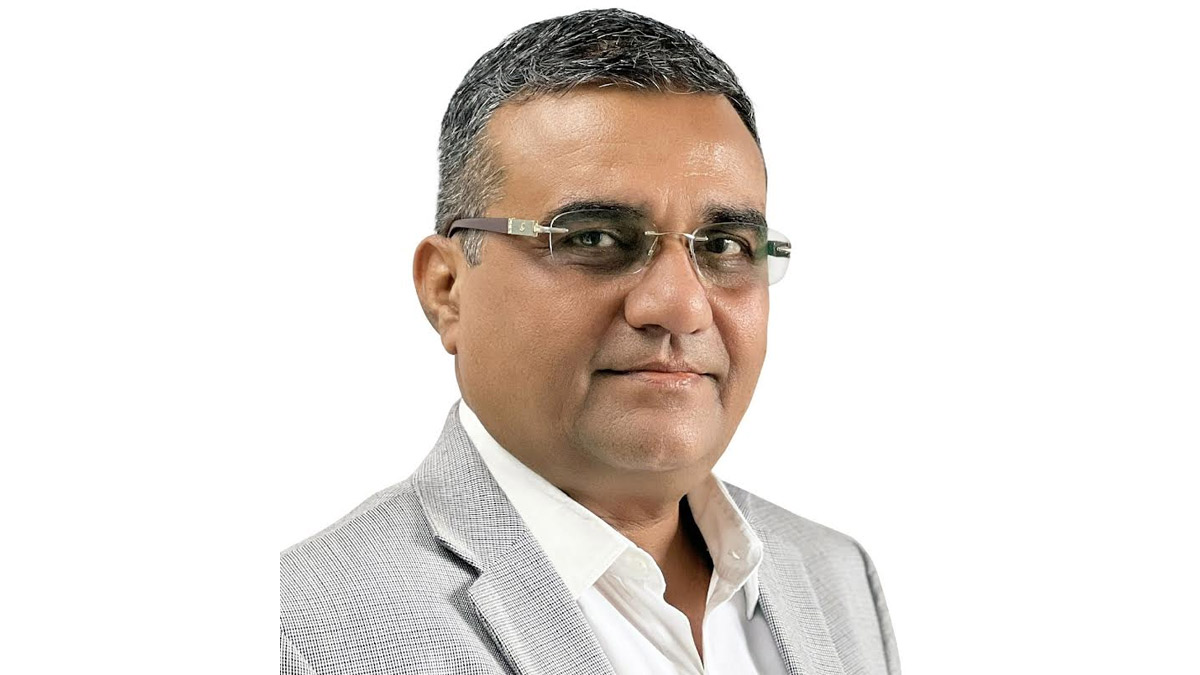
MUMBAI: A new chief, a fresh diagnosis and a sharper prescription for growth. Beacon Group has appointed Dr Rajesh Patel as its Group Chief Executive Officer, effective April 1, 2026, signalling a decisive push to scale its presence in the diagnostics and IVD space. Patel steps into the role with 36 years of experience across the healthcare and diagnostics industry, bringing a career shaped by leadership roles spanning sales, marketing, business development and operational strategy. His mandate is both expansive and precise: to steer the group’s overall strategic direction while tightening coordination across its three core entities Beacon Diagnostics, Vector Biotek and Biogeny Diagnostics.
In practical terms, that means driving cross-company synergies, accelerating market expansion and strengthening organisational capability areas increasingly critical as diagnostic players compete for scale in a fragmented yet rapidly evolving healthcare ecosystem. The group is positioning itself to capture unmet demand across chain laboratories, key accounts and standalone labs, segments that remain underserved despite growing diagnostic needs.
The appointment comes at a time when the In Vitro Diagnostics (IVD) sector in India is entering a more competitive and innovation-led phase, with companies focusing not just on product pipelines but also on service delivery, integration and customer-centric models. Beacon’s leadership appears to be betting that Patel’s execution-focused approach can help translate ambition into operational momentum.
Welcoming the appointment, Chairman Dr D K Joshi described Patel’s induction as a strategic move aligned with the group’s long-term vision, emphasising the role of leadership depth in navigating the next phase of growth.
For Beacon Group, the message is clear, in a sector where precision matters, leadership is the new differentiator—and this appointment is intended to set the tone for what comes next.






