Brands
DeVANS sparks buzz with self-chilling beer can April Fools campaign
Godfather stunt racks up 7 million impressions, blending humour with hype

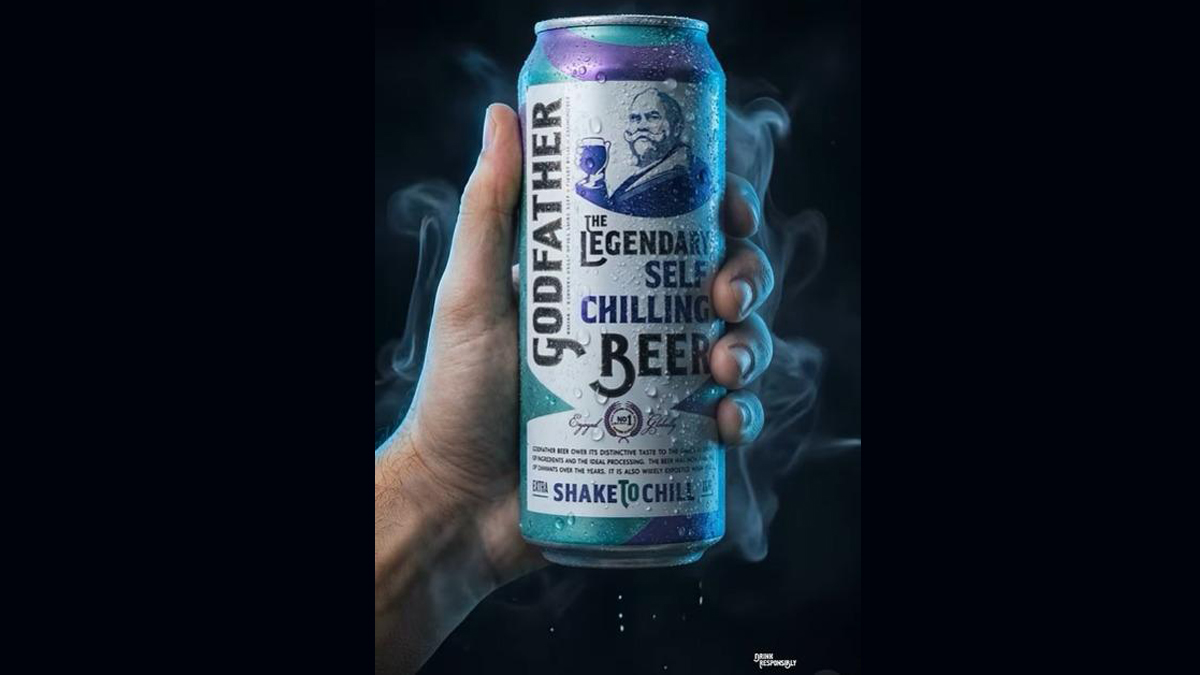
NEW DELHI: DeVANS Modern Breweries has stirred up the marketing pot with a playful yet high-impact campaign teasing a futuristic “self-chilling beer can” under its flagship Godfather label.
What began as a seemingly bold product innovation quickly turned into one of the most talked-about brand moments online, before being revealed as an April Fools’ Day prank. The reveal, however, did little to cool the buzz.
The campaign clocked over 7 million organic impressions across platforms including LinkedIn, Instagram, Facebook and X, with users debating whether the concept was a genuine breakthrough or clever marketing theatre. Thousands of shares and comments turned the idea into a full-blown conversation, drawing in both consumers and industry insiders.

The hook was simple but effective. A self-chilling can positioned as an on-the-go convenience product tapped into the imagination of younger, urban audiences. Add the timing around April Fools’ Day, and the campaign struck the perfect balance between curiosity and scepticism, keeping audiences guessing.
Marketing experts have pointed to the campaign as a case study in leveraging cultural moments. By leaving just enough ambiguity, the brand invited audiences to participate rather than simply observe, turning passive viewers into active contributors to the narrative.
“Godfather has always been an iconic brand, but iconicity must evolve to stay meaningful,” said DeVANS Modern Breweries chairman and managing director Prem Dewan. “The ‘Self-Chilling Can’ was our way of showing up in a cultural moment with confidence and a sense of humour.”
Beyond the numbers, the campaign signals a broader repositioning for Godfather. Long seen as a legacy beer brand, it is now leaning into youth culture, digital-first storytelling and topical engagement to stay relevant in a crowded alcobev market.
In a space where attention is fleeting, DeVANS has shown that sometimes the coolest idea is the one that keeps people guessing.




Brands
Dunkin’ Donuts to exit India as Jubilant FoodWorks ends 15-year franchise deal
The quick service restaurant giant is ending a 15-year franchise partnership with the American doughnut chain, even as it renews its Domino’s agreement for another 15 years
NOIDA: Dunkin’ is done in India. Jubilant FoodWorks Ltd, the country’s leading quick service restaurant operator, has decided not to renew its franchise agreement with the American coffee and doughnut chain, and will wind down its Indian stores in a phased manner before December 31, 2026, bringing a 15-year partnership to a quiet, loss-laden close.
The decision, approved by JFL’s board on March 30, 2026, ends a relationship that began with a Multiple Unit Development Franchise Agreement signed on February 24, 2011. JFL will now evaluate and undertake what it described in a regulatory filing as the “rationalisation and/or cessation of certain operations and/or sale, transfer or disposal of assets and/or assignment or transfer of franchise rights,” all in consultation with Dunkin’s brand owners and strictly within the terms of the original agreement.
The numbers tell the story bluntly. In the financial year 2024-25, Dunkin’ India posted a revenue of Rs 37 crore against a loss of Rs 19 crore — a haemorrhage that was always going to test the patience of a parent company recording revenues of Rs 6,104 crore and a profit of Rs 194 crore in the same period. Doughnuts, it turns out, were never going to move the needle.
The contrast with JFL’s handling of its other marquee franchise could hardly be sharper. Even as it walks away from Dunkin’, the company has just doubled down on Domino’s, signing a fresh Master Franchise Agreement on March 31, 2026, granting it exclusive rights to develop and operate Domino’s Pizza stores in India for 15 years, with an option to renew for a further 10.
JFL, incorporated in 1995 and promoted by the Bharatia family, operates a network of more than 3,500 stores across six markets — India, Turkey, Bangladesh, Sri Lanka, Azerbaijan and Georgia. Its portfolio includes Domino’s and Popeyes on the global side, and two home-grown brands: Hong’s Kitchen and COFFY, a café brand in Turkey.
For Dunkin’, India was always a stretch. The brand never quite cracked the cultural code in a market where filter coffee and chai command fierce loyalty and where the doughnut remains, at best, an occasional indulgence rather than a daily habit. Fifteen years, mounting losses and a parent with better things to spend its capital on was always going to be a difficult equation to solve.
The doughnut has had its last day. The pizza, however, is staying.






