MAM
Dentsu Aegis & Facebook rope in ShopClues as title sponsor for new social platform


MUMBAI: Online marketplace Shopclues.com has hopped on board as the title sponsor of the new festive social platform called India Celebrates, designed by Dentsu Aegis Network, which is collaborating the networking opportunities on Facebook.
The idea is to create a unique destination for people where they can share their festive moments and celebrate the festive season with a large network of people, brands and celebrities.

“The event is an excellent platform to bring together the synergies of India’s top brands for a truly exceptional Diwali celebration. While Dentsu brings more partners on board to drive engagement to the platform, Shopclues will give out exclusive offers and the most unmatched propositions for consumers from its vast product portfolio. As the title sponsors, will further enhance our brand salience through the massive reach and engagement of Facebook,” said ShopClues AVP – marketing Nitin Agarwal.
India Celebrates is a content destination that will feature the togetherness of high quality entertainment quotient and an interactive, convenient platform for people to employ in the best shopping experience with customised packages.
“Dentsu Aegis Network in India is very happy to join hands with Facebook in this unique digital initiative. As the leading digital group in India, with over 750 digital specialists in our group companies like Isobar, iProspect, Dentsu WebChutney, and WATConsult, we feel it is our duty to encourage such digital initiatives, which will be the way of the future,” added Dentsu Aegis Network South-Asia chairman and CEO Ashish Bhasin.
The Facebook page of India Celebrate will feature updates on deals, new brands on board, the first of them being ShopClues. It will also feature celebrity engagements for every season, starting with Dusserra and followed by Diwali.
On India Celebrates, users not only have the option to share their content but also win exciting prizes for the same. A number of online games, which deliver an opportunity to win gifts for festivals and a range of discount options from various brands, have been designed for users.
“Facebook is the new Diwali Greeting card. Indians are increasingly sharing their festival moments in full colour through visual content, and there are three times more videos and 1.5 times more photos uploaded via mobile during Diwali than the rest of the year. The India Celebrates initiative by Dentsu Aegis Network will leverage our unparalleled targeting capabilities to potentially reach over 130 million people in India connecting on Facebook every month,” said Facebook India managing director Kirthiga Reddy.





MAM
BLR Airport Launches ‘Connections’ Service to Ease Transit Travel
New initiative targets smoother transfers as Bengaluru hub traffic rises 30 per cent.
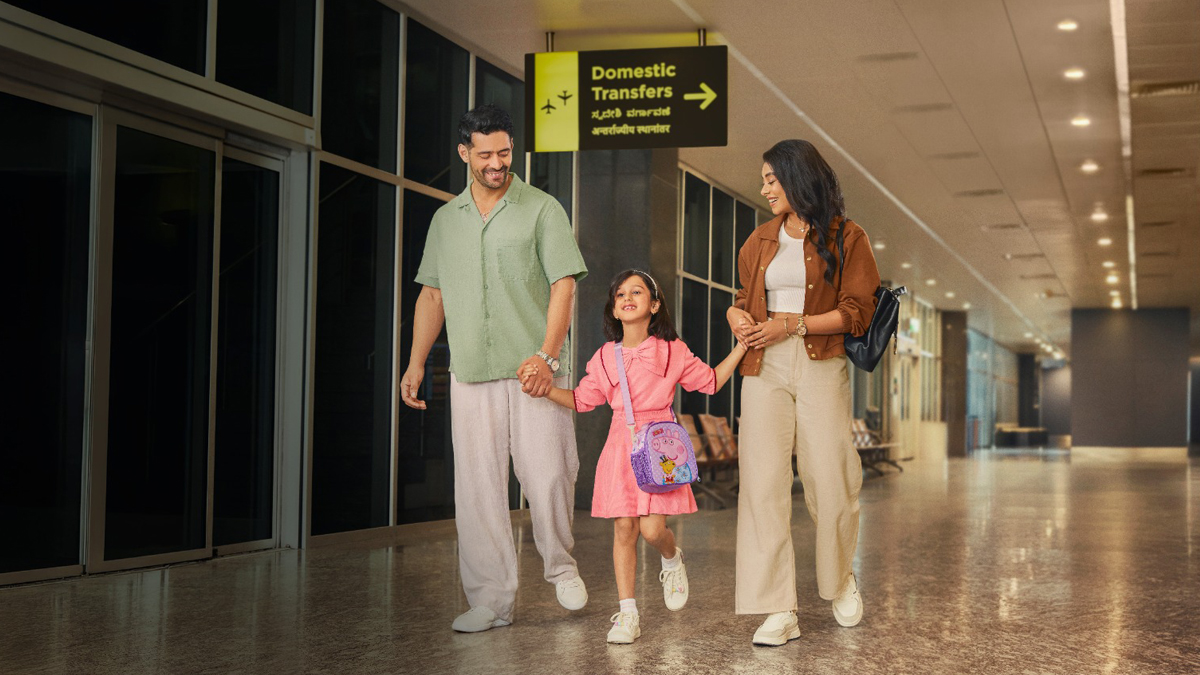
MUMBAI: Missed connections may be a traveller’s nightmare but Bengaluru is trying to make them a thing of the past. Kempegowda International Airport Bengaluru (BLR Airport) has rolled out ‘Connections by BLR’, a new transfer programme designed to take the friction out of connecting journeys. Built around three pillars ease, efficiency and experience,the initiative aims to simplify what is often the most stressful leg of air travel.
The move comes as transfer traffic at BLR Airport climbs sharply, up more than 30 per cent year-on-year. Transfers currently account for around 15 per cent of total passenger traffic and are projected to touch 20 per cent by 2026, signalling a clear shift in how the airport is positioning itself within airline networks.
At its core, the programme focuses on making navigation intuitive and downtime more comfortable. Dedicated transfer desks have been set up across terminals, supported by colour-coded wayfinding blue and yellow signage designed for quick recognition. Inter-terminal movement is being streamlined through complimentary shuttle services with predictable wait times, while designated transfer zones aim to reduce passenger confusion.
Beyond logistics, the airport is leaning into experience. Travellers in transit now have access to a wider choice of lounges, curated retail and food and beverage options, as well as sleeping pods for short stays. For longer layovers, transit hotels in both Terminal 1 and Terminal 2 offer boutique in-terminal accommodation, an increasingly sought-after feature as global travel patterns evolve.
The timing is strategic. BLR Airport now connects to 114 passenger destinations 80 domestic and 34 international with key routes spanning Delhi, Mumbai, Kolkata, Hyderabad and Pune domestically, and Singapore, London Heathrow, Dubai, Abu Dhabi and Kuala Lumpur internationally. Recent additions such as Hindon, Bidar and Silchar within India, alongside Dammam, Hanoi and Riyadh overseas, are further expanding its reach.
Infrastructure is also catching up with ambition. Developments including the West Cross Taxiway, Terminal 1 refurbishment and Terminal 2 expansion are laying the groundwork for higher capacity and smoother operations critical for any airport aiming to become a serious transfer hub.
Bangalore International Airport Limited chief operating officer Girish Nair framed the initiative as both a response to demand and a forward-looking play. He pointed to the growing depth of the airport’s network and the opportunity to build a more reliable transfer ecosystem that benefits both passengers and airline partners.
In an era where travel is as much about transitions as destinations, BLR Airport is betting that a seamless connection might just be the journey’s most important upgrade.







