Brands
DC Entertainment unveils major plans; to launch 24 new comic book series
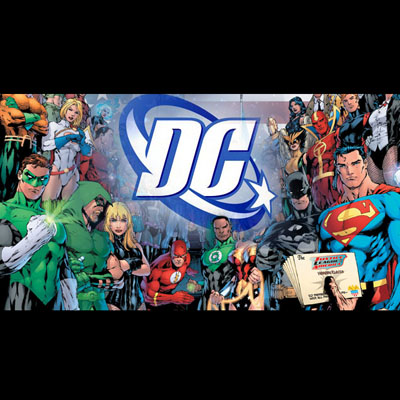
MUMBAI: This summer, DC Entertainment launches a bold new direction for the DC Universe (DCU) that is even more inclusive and accessible to a wider group of readers as the publisher continues to evolve comic storytelling for its next generation of fans. Award-winning, critically acclaimed writers are headlining the June 2015 slate of DC Comics’ new periodicals and graphic novels, including Gene Luen Yang, Bryan Hitch, Garth Ennis and Ming Doyle.
Beginning 3 June, the DC Comics line of comic books will consist of 24 brand-new series that will begin at issue number one, as well as 25 on-going, bestselling fan favorite series that will continue without a break in the issue numbering. The total number of periodicals in the DCU will be 49, with additional new titles debuting throughout the year.
“This heralds in a new era for the DC Universe, which will allow us to publish something for everyone, be more expansive and modern in our approach and tell stories that better reflect the society around us. Whether you’ve been a DC fan your whole life, or whether you are new to comics – there will be a book for you beginning in June,” said DC Entertainment co-publisher Dan DiDio.
DC Comics will be keenly focused on going back-to-basics with its legendary characters, like Batman, Superman and Wonder Woman, while also reinventing key characters, such as Black Canary, Bizarro, Cyborg and Starfire, with a new contemporary tonality to ensure a diverse offering of titles. Top writers and artists, as well as emerging fresh voices, are on board to help create an expansive lineup of comics that appeals to a broad audience of fans.
Depicting some of these iconic characters in a more contemporary light include National Book Award finalist Gene Luen Yang who will join artist John Romita Jr. in the ongoing adventures of Superman. Comic superstar artist Bryan Hitch will write and draw new tales of the world’s greatest heroes in Justice League of America. The pitch perfect team of Garth Ennis and John McCrea returns to DC Comics for a limited series called Section Eight featuring characters from their popular Hitman comic. Vertigo creator Ming Doyle will be lending her talents to DC Comics, penning Constantine: The Hellblazer along with newcomer artist Riley Rossmo.
“More than ever before, DC Comics fans are being exposed to our rich portfolio of characters through multiple sources, including an unprecedented number of highly successful TV shows, video games and upcoming major motion pictures. We are looking to extend that experience within publishing to ensure there is a comic book for everyone. For example, fans of the Arrow television show may want more stories about Black Canary. Now they can find modern, fresh takes on the character in the pages of her standalone series both in stores and digitally,” said DC Entertainment co-publisher Jim Lee.
Breakout star, Brenden Fletcher, co-writer behind the all new, highly successful Batgirl book will also be writing the new Black Canary series launching in June. Fan favorites Amanda Conner and Jimmy Palmiotti will be the creative team on new titles Starfire and Harley Quinn/Power Girl and will continue to helm the perennially bestselling Harley Quinn.
“Beyond character and creators, the June slate will showcase different styles and approaches to storytelling as we add offbeat, irreverently funny titles such as Bizarro, Bat-Mite and Prez. Truly there will be something for everybody as we simultaneously celebrate our rich legacy while embracing new voices and concepts,” said Lee.
A first look at upcoming storylines will be the focus of DC Entertainment’s Free Comic Book Day issue – “DC Comics: Divergence” – available 2 May, featuring three 8-page previews for the June releases of Scott Snyder and Greg Capullo’s Batman, as well as Geoff Johns and Jason Fabok’s launch of the Darkseid War within Justice League featuring the biggest villains in the DCU – Darkseid and the Anti-Monitor, and Gene Luen Yang’s DC Comics debut with celebrated artist John Romita, Jr. on Superman. More than half-a million free issues of the DC Entertainment sampler will be given away at comic book retailers globally.
“In this new era of storytelling, story will trump continuity as we continue to empower creators to tell the best stories in the industry,” said DiDio.

Brands
GUEST COLUMN: Beyond layoffs, India emerges as creative-tech hub
Shift in hiring and AI-led workflows is reshaping global media and marketing
MUMBAI:The global narrative around layoffs in media and technology may suggest contraction, but a deeper transformation is reshaping how creative and tech capabilities are built and deployed. For Sanjil Zaveri, general manager – India at Brandtech+, this shift is less about decline and more about redistribution, one that is positioning India at the centre of a new global operating model. In this piece, Zaveri explores how integrated workflows, AI-powered production, and evolving talent demands are redefining the creative-tech ecosystem, why India is emerging as a strategic hub for global content and innovation, and what this means for the future of media, marketing, and talent.
The global headlines around layoffs in technology and media continue to dominate industry conversations. From platform restructuring to reduced marketing spends, the narrative suggests a slowdown across the creative and digital ecosystem.
But beneath these headlines, a different shift is underway, one that is quietly redefining how creative and technology work is delivered globally.
Hiring is not disappearing; it is being redistributed. And India is increasingly at the centre of this transition.
A structural shift in the creative-tech ecosystem
The media and marketing landscape is undergoing a fundamental reset. Brands today are moving away from fragmented agency models and siloed teams toward more integrated, agile structures.
Creative, technology, and media are no longer operating in isolation. Campaigns are now built through connected workflows, where ideation, production, and optimisation happen simultaneously.
This shift is forcing organisations to rethink where and how teams are built. Increasingly, the focus is on capability, speed, and scalability, rather than geography alone.
India’s emergence as a creative-tech hub
India’s role in this evolving ecosystem has expanded significantly.
Traditionally positioned as a backend execution market, India is now playing a far more central role in global campaign delivery. Teams based here contribute not just to production, but also to strategy, content development, and performance optimisation.
This is particularly relevant in a market where content velocity has increased dramatically. With the rise of digital platforms, OTT, and always-on marketing, brands require high volumes of creative assets without compromising on quality.
Industry insights from Ernst & Young point to India’s growing strength as a global content hub, while NASSCOM continues to highlight the scale and depth of the country’s digital talent pool. Together, these factors create a compelling case for India as a foundation for more efficient, integrated content ecosystems serving global markets.
A global company’s perspective on India
At Brandtech+, this shift is already shaping how we operate.
As a global organisation working across creative, marketing, and technology, our talent strategy is increasingly driven by capability rather than location. India has therefore become a key market for both scale and strategic talent.
In the first quarter of this year, we have significantly accelerated hiring in India across creative, technology, and operations roles, moving well ahead of plan and continuing to build strong momentum. We are actively hiring across multiple functions, with India playing a central role in delivering integrated creativetech solutions for global brands.
These signals reflect a broader change in how global companies view India, not as a delivery centre, but as a hub for connected creative, data, and technology capabilities.
“While much of the global narrative is centred on contraction, what we are seeing in India is a different kind of growth,” says Sanjil Zaveri. “As a global company, we are investing in talent that can work across creative, data, and technology, because that is where the future of marketing is headed.”
AI and the new content economy
Artificial intelligence is playing a critical role in enabling this transformation.
In today’s media environment, the demand for content has scaled exponentially. Brands are expected to create, adapt, and optimise creative assets across multiple platforms in real time. The scale of this demand would be difficult to sustain through traditional production models alone.
AI is helping make this possible.
Rather than replacing roles, AI is streamlining workflows, automating repetitive tasks, accelerating production timelines, and enabling faster experimentation. This allows creative and strategy teams to focus on higher-value outputs.
“AI removes the mundane and elevates the meaningful,” says Zaveri. “It allows teams to focus on ideas and storytelling, while technology drives efficiency.”
For media platforms and advertisers, this is redefining how campaigns are built, moving from linear production cycles to continuous, data-driven content creation.
What this means for media talent
For professionals across media, advertising, and digital, this shift is redefining skill requirements.
The traditional boundaries between creative, media planning, and technology are blurring. Content creators are expected to understand performance metrics. Media professionals are working more closely with data, platforms, and automation. Collaboration across disciplines is becoming a core skill.
This is creating demand for hybrid talent, professionals who can operate across disciplines and adapt to rapidly changing workflows.
India’s talent ecosystem is particularly well suited to this environment. With strong capabilities across content, design, engineering, and analytics, the market offers a unique combination of scale and versatility.
Importantly, global exposure is no longer tied to relocation. Professionals in India are increasingly working on international brands and campaigns, collaborating with teams across markets in real time.
Looking ahead: India at the centre of the reset
What we are witnessing today is not a temporary phase; it is a structural reset in the global creative-tech ecosystem.
Layoffs may continue to shape short-term narratives, but they do not capture where long-term growth is being built. That growth lies in new operating models, integrated workflows, and markets that can deliver both scale and innovation.
India is firmly at the centre of this transformation.
As global media and marketing organisations continue to evolve, India’s role will only become more critical, not as a support market, but as a strategic hub for content, creativity, and technology-led innovation.
The future of creative-tech will be defined by collaboration, speed, and adaptability. And increasingly, it will be shaped from India.
Note: The views expressed in this article are solely the author’s and do not necessarily reflect our own.