Connect with us

MAM

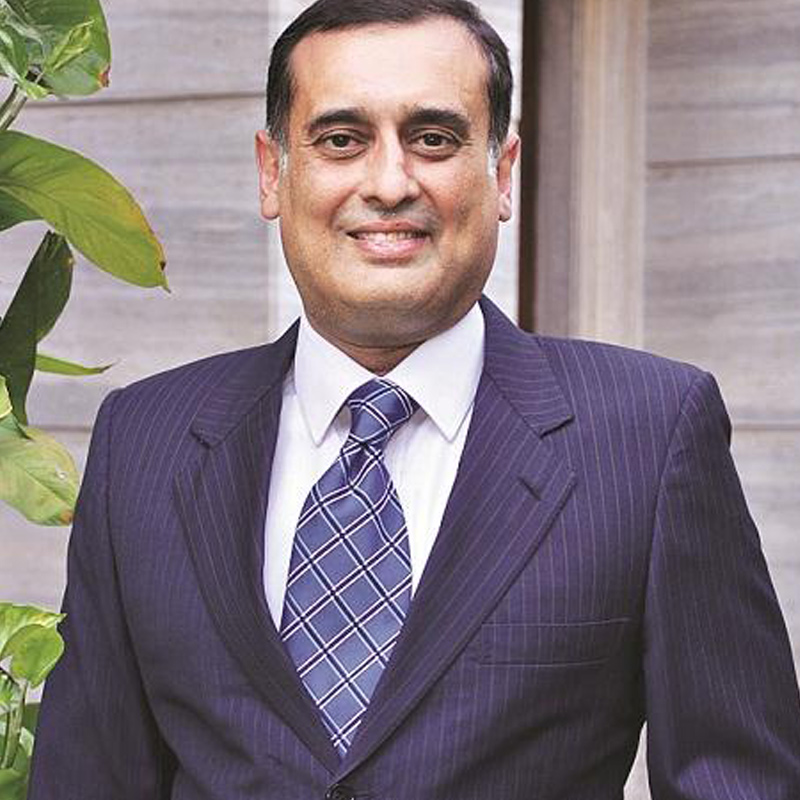
Dabur’s Amit Burman steps down as chairman, to continue as a non-executive director

Published

on

MUMBAI: Amit Burman has resigned as the chairman of FMCG major Dabur India. Burman shall continue to be the non-executive director of the company, Dabur India announced in a regulatory filing. The company has accepted the resignation of Amit Burman from the post of chairman of the board of directors with effect from 10 August 2022.

The board has also affirmed the appointment of Mohit Burman, who is currently the non-executive vice chairman, as the non-executive chairman of the board for five years with effect from 11 August. 

Apart from this, Saket Burman has been appointed as the non-executive vice-Chairman of the board of directors for five years.

Advertisement

Burman started his career at Dabur’s Industrial Engineering Department where he was responsible for the induction of machinery, method improvements, manpower reduction and improving product packaging. He took on the responsibilities as the CEO of Dabur Foods in 1999 and forayed into the processed foods business with a range of ethnic cooking pastes & chutneys and packaged fruit juices.

Burman stepped down as the CEO of Dabur Foods when the company was merged into Dabur India in July 2007. He was then appointed the vice chairman of Dabur India. He took charge as the chairman of Dabur India in 2019. He is credited for Dabur India’s foray into the processed foods business with the setting up of Dabur Foods Ltd. He is also responsible for driving all business strategy, development and communications at Dabur Foods.

An alumnus of the University of Cambridge, he also holds M.Sc degree in Industrial Engineering from Columbia University, USA and a B.Sc. degree in Industrial Engineering from Lehigh University, Bethlehem, PA, USA.


Advertisement
Click to comment

Leave a Reply

Your email address will not be published. Required fields are marked *

MAM

Paramount set to acquire Warner Bros. Discovery in $81 billion deal

Shareholders back merger, combined entity could reshape streaming and studios.

Published

on

MUMBAI: Lights, camera… consolidation, Hollywood’s latest blockbuster might be happening off-screen. Shareholders of Warner Bros. Discovery have voted in favour of selling the company to Paramount in a deal valued at $81 billion rising to nearly $111 billion including debt setting the stage for one of the biggest shake-ups in modern media. The proposed merger, still subject to regulatory approvals, would bring together a vast portfolio spanning HBO Max, CNN, and franchises such as Harry Potter under the same umbrella as Paramount’s own heavyweights, including Top Gun and CBS.

At the heart of the deal is streaming scale. Executives have indicated plans to combine HBO Max and Paramount+ into a single platform, potentially creating a stronger challenger to giants like Netflix and Amazon’s Prime Video. Current market data suggests HBO Max holds around 12 per cent of US on-demand subscriptions, compared to Paramount+’s 3 per cent, together still trailing Netflix’s 19 per cent and Disney’s combined 27 per cent via Disney+ and Hulu.

Paramount CEO David Ellison has signalled that while platforms may merge, HBO’s creative identity will remain intact, stating the brand should “stay HBO” even within a broader ecosystem.

Advertisement

Beyond streaming, the deal would redraw the map for film production. Combining two of Hollywood’s oldest studios Paramount Pictures and Warner Bros., the new entity aims to scale output to over 30 films annually, while maintaining a 45-day theatrical window. Warner Bros. currently commands around 21 per cent of the US box office, compared to Paramount’s 6 per cent, underscoring the strategic weight of the acquisition.

But scale comes with scrutiny. Critics warn that fewer players could mean reduced consumer choice, rising subscription costs, and potential job cuts as the combined company looks to streamline overlapping operations while managing billions in debt.

The news business, too, faces a reset. CNN would join forces at least structurally with Paramount-owned CBS, raising questions about editorial independence and positioning. The merger has already drawn political attention in the United States, particularly given perceived ties between the Ellison family and Donald Trump, though the company maintains that newsroom autonomy will be preserved.

Advertisement

If approved, the deal would mark another milestone in Hollywood’s consolidation wave shrinking the industry’s traditional “big six” studios to a “big four”, with Paramount joining Disney, Universal, and Sony at the top table.

In an industry built on storytelling, this merger may well become its most consequential plot twist yet.

Advertisement
Continue Reading

Advertisement News18
Advertisement
Advertisement
Advertisement
Advertisement Whtasapp
Advertisement Year Enders

Indian Television Dot Com Pvt Ltd

Signup for news and special offers!

Copyright © 2026 Indian Television Dot Com PVT LTD

This will close in 10 seconds