MAM
Creating an IP in events is tough: Kyoorius’ Rajesh Kejriwal


MUMBAI: At a time when content, technology and disruption are mentioned in the same breath in every marketing and digital summit, design often takes a backseat. It’s an open secret that several marketers, traditional or digital, neglect design, so much so that a couple of years ago the art of creating the right design and its role in aiding brands was practically non-existent. Feeble efforts were undertaken to boost the conversation around design and innovation.
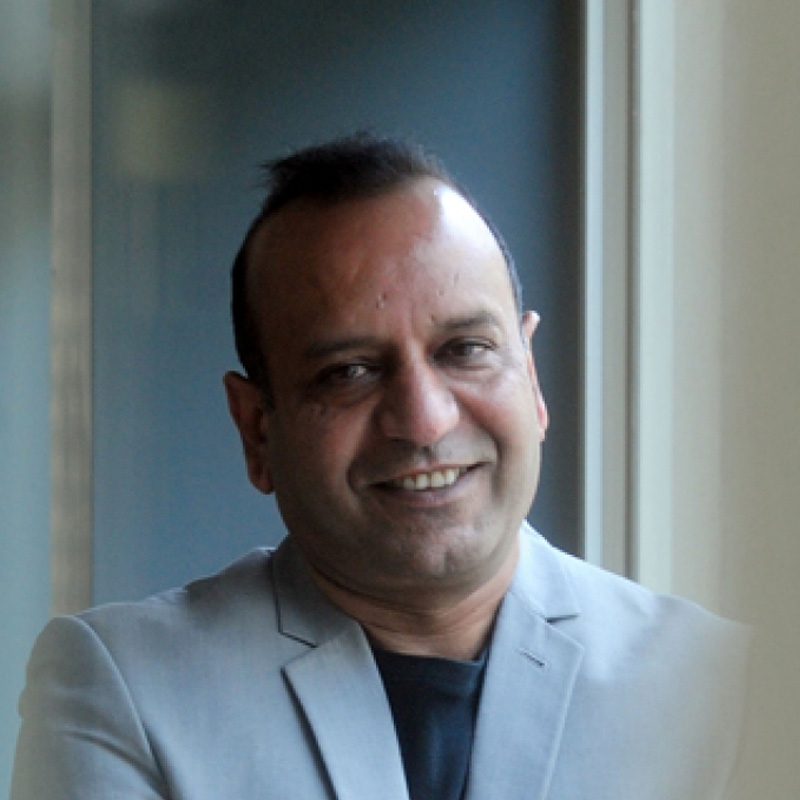
Things would have remained the same were it not for Rajesh Kejriwal who came up with the concept of Kyoorius, a common ground for designers, brands, creatives and every stakeholder in between.
Now, the Kyoorius Creative Awards is in its fifth edition and has the likes of Arun Iyer, Nandini Dias, Tarun Katial and Kainaz Karmakar on board as jury members. The awards this year are scheduled on 1 June 2018 at Mumbai following a two-day disruptive marketing conclave Zee MELT on 30 and 31 May.
In a candid chat with Indiantelevision.com, Kyoorius founder and CEO Rajesh Kejriwal spoke about a range of topics, including his journey, the paper business, the struggle, Kyoorius awards and design in India. Excerpts:
You started off with a fine paper business but eventually moved into events. How has that journey been for you and how did that happen?
The core of our Kyoorius business is paper merchandising and the creative community and design community are a large influencer on the choice of paper. Instead of targeting print guys who are always bothered about price, we thought of targeting designers because if they specify our paper, we are good to go. Then I thought that if I have to change my relationship with the creative and design community from being a vendor to a friend, I have to do something that helps them in their professional life and that is when we started Kyoorius as a not-for-profit organisation.
But a lot has changed since you started off…
The paper business grew by around 75 per cent year-on-year till 2010. Then China entered the market and the industry went downhill and the way paper was used changed completely. Back in 2004, 80 per cent of our business came from papers used for stationary sale but today stationary only contributes to two per cent of our business and everything has gone to brochures and catalogues. From being a premium fine paper business, it has now become a paper commodity business. My paper business continues to run but the influence of design on papers has come down drastically. But, because Kyoorius is running, we continue with the business and that’s why it is a non-profit non-loss organisation. We hadn’t evangelised this scenario when we started with the paper business but it has come to this. Had Kyoorius been a CSR activity, we would have stopped doing it in 2011.
But why non-profit?
I actually prefer referring to the organisation as ‘not for loss’ because the idea was that initially everyone starts awards thinking of it as a marketing exercise and then at some point in time when business goes up and down, the marketing budget also goes up and down. When it goes down, you stop doing marketing activities and I didn’t want Kyoorius to stop doing what it was doing. That is when the idea of not-for-loss organisation came about, thinking that whatever we do, we should at least sustain and be able to carry on even if the paper business goes in any direction.
How have the entries been this year since there is a global decline in agency participation in awards due to budget cuts?
We have just finished with our entries and we received 20 per cent more entries as compared with last year while most others are seeing a decline. The number of entries received this year is 2100 whereas we received 1800 entries last year, which is quite an encouraging number.
Any new sponsor on board? Do you think sponsors are now more cautious about which events they associate with?
All our sponsors that came on board have stayed with us, including Colors, Lokmat, Surewaves, Times Group and Kinetic. This year, Honda and Nestle have also come on board as sponsors for three years. All our sponsors have associated with us not only for Kyoorius awards but also for Zee Melt and Design Yatra. Our sponsors show faith in us and keep coming back to us because we don’t allow two sponsors from the same category. Today, sponsors look at events and awards with a business objective and whether they need to support industry events. It is no longer about just advertising your brand at any irrelevant event.
Do you have to micromanage things for the awards?
No, I don’t and I can’t because if you want to grow you have to let other people take charge and if they make mistakes, you correct them. If every year you make the same mistake, people will stop coming to your event. We are very clear that sponsors can’t have speaker slots. This year, we let go of Rs 30 lakh because someone wanted to sponsor us only if we gave them a speaker slot.
Do you think events have become a harder business to be in over the years?
Events are anyway not easy to do but if you want to create an IP, that is hard. Everyone keeps saying, ‘I have an IP’ and that is just silly. An IP happens when your sponsors stay with you, your participation increases year-on-year, people feel proud to be associated with you and other event guys want to copy you. Anyone can do an event today and every publishing house or broadcaster keeps doing an event every now and then with a budget of Rs 10-20 lakh. Those are events and not IPs. While they may say they are IPs but they are just events and that is not hard to do. If people are talking about your event a month before and after the event, then that is an IP.
Is there anything new that you are bringing to Kyoorius this year?
We have a team flying down from Amsterdam to design the stage and creative for the awards. Kyoorius has the largest LED screen for an award show in India. Moreover, we are the only award show globally to be carbon positive for three consecutive years. This year, we have created 503 tonnes of carbon emission for Kyoorius awards and to offset this carbon emission, we had to plant 11,000 trees. National Geographic is our green partner for Kyoorius and Zee Melt. Also, since we want to limit our plastic waste, we are bringing in a shredder to the venue that will turn the plastic into granules, which will later be shipped to Pune and converted into biofuel. I think people need to think about the sanctity of their act whether it’s right or wrong. 80 per cent of the ads today talk about social messages and water conversation and there you have people wasting water at the award venue!
What is your view on creativity and design in India? Do you think we are doing a better job than the West or do we have our own challenges?
I think people keep talking about how great international creativity is but they keep forgetting that their ad budgets are two to three times higher than ours. They spend a million dollar on a campaign whereas, in India, the best agencies get Rs 2 crore to make a film. Most of the times, the CEO or the CMO wants five films but the budget is of only Rs 1.5 crore, which results in silly films and then they wonder why their work didn’t win. Clients need to understand that less is more but I don’t think the scenario will change anytime soon.
Do you see digital budgets increasing in the next few years? Have we truly understood the essence of digital and how much money is to be put in the medium?
The digital budgets may or may not increase but they will become more rationalised with time as five years ago nobody understood digital in India but everybody said ‘I want to be on digital’ and they spent money on the medium without even understanding it or what it is doing for them. Brands have now learnt digital and are spending wisely. It is an effective medium and brands cannot avoid it but they just need to be wise about their investment.
Which has been the most creative campaign that you’ve come across in recent times?
The Sindoor Khela campaign has been the most creative campaign for me as it was not only about a social cause but was brought out effectively and with a great message. It was executed beautifully. Also, some of the Tanishq ads are beautifully executed as they do not hammer on the social cause and the company is not doing it to win awards. This year, the Aditya Birla Capital campaign stood out for me which is predominantly outdoor along with the classic Amul campaigns, which have been the most tactile. They are short and creative. Why can’t creative people think of that? I think outdoor in general is becoming too cluttered and brands and agencies continue to make the mistake of putting too much in too little space.
So, what’s next for Rajesh Kejriwal?
Doing more well by doing more better! We will kickstart a few training programmes for the industry from July, which will focus on personal development, body language and negotiation skills. We are also looking at starting a portal for jobs where you just upload all your work and anybody can browse through them and hire you. There is a huge gap between designers/creative people and agencies and this portal will help in that regard.
Also Read :
KYOORIUS CREATIVE AWARDS 2018 ANNOUNCES ITS MEDIA JURY
KYOORIUS CREATIVE AWARDS ANNOUNCES ITS JURIES FOR ADVERTISING, DIGITAL AND MEDIA
Shashi Sinha named Kyoorius media jury foreman
Zee melt, largest convention forming synergies between mar-comm-tech is back with its 4th edition