Connect with us

MAM

Covid takes its toll on 65-year-old iconic luggage brand

Published

on

Mumbai: The pandemic has taken its deathly hold not just on people’s lives but also their livelihoods. Business organisations across different sectors are struggling to wade through the detrimental impact of Covid-19, and many others are facing closure. One such casualty has been the Chennai-based luggage retailer, Witco.

After running for nearly 65 years, the iconic luggage retail chain has announced its decision to shut shop after it could not recover from the severe downturn caused by the ongoing pandemic. “We regret to inform you that we have closed down our business. The decision to close down this business was not an easy one, but unfortunately due to COVID-19 and the restrictions on international travel it was not sustainable for us,” the company wrote on its website.
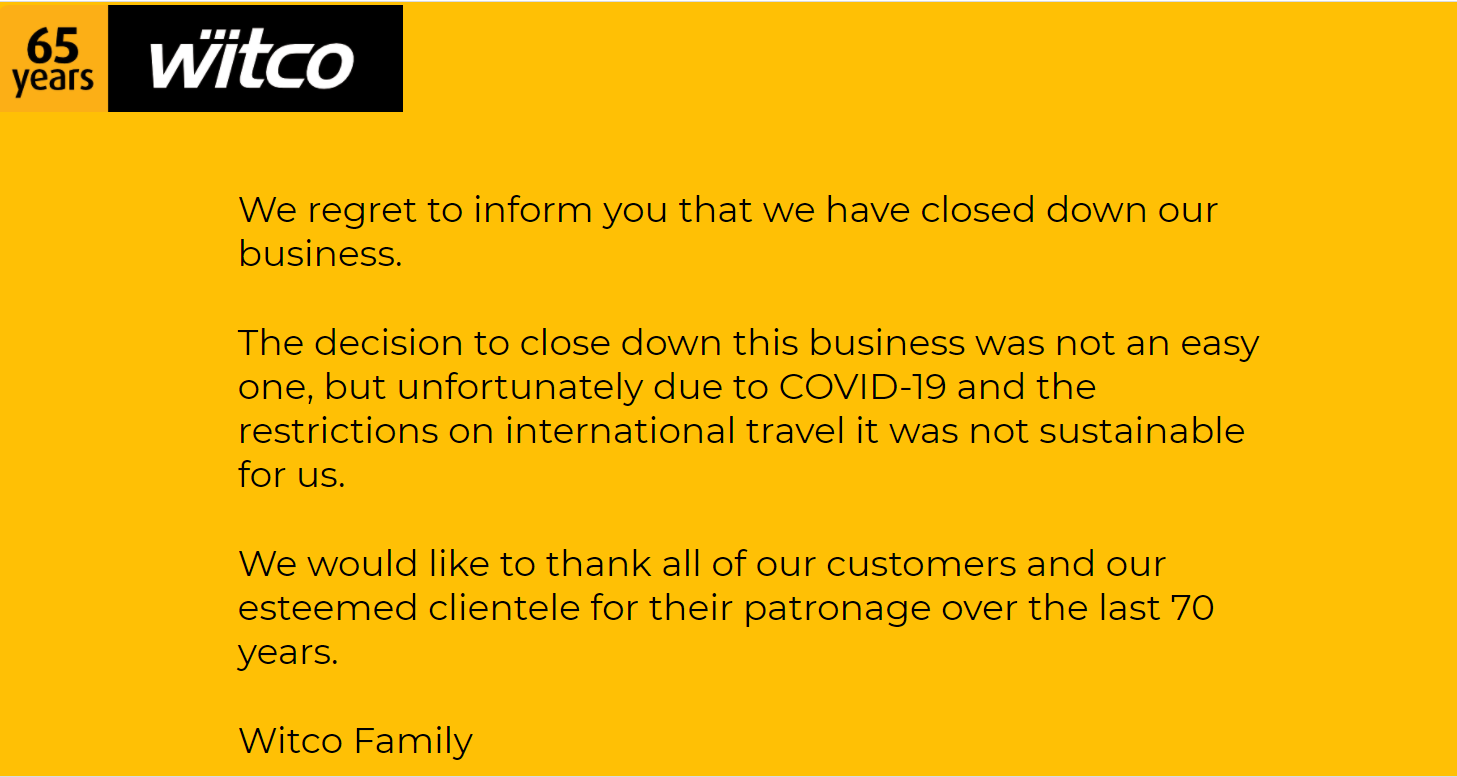
The company’s mainstay was international travel which contributed a significant portion to revenue. “While domestic travel resumed to some level towards the end of last year, International travel did not pick up and this impacted our sales,” the company’s MD VP Harris told Moneycontrol.

The initial three months of the last financial year were a complete washout because of the lockdown, and the company could recover only 25-30 per cent of business after the economy reopened. “Given our rentals, employee salaries, and other expenses, we would have not been able to survive even if we had done 50 percent of our pre-Covid business,” he added.

Advertisement

According to Harris, Witco’s downward spiral began with demonetisation, announced by the government in November 2016, which worsened further, after GST impacted its sales. The pandemic and lockdown proved to be the final nail in the coffin for the retail chain. The brand also tried to take the e-commerce route to survive and registered on Amazon and Flipkart but that too did not yield returns, shared Harris.

Travel & tourism has been one of the worst affected sectors due to the pandemic. The market share for travel-related accessories and equipment has also taken a huge hit. While most sectors are still hopeful of recovery by the end of this financial year, the travel sector remains apprehensive and could take a long time to revive, according to industry experts. Consequently, the outlook for related segments such as luggage, too, remains grim.

The brand with a strong presence in Chennai also had stores in Trichy, Kozhikode, Bengaluru and Kochi. Witco offered not only travel bags, but also laptop bags, backpacks, school bags, as well as handbags, from renowned brands like Samsonite, Delsey, American Tourister, Nike, Puma, VIP, Skybags, Baggit, Hidesign, Wildcraft and more.

Advertisement

The sudden closure of the brand has left its decades-old customers dismayed. Several of them reminisced on social media, and shared childhood memories of shopping at the stores before starting the academic year of school and college or for their first trip abroad.

“This is super sad. Witco was that one stop that you always window shopped and ogled in Forum Mall. It was also the place where we bought the first two large samsonite boxes that every graduate student buys before he goes to the US (and that was 18 years ago!),” shared one of the customers.

Another tweeted, “This is terrible news. the 65-year-old brand shuts down. I fondly remember trips to Anna Nagar Witco ahead of school reopening to purchase school bags. One such backpack bought in 2002 is still in use.”


Advertisement
Click to comment

Leave a Reply

Your email address will not be published. Required fields are marked *

MAM

From Spills to Stains: Choosing Materials That Support a Healthier Home

Published

on

As homes evolve to reflect a growing focus on wellness, hygiene, and long-term durability, the materials we choose are coming under sharper scrutiny. It’s no longer just about how a space looks, but also about how it performs under daily use. From accidental spills in the kitchen to everyday wear in living spaces, the right materials can make the difference between a home that simply appears clean and one that actively supports healthier living.

Across categories like paints, surfaces, and furniture, there is a clear shift towards solutions that minimise toxins, resist stains, and are easier to maintain. Here’s how thoughtful material choices can help create a home that is both beautiful and better for everyday life.

Cleaner Walls: The Shift to Low-VOC Paints

Advertisement

Walls cover the largest surface area in any home, making them a critical factor in indoor air quality. Traditional paints often contain high levels of Volatile Organic Compounds (VOCs), or chemicals that can release harmful fumes long after application. These emissions are known to contribute to headaches, respiratory irritation, and long-term health concerns, particularly in enclosed spaces.

This has led to a growing preference for eco-friendly paints, which are formulated using natural, non-toxic, and sustainable materials. With low to zero VOC content, these paints significantly reduce indoor air pollution and create a safer environment for families, especially children and the elderly. Water-based formulations are another key advancement, as they limit the use of hazardous solvents without compromising on finish or durability. Brands like Nippon Paint have introduced eco-friendly, child-safe paint ranges that align with this shift towards healthier interiors.

Beyond composition, finish also plays a role in maintenance. Satin, eggshell, and semi-gloss emulsions are increasingly preferred for interiors, as they are less absorbent and more resistant to stains, making walls easier to clean and maintain over time.

Advertisement

Hygienic Surfaces: Where Performance Meets Everyday Living

If walls influence air quality, surfaces, especially in kitchens and children’s bedrooms or play areas, directly impact hygiene. Interestingly, studies have shown that kitchen surfaces can sometimes harbour more bacteria than bathrooms, largely due to frequent exposure to food, moisture, and spills.

This makes the choice of countertop and surface material particularly important. Porous materials can absorb liquids, leading to staining and potential bacterial growth over time. In contrast, non-porous surfaces offer a more hygienic alternative, as they prevent absorption and are easier to clean.

Advertisement

Engineered quartz surfaces have emerged as a strong solution in this space. For instance, offerings from Specta Quartz Surfaces are designed to address both hygiene and durability concerns. Being non-porous and impenetrable, these surfaces do not absorb liquids, making them resistant to common household stains such as tea, coffee, turmeric, or juice. They also offer ease of maintenance, as most spills can be cleaned with a damp cloth, and occasional use of mild soap is enough to restore the surface.

Additionally, they are NSF and GreenGuard certified, proving that these surfaces are safe for direct food contact and do not support the growth of bacteria, mould, or mildew. This is particularly relevant in Indian kitchens, where cooking often involves heavy use of spices, oils, and frequent cleaning.

Smart Furniture Choices

Advertisement

Furniture is another area where material choice plays a crucial role in maintaining a clean and healthy home. Sofas, chairs, and wardrobes are constantly exposed to dust, spills, and daily wear, making durability and stain resistance key considerations. Fabrics like microfiber, leather, and synthetic blends like polyester or olefin are becoming popular for upholstered furniture. These materials are designed to repel liquids, resist scratches, and withstand regular use, making them ideal for households with children or pets.

Brands like Orange Tree offer furniture that combines aesthetic appeal with practical material choices. Laminates from companies like Century Ply are now designed to be stain-resistant and durable, making them suitable for wardrobes, cabinets, and seating. These finishes not only enhance longevity but also reduce the effort required for daily upkeep.

Designing for Long-Term Well-Being

Advertisement

What ties these material choices together is a broader shift in how we think about our homes. Cleanliness is no longer just about routine maintenance, it begins with selecting materials that are inherently easier to maintain, safer to use, and more resistant to wear.

Low-VOC paints contribute to better air quality, non-porous surfaces improve hygiene, and performance-driven furniture materials reduce the stress of everyday living. Together, they create an environment that supports both physical health and peace of mind.

As modern lifestyles become more fast-paced, the demand for homes that are low-maintenance yet high-performing will only continue to grow. By choosing materials that can handle spills, resist stains, and stand the test of time, homeowners can create spaces that are not just visually appealing, but also fundamentally healthier to live in.

Advertisement
Continue Reading

Advertisement News18
Advertisement
Advertisement
Advertisement Whtasapp
Advertisement Year Enders

Indian Television Dot Com Pvt Ltd

Signup for news and special offers!

Copyright © 2026 Indian Television Dot Com PVT LTD


