Brands
Consumers don’t want brands to stop advertising despite COVID-19: Kantar study


MUMBAI: Consumers don’t want brands to stop advertising and it must not be exploitative, says Kantar's new study. Majority also believe that coronavirus must not be exploited to promote a brand.
The study seeks to gauge urban India’s sentiments, behaviours and expectations from brands during the COVID-19 pandemic.
As consumer behaviour shifts dramatically and an anxious India waits it out, the new study provides brand owners the answers to burning questions like:
· What are people thinking, their major concerns, fears and expectations
· How the current crisis is impacting purchase behaviour
· Implications for brands and marketing

In the wake of the COVID-19 pandemic, urban India has emerged deeply anxious with a strong need for reassurance and stabilisation. Some highlights of the study are:
Expectations from brands
A “New Normal” is gradually forming. If you don’t build desire, we will learn to live with less, indicates the Kantar study.
· Brands are expected to be a trusted source of accurate information (28 per cent)
· Consumers don’t want brands to stop advertising and it must not be exploitative
· 71 per cent believe coronavirus must not be exploited to promote a brand
· Brands must show how they can be helpful in the new everyday life (79 per cent)
· Inform about their efforts to face the situation (77 per cent)
· Offer a positive perspective (74 per cent)
Urban India sentiments and behaviour
· Despite a significantly lower number of cases and death toll compared to many nations, India has a high score on the concern index at 57 per cent.
· Day-to-day disruption bothers India more 69 per cent when compared to:
o Health concerns at 48 per cent
o Economic recession at 18 per cent
o Financial preparedness of the nation at 47 per cent
· Standing at 54 per cent, India supersedes the global average of 34 per cent when it comes to expecting a speedy recovery
· We are optimistic attitudinally, but behaviours are contrary. Driven by high concerns for scarcity, 51 per cent India is stocking up for worse, mainly essentials.
· Going by the current scenario, shared mobility is likely to take a hit; the numbers are heavily skewed towards a complete stop on usage of public transport (55 per cent), taxis/ride-hailing apps (35 per cent), domestic air travel (58 per cent), domestic railway travel (57 per cent) as opposed to private vehicles (17 per cent).
Kantar’s COVID-19 Barometer India study was conducted among 1100+ sample across 19 cities and 15 states. The respondents are men and women above 18 years and belong to NCCS A and B. The data collection was done through 19 – 22 March.







Brands
Emami names Dhruv Aggarwal as chief growth officer
Former Bain partner steps in as FMCG firm sharpens growth playbook
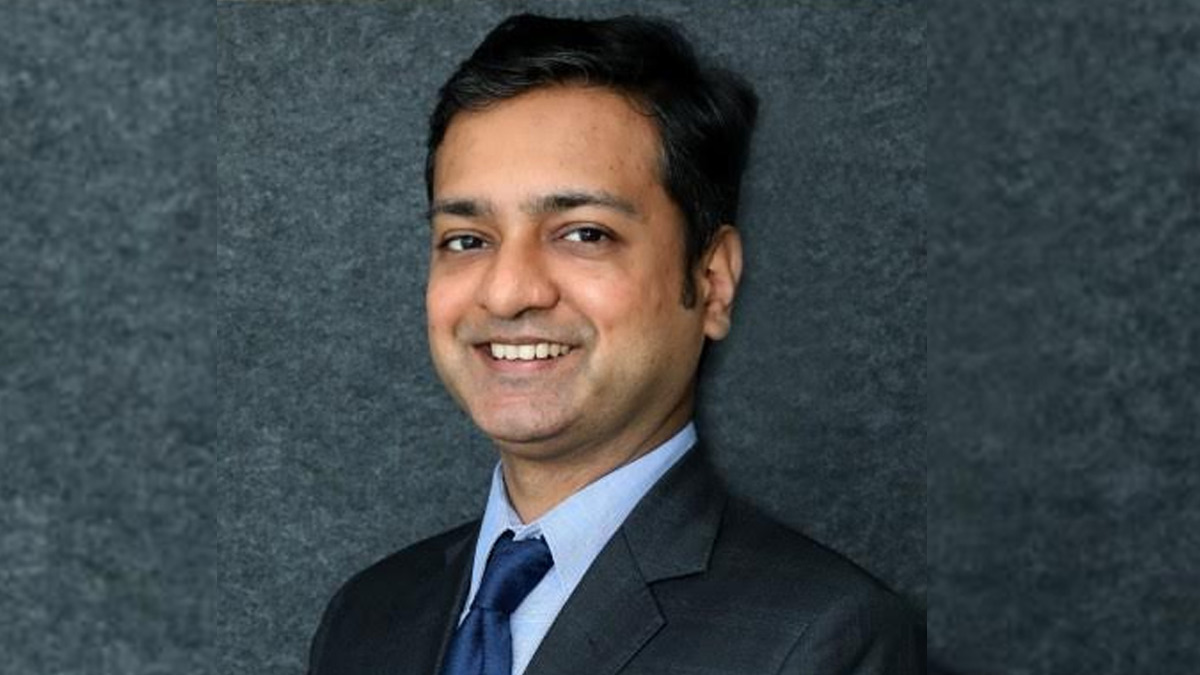
MUMBAI: Emami Limited has appointed Dhruv Aggarwal as its chief growth officer, effective 25 March 2026, following the resignation of Giriraj Bagri.
Aggarwal joins the FMCG major from Bain & Company, where he most recently served as partner. With over two decades of experience across consulting and strategy, he brings a global perspective shaped by work across India, the US, the UK and Germany.
During his tenure at Bain, Aggarwal advised consumer, retail and media companies on large-scale transformations, business turnarounds and growth strategies. He was also closely involved with India’s startup ecosystem, guiding early-stage ventures on scaling and digital expansion, while supporting private equity and venture capital firms on investment decisions.
His earlier stints include a brief role at Barclays Capital and operational experience at Jindal Power, giving him a mix of financial and industry exposure.
Academically, Aggarwal holds an MBA from Indian Institute of Management Bangalore and has also been associated with University of Illinois Urbana-Champaign as a PhD candidate and teaching assistant.
The appointment comes at a time when Emami Limited is looking to sharpen its growth strategy in a competitive consumer market. With a seasoned strategist now at the helm of growth, the company appears set to double down on transformation and expansion in the months ahead.








