MAM
Comparative advertising gets thumbs up from advertisers

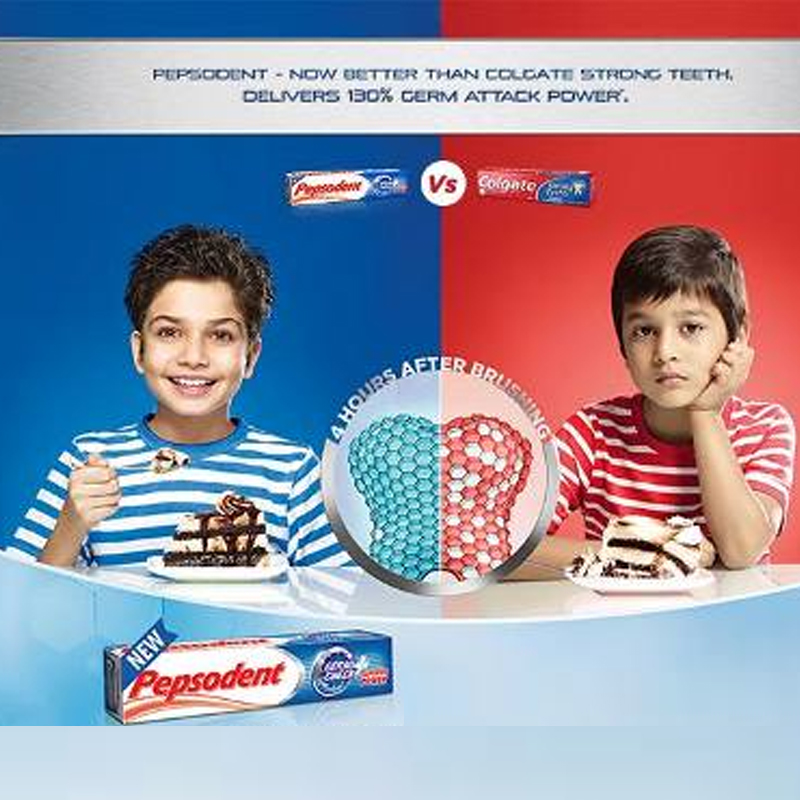
MUMBAI: A brand trying to downplay its competition is nothing new. For years now, one has witnessed a brand praising itself and claiming to be better than its rival. What has changed over the years is the method; from ambush to disguise to in-your-face comparative advertising, brands have tried it all to catch customers‘ eye.
And in doing so, many a times, advertisers and brands have either gone overboard or crossed the line of ‘ethics‘ to get in trouble with customers, associations or rivals. The latest to enter the troubled waters was one of the leading toothpaste brand.
In the TVC, launched earlier this month, HUL‘s Pepsodent takes on Colgate-Palmolive toothpaste, Colgate. The advertisement shows Pepsodent Germicheck claiming to be 130 per cent superior in terms of germ attack power over market leader claim of having strong teeth even after four hours after brushing.

The ad which got more than four lakh views within a week on Youtube, took the world and especially the social media by a storm. It took a new turn when after a lull, Colgate-Palmolive (India) decided to drag Pepsodent to the Delhi high court.
Are we not mature enough to take comparative advertising? Can one call it a below the belt marketing? According to Leo Burnett national creative director KV Sridhar, “There is nothing wrong in comparative advertising until and unless the ad is stating facts to the consumers. A consumer needs to know what is good for them be it any product.”
He goes on to say that a TVC should be engaging for consumers as well as state specifics. When asked about Colgate dragging Pepsodent in court, Sridhar says, “Fight here is about superiority of brands. But one shouldn‘t forget about the interest of consumers as well.”
Similarly, Ogilvy& Mather‘s NCD Abhijit Avasthi too feels that if an ad is factual and beneficial to consumers then there is no harm in naming the competitor. However, he adds, “Even if we are open to such form of advertising, it is important for a brand to also be open to it. Otherwise, such fights will only become a matter of laugh among others.”
Advertising filmmaker Prahlad Kakkar sings in the same tune and believes that there is no harm in airing such ads if a brand has enough proof that their ingredients are better than the one they are claiming to be. “Customers have a right to know that which brand is better for them, because they are the ones who are investing their money.”
The advertising world is okay with comparisons so maybe it is high time for brands too to open their minds and enter the fight without a veil.







MAM
Promotedge marks 11 years with expansion into D2C and performance marketing
Kolkata-based agency strengthens global footprint and launches new platforms.
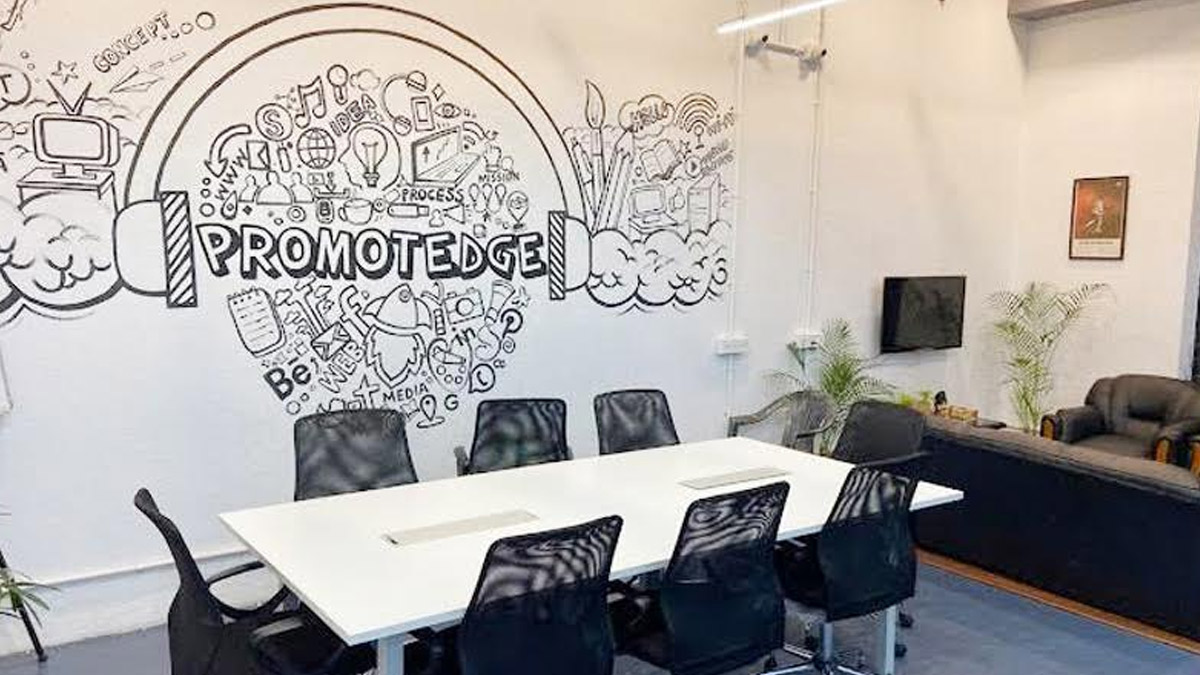
MUMBAI: Promotedge has spent 11 years quietly building momentum and now it’s ready to take a much bigger leap. The Kolkata-based integrated marketing and branding agency, founded in 2015, has completed 11 years of steady growth, evolving from a local creative firm into a full-service marketing partner with a growing international presence. With operational hubs in the US and Canada through its platform PromotEdgeDigital, the agency now serves clients across India, the US, Canada, Australia, and the Middle East.
Over the past 11 years, Promotedge has partnered with more than 200 businesses across diverse industries. Guided by its “Digitally Desi” philosophy which blends cultural insight with data-driven execution, the agency offers end-to-end services including web solutions, digital marketing, creative design, brand planning, and audio-visual production.
In its eleventh year, the agency made significant strides by developing branded IPs and content series for the automotive and industrial sectors, creating audio-visual content for international sporting bodies like the Fédération Internationale de Volleyball, and strengthening its performance marketing capabilities, particularly on quick-commerce platforms such as Zepto, Blinkit, Flipkart, and Swiggy Instamart.
To further boost its D2C focus, Promotedge has integrated the operations of Fizzle Digital into its performance marketing division, now led by founders Avi Saraf and Jhalak Agarwal. The agency continues to serve B2B clients in sectors like steel, energy, engineering, and infrastructure.
Beyond traditional services, Promotedge has introduced new platforms. DesiMachines is an online marketplace for heavy engineering and construction equipment, supported by two financial institutions and six top OEMs. The agency also launched Pexora, a joint venture with Prodigy focused on workspace design, branding, experiential marketing, and Digital Out-of-Home (DOOH) solutions in Eastern and North Eastern India.
Additionally, Promotedge nurtures The Trip Space, a boutique travel brand that curates personalised, luxury journeys for high-net-worth travellers.
Promotedge CEO Saurav Agarwal said, “PromotEdge has always been built with a long-term vision. Our goal is to develop capabilities that provide long-term value to our clients.”
As it approaches its 12th year, the agency plans to expand its global clientele, deepen D2C and performance marketing capabilities, invest in AI-enabled solutions, and strengthen its platform-led initiatives.
From a modest start in Kolkata to building platforms and partnerships across borders, PromotEdge is proving that smart, culturally rooted marketing can travel far and deliver real impact. The agency is clearly gearing up for an even bigger chapter ahead.






